L’IGAD, une communauté régionale en difficulté chronique, avec Khalid Chegraoui

September 18, 2020

Découvrez le Chapitre 2 du Rapport annuel sur la Géopolitique de l'Afrique 2020 sur l'Autorité intergouvernementale pour le développement (IGAD), avec Khalid Chegraoui, fellow au Policy Center. La situation politique au sein de l’IGAD souffre encore de ses instabilités chroniques, sauf pour trois Etats non traités dans ce papier, Uganda, Djibouti et Kenya. Le reste des pays, à des degrés différents, arrivent tant bien que mal à surmonter les démons de l’instabilité, tant sur les frontières qu’à l’intérieur des pays. En plus des challenges climatiques et de développement pour lesquels l’IGAD a été mise en place. Les constructions nationales restent à faire. Les modèles de gouvernance restent à entrevoir autrement, dans des configurations adaptées aux nécessités historiques, culturelles et sociologiques des pays, du moment que les pratiques et les expériences locales sont sujettes à plusieurs critiques et remises en question. Les instruments, outils et programmes de l’IGAD mis en place, sont restés au plan des déclarations sans applications réelles sur le terrain. À voir la situation des pays constituant l’autorité, on remarque que le grand problème aujourd’hui reste lié à la sécurité et des Etats et des frontières, en plus des défis des conditions des gouvernances locales, ajouté à cela l’extrême danger des interventions étrangères et leur mainmise sur les politiques et les économies de la région. Ce chapitre est disponible dans le "Rapport annuel sur la géopolitique de l’Afrique - 2020" : https://www.policycenter.ma/publications/rapport-annuel-sur-la-géopolitique-de-lafrique-2020

Speakers
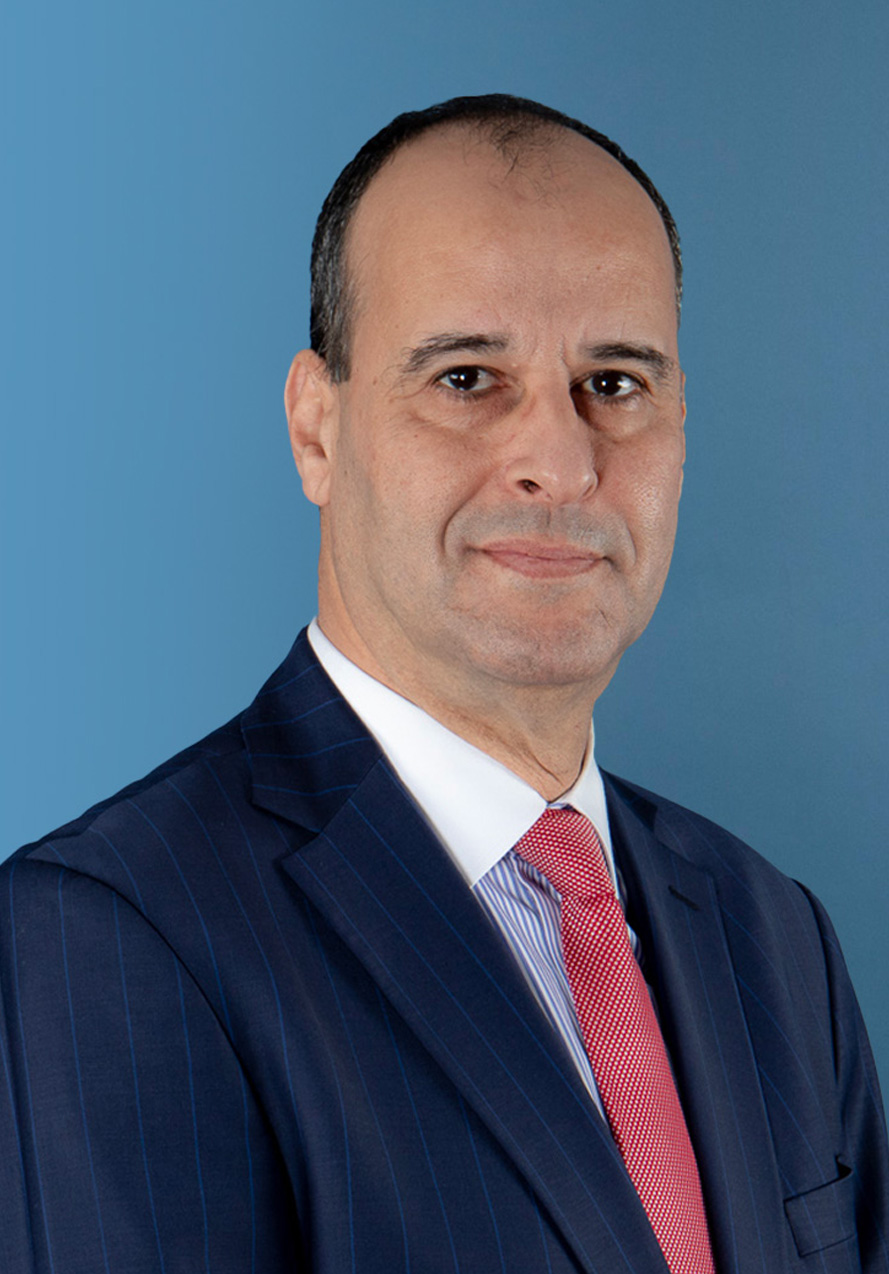
Khalid Chegraoui
Senior Fellow
Khalid Chegraoui is Senior Fellow at the Policy Center for the New South and Vice Dean of Political Sciences and International Relations at the Faculty of Governance, Economic and Social Sciences of the Mohammed VI University.  He began his teaching and research career in 1992 as a Research Assistant Professor at Sidi Mohammed Ben Abdallah University in Fez after earning his first doctorate in African Studies from the Mohammed V University in Rabat focusing on West Sub-Saharan Africa. He also earned a Doctorate of State in African Studies from the same University in 2002, where he focused on Contemporary West Africa, in 2003 he became Professor of History and Political Anthropology at the Institute of African Studies, Mohammed V University, consultant on African and Midd ...

RELATED CONTENT

  • October 15, 2026
    The Policy Center for the New South, in partnership with The Asian Network, is organizing a webinar titled “Emerging Powers and the Remaking of Global Order” to examine the growing role of emerging powers and the Global South at a time of profound transformation in the international sys...
  • October 15, 2026
    The UN Secretary-General’s report of October 1, 2026 marks an important stage in the evolution of the political process concerning the Moroccan Sahara. As the first report issued since the adoption of Resolution 2797 (2025), it highlights renewed diplomatic momentum, marked by the resumption of substantive four-party negotiations led by the United States with United Nations support.This development reflects a gradual shift in a debate long focused on the territory’s final status tow ...
  • October 15, 2026
    Le rapport du Secrétaire général des Nations Unies du 1er octobre 2026 marque une étape importante dans l’évolution du processus politique relatif au Sahara marocain. Le premier présenté depuis l’adoption de la résolution 2797 (2025), le rapport met en évidence une dynamique diplomatique nouvelle, caractérisée par la reprise de négociations substantielles à quatre sous l’impulsion des États-Unis et avec l’accompagnement des Nations Unies. Cette évolution traduit un déplacement ...
  • September 28, 2026
    This paper was initially published in French on the website of the Fondation Jean-Jaurès. There was a historic decline in Official Development Assistance (ODA) in 2025. Foreign aid to developing countries from members of the OECD-DAC fell by some 23%, the largest decline on record and the second consecutive annual decline. Aid to Africa fell by more than 25%. The International Monetary Fund (IMF) described this decline in ODA to Africa as “a shock like no other.” It differ ...
  • Authors
    Marianna Albuquerque
    September 23, 2026
    The author of this opinion, Marianna Albuquerque, is a 2022 alumna of the Atlantic Dialogues Emerging Leaders Program.As world leaders gather in New York for the 81st United Nations General Assembly, climate change returns to the center of multilateral diplomacy under markedly different circumstances. The debate is no longer confined to whether the world must decarbonize, but increasingly centers on how the transition will happen, who will bear its costs, who will capture ...
  • Authors
    Joana Ama Osei-Tutu
    September 12, 2026
    The author of this opinion, Joana Ama Osei-Tutu, is a 2017 alumna of the Atlantic Dialogues Emerging Leaders Program.South-South cooperation (SSC) is often presented as an alternative to the hierarchical relationships that have historically characterized international development. In principle, SSC means Global South countries learn from one another, share expertise and resources, and develop solutions grounded in their own experiences, rather than importing models designe ...
  • August 14, 2026
    In this Episode, Arup Banerji discusses why local expertise—not just international advice—should be intentionally embedded in African development policy. He cites cash transfer programs a ...