Les Politiques Economiques de Relance Post-Covid-19 : Regards Croisés

June 12, 2020

Le Laboratoire d’Economie Appliquée ( LEA) de la Faculté des Sciences Juridiques Economiques et Sociales Rabat - AGDAL en partenariat avec le Policy Center for the New South, a le plaisir de vous inviter à participer à la table ronde organisée sous le thème «Les politiques économiques de relance Post Covid-19 : Regards croisés », qui se tiendra le vendredi 12 juin 2020 à 18h00 (Heure de Rabat). Les politiques économiques de gestion de la crise issue du covid-19 sont en rupture avec les pratiques antérieures. Elles sont audacieuses et révèlent au grand jour la capacité des pays, quand ils mettent en stand-by les prêts à penser- orthodoxes-, à gérer des chocs extrêmes. Il s’agit maintenant d’examiner la capacité des politiques économiques de relance post Covid-19 à l’échelle internationale et au Maroc, de saisir cet effet de révélation, de le traduire en stratégies innovantes à même de reconstruire un Maroc social inclusif et durable.
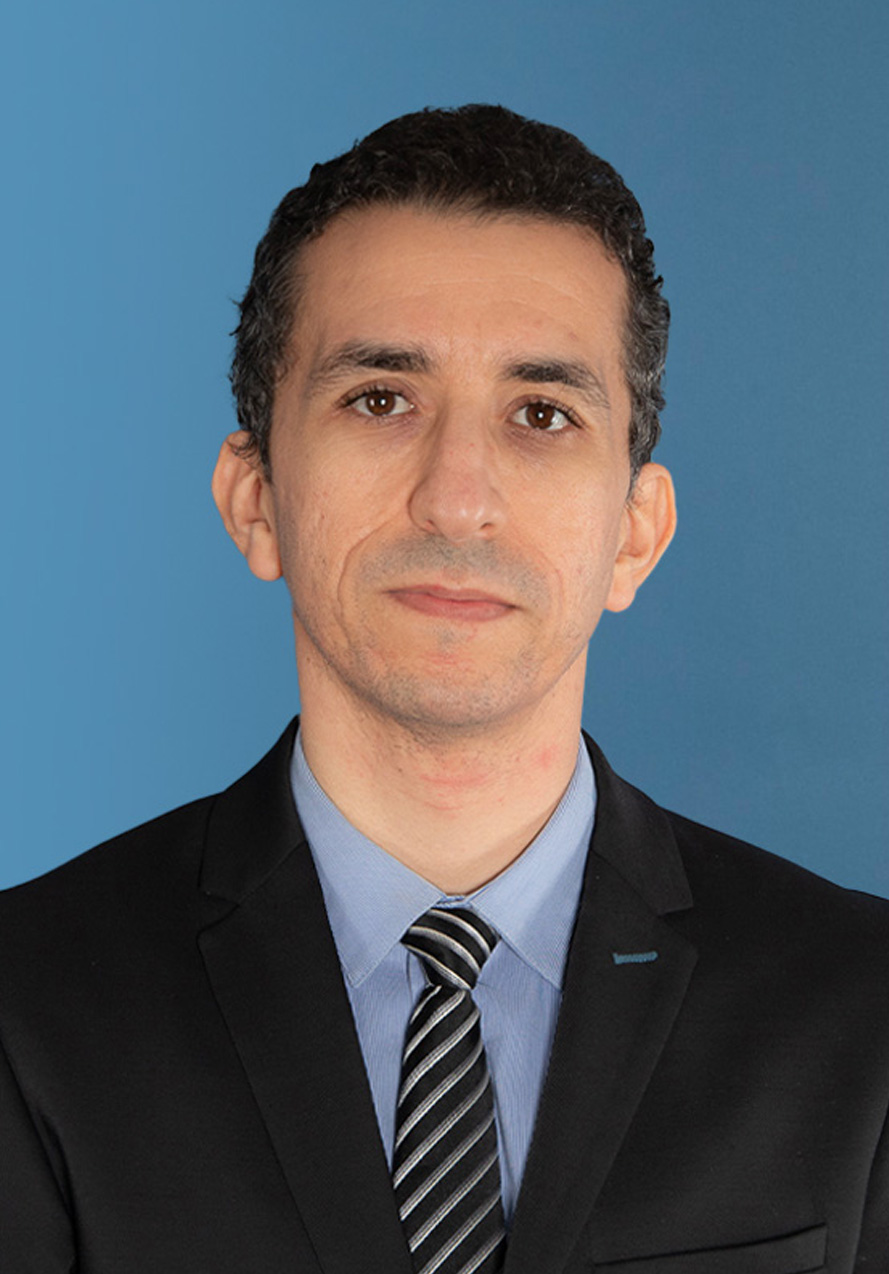

Speakers
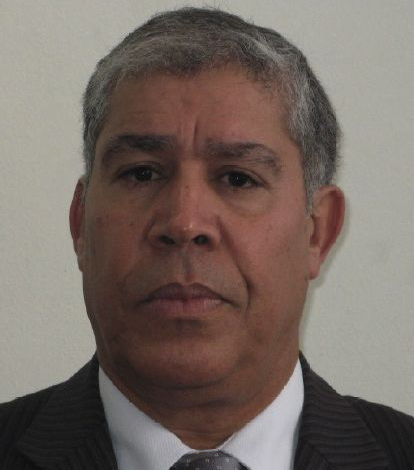
Abdelaaziz Ait Ali
Head - Research in Economics
Abdelaaziz Ait Ali is a principal Economist and head of the Research Department at the Policy Center for the New South. He joined the Center in 2014 after five years of experience at the Central Bank of Morocco. He worked as an economist in the International Studies and Relations Department and was analyzing the real estate price index and financial asset prices for monetary policy and financial stability purposes. Since then, Abdelaaziz has focused on cyclical and structural issues of the Moroccan economy, including macroeconomic management and industrial policy design. He has published articles on the reform of the exchange rate regime in the Moroccan economy and its implications for macroeconomic regulation, as well as on the evolution of the macroeconomic framework over th ...
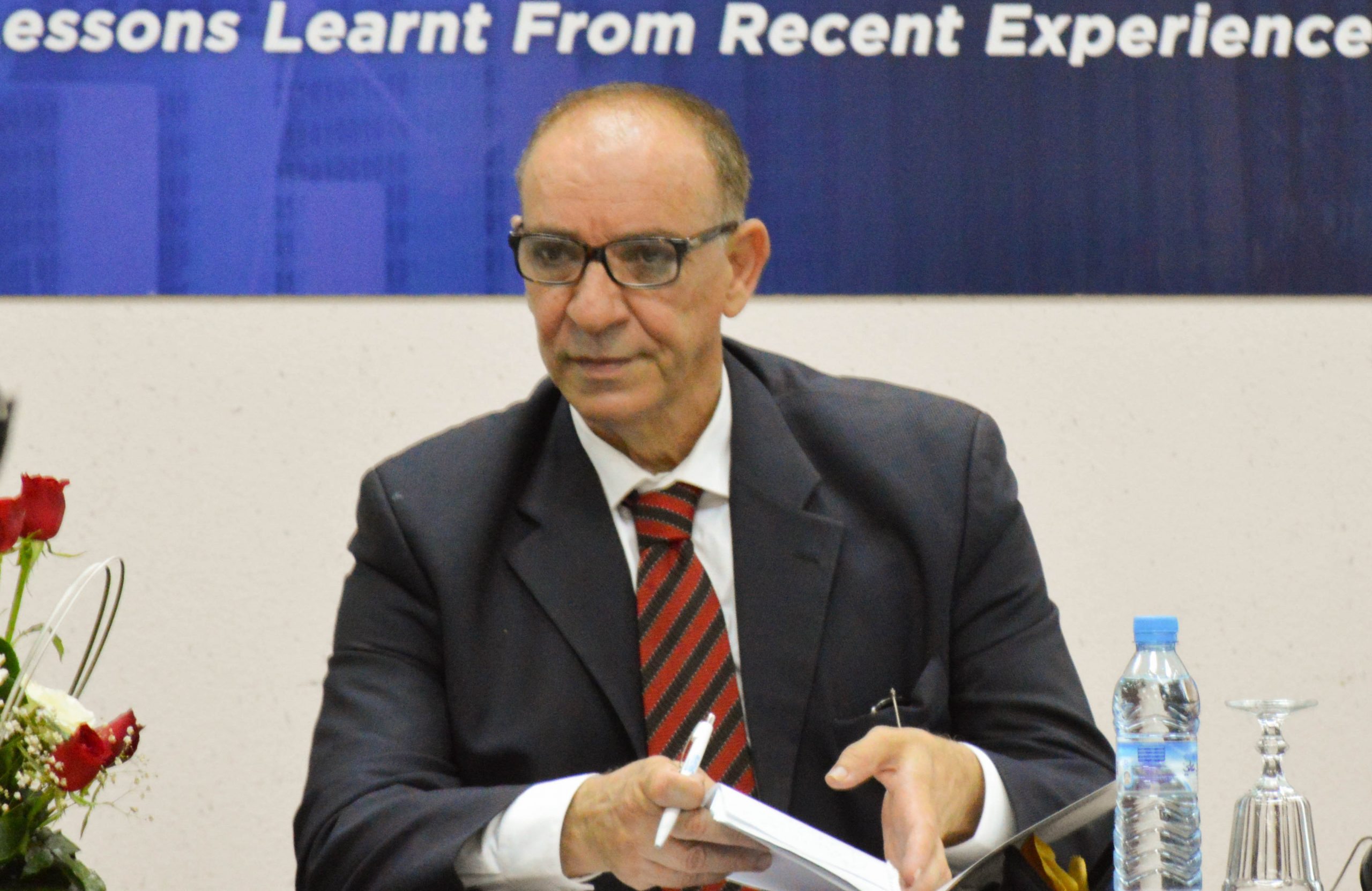
Idriss El Abbassi
Professor of economics, Mohammed V University
Idriss El Abbassi is a Professor of Economics at Mohammed V University in Rabat and coordinator of the Master’s programme in economics. He holds a PhD from Florida State University, and his research focuses on open-economy macroeconomics, growth, and structural transformation. He teaches at both the Master’s and PhD levels and is a founding member of the Laboratory of Applied Economics. A former director of the EMPRETEC/UNCTAD programme in Morocco, he has also been a visiting professor in London. He co-authored Human Capital and Economic and Social Development in Morocco and has recently published in The Economic and Labour Relations Review and Structural Change and Economic Dynamics. ...
Lahcen Oulhaj
Laboratoire d'Economie Appliquée (LEA), FSJES Agdal
...
Larabi Jaïdi
Senior Fellow
Larabi Jaïdi is a Senior Fellow at the Policy Center for the New South and an Affiliate Professor at Mohammed VI Polytechnic University. His areas of expertise include international economy, economic policies, international economic relations, regional economies, social development, international relations, and Mediterranean studies. He also served on the Special Commission on the New Development Model of Morocco, a consultative body created in November 2019 to formulate the country's new developmental guidelines. Jaïdi is a former Professor at Mohamed V University in Rabat-Agdal and a founding member of both the Centre Marocain de Conjoncture and the Groupement d’Etudes et de Recherches sur la Méditerranée.   Prof. Jaïdi previously served as Advisor to the Prime Minist ...
Saïd Tounsi
Professor and Researcher, Mohammed V University
Saïd Tounsi is a Professor and Researcher at Mohammed V University in Rabat. A specialistin economic policies, particularly fiscal policy, he has authored several studies onpublic debt sustainability and exchange rate regimes in developing countries. He has alsoco-edited collective volumes on macroeconomic policies in Morocco. A former trainer atthe IGF and Bank Al-Maghrib, he combines academic expertise with institutional experiencein analysing national and international economic dynamics. ...

RELATED CONTENT

  • April 29, 2026
    Cet épisode revient sur la politique monétaire au Maroc, en soulignant sa capacité à maintenir une inflation faible et stable sur le long terme grâce à un cadre macroéconomique solide. Il met en avant le rôle central des réformes institutionnelles et de la Banque centrale dans le renfor...
  • April 29, 2026
    Cette chronique a été initialement publiée sur le site lesechos.fr Les économies en développement font face à un double défi : créer des emplois à grande échelle tout en soutenant la productivité. Quels types de services permettent cette convergence ? Les économistes Hinh T. Dinh et Karim El Aynaoui répondent dans la chronique du « Cercle des économistes ».Les services peuvent-ils se substituer à l'industrie manufacturière comme moteur du développement ...
  • Authors
    April 28, 2026
    Climate policy is increasingly reshaping the conditions under which firms participate in international markets. As some jurisdictions introduce carbon border adjustments, lifecycle emissions standards, and supply-chain traceability requirements, market access is starting to be made conditional on verifiable characteristics of production processes, such as carbon intensity, embedded emissions, and input sourcing, rather than solely on product characteristics or prices. This paper exa ...
  • April 27, 2026
    This episode examines firms’ access to finance in Morocco, highlighting its critical role in business creation and growth, especially for SMEs. It challenges common assumptions by showing that medium-sized firms, rather than small ones, face the most binding financial constraints. The d...
  • April 27, 2026
    This episode examines Morocco’s handicraft sector, highlighting its economic importance as a major source of employment and value creation, despite being often overlooked. It presents new empirical evidence showing the sector’s gradual shift toward more formalized SMEs, while exposing i...
  • Authors
    April 23, 2026
    The call for private finance mobilization received an answer in 2024, with private capital accounting for 66% of total flows in climate finance, while still reaching a record level. This flow of private finance represents a structural shift that can both be considered as a significant achievement and an underexamined governance risk. This paper argues that the growth of private climate finance, while real and consequential, does not always directly serve climate objectives. Pri ...
  • Authors
    April 20, 2026
    This paper was published as a book chapter in “The Economic Potential of Islamic Countries, Part B: Sustainability, Governance, Energy and Digital Transformation,” released by Emerald Publishing. The COVID-19 pandemic exposed significant deficiencies within social protection systems worldwide, especially in Middle Eastern and North African (MENA) countries. This underscores the urgent need to fortify these social protection schemes to ensure resilience in the face of crises (Sa ...
  • Authors
    Markus Goldstein
    Chema Triki
    Charley Ward
    April 16, 2026
    This blog was originally published on cgdev.org We recently wrapped up the second edition of the Growth Summit, organized by our three organizations and hosted by the Policy Center for the New South. The event was filled with eclectic voices. To give you a sense of the discussions, we’ve tried to capture some of the key messages from the 12 sessions (with no direct attribution).Overall, the eclecticism of the debate points to an uncomfortable truth: there is today no shared pla ...
  • April 14, 2026
    Cet épisode met en avant les industries automobile et aéronautique du Maroc en tant que moteurs de transformation industrielle, portées par le Pacte pour l’Émergence et le Plan d’Accélération Industrielle. Un écosystème solide composé de donneurs d’ordre, de fabricants internationaux et...