Les Politiques Economiques de Relance Post-Covid-19 : Regards Croisés

June 12, 2020

Le Laboratoire d’Economie Appliquée ( LEA) de la Faculté des Sciences Juridiques Economiques et Sociales Rabat - AGDAL en partenariat avec le Policy Center for the New South, a le plaisir de vous inviter à participer à la table ronde organisée sous le thème «Les politiques économiques de relance Post Covid-19 : Regards croisés », qui se tiendra le vendredi 12 juin 2020 à 18h00 (Heure de Rabat). Les politiques économiques de gestion de la crise issue du covid-19 sont en rupture avec les pratiques antérieures. Elles sont audacieuses et révèlent au grand jour la capacité des pays, quand ils mettent en stand-by les prêts à penser- orthodoxes-, à gérer des chocs extrêmes. Il s’agit maintenant d’examiner la capacité des politiques économiques de relance post Covid-19 à l’échelle internationale et au Maroc, de saisir cet effet de révélation, de le traduire en stratégies innovantes à même de reconstruire un Maroc social inclusif et durable.

Speakers
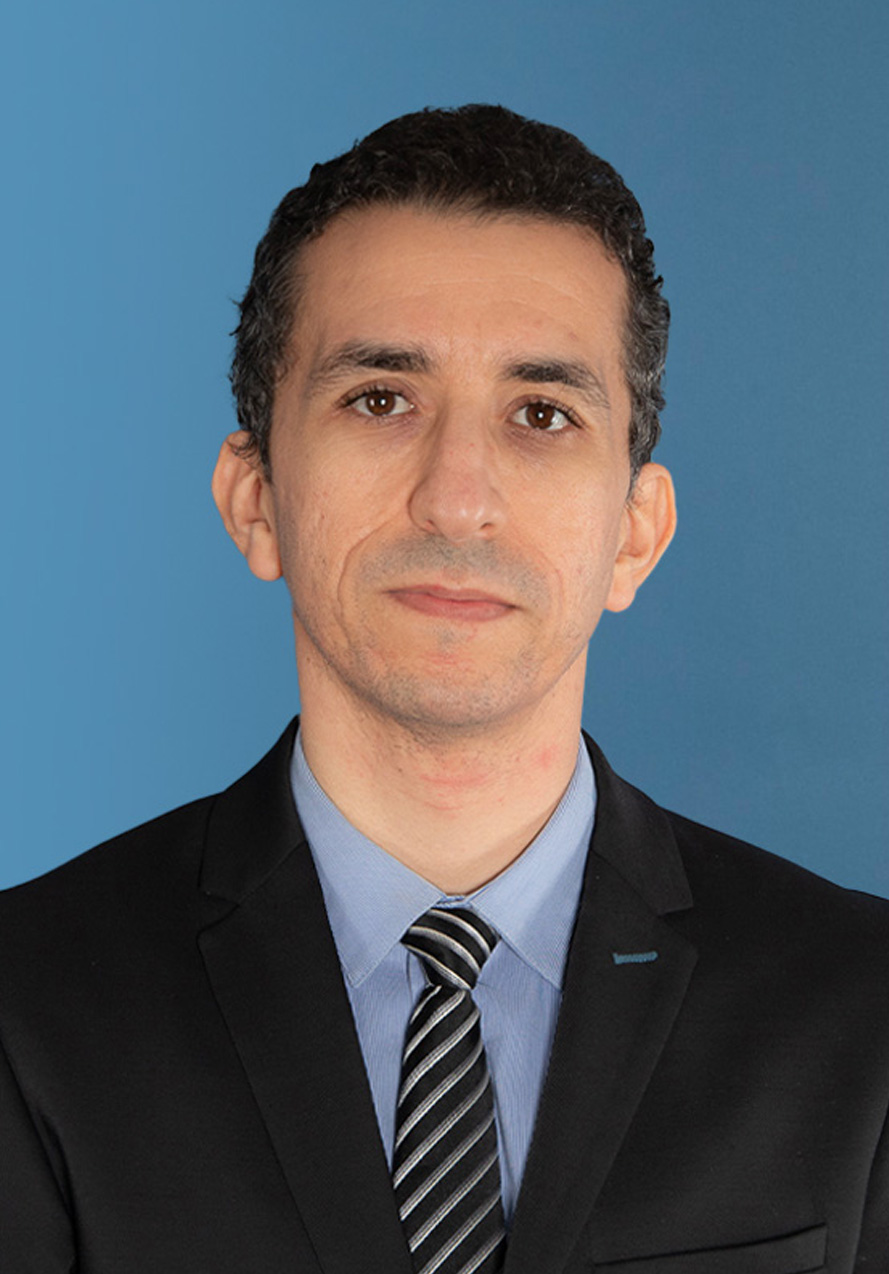
Abdelaaziz Ait Ali
Head - Research in Economics
Abdelaaziz Ait Ali is a principal Economist and head of the Research Department at the Policy Center for the New South. He joined the Center in 2014 after five years of experience at the Central Bank of Morocco. He worked as an economist in the International Studies and Relations Department and was analyzing the real estate price index and financial asset prices for monetary policy and financial stability purposes. Since then, Abdelaaziz has focused on cyclical and structural issues of the Moroccan economy, including macroeconomic management and industrial policy design. He has published articles on the reform of the exchange rate regime in the Moroccan economy and its implications for macroeconomic regulation, as well as on the evolution of the macroeconomic framework over th ...
Idriss El Abbassi
Professor of economics, Mohammed V University
Idriss El Abbassi is a Professor of Economics at Mohammed V University in Rabat and coordinator of the Master’s programme in economics. He holds a PhD from Florida State University, and his research focuses on open-economy macroeconomics, growth, and structural transformation. He teaches at both the Master’s and PhD levels and is a founding member of the Laboratory of Applied Economics. A former director of the EMPRETEC/UNCTAD programme in Morocco, he has also been a visiting professor in London. He co-authored Human Capital and Economic and Social Development in Morocco and has recently published in The Economic and Labour Relations Review and Structural Change and Economic Dynamics. ...
Lahcen Oulhaj
Laboratoire d'Economie Appliquée (LEA), FSJES Agdal
...
Larabi Jaïdi
Senior Fellow
Larabi Jaïdi is a Senior Fellow at the Policy Center for the New South and an Affiliate Professor at Mohammed VI Polytechnic University. His areas of expertise include international economy, economic policies, international economic relations, regional economies, social development, international relations, and Mediterranean studies. He also served on the Special Commission on the New Development Model of Morocco, a consultative body created in November 2019 to formulate the country's new developmental guidelines. Jaïdi is a former Professor at Mohamed V University in Rabat-Agdal and a founding member of both the Centre Marocain de Conjoncture and the Groupement d’Etudes et de Recherches sur la Méditerranée.   Prof. Jaïdi previously served as Advisor to the Prime Minist ...
Saïd Tounsi
Professor and Researcher, Mohammed V University
Saïd Tounsi is a Professor and Researcher at Mohammed V University in Rabat. A specialistin economic policies, particularly fiscal policy, he has authored several studies onpublic debt sustainability and exchange rate regimes in developing countries. He has alsoco-edited collective volumes on macroeconomic policies in Morocco. A former trainer atthe IGF and Bank Al-Maghrib, he combines academic expertise with institutional experiencein analysing national and international economic dynamics. ...

RELATED CONTENT

  • Authors
    Yassine Msadfa
    September 21, 2017
    Les chaînes de valeur mondiales offrent de nouvelles opportunités de transformation structurelle pour les pays en développement. Aujourd’hui la vision des chaînes de valeur mondiales se limitant à l’analyse des flux commerciaux et des IDE à l’échelle globale n’est plus suffisante pour répondre aux questions clés du positionnement et de la remontée dans ces chaînes de valeur, de la dynamique de la capture de la valeur et de sa pérennisation. La réponse à ces questions appelle un écla ...
  • Authors
    Lahcen Oulhaj
    September 20, 2017
    Le présent livre présente un ensemble d’outils et de notions mathématiques communément utilisés en économie appliquée. Il commence par rappeler les notions d’algèbre matricielle, et enchaîne avec l’étude des systèmes linéaires d’équations et les transformations de matrices, pour traiter de la décomposition des matrices, devenue un outil couramment utilisé en économétrie des séries chronologiques et des données de panel. Le calcul différentiel et intégral, de plus en plus utilisé en ...
  • Authors
    Dina N. Elshahawany
    Michael L. Lahr
    September 18, 2017
    This paper focuses on a proposed development corridor in Egypt, a main component of which is a desert-based expansion of the current highway network. The main beneficial features of this proposed transport investment are travel time reductions and improved accessibility. We use a spatial computable general equilibrium (SCGE) model to estimate the economic impacts of changes in transportation costs from this new roadway. To effect this, we integrate the model with a stylized geo-code ...
  • September 17, 2017
    Les fonds souverains africains sont pour certains d’entre eux des fonds anciens, comme le Pula Fund du Botswana créé en 1994, d’autres fonds vont suivre, dont les plus importants en actifs sous gestion sont les fonds algériens et libyens. Et si la majeure partie d’entre eux, huit sur les onze analysés ici, sont financés par des recettes provenant d’hydrocarbures, tel n’est pas le cas du fonds botswanais (diamant), du fonds sénégalais (actifs transférés de l’état) et du der ...
  • Authors
    September 15, 2017
    After a strong rising tide starting in the 1990s, financial globalization seems to have reached a plateau since the global financial crisis. However, that apparent stability has taken place along a deep reshaping of cross-border financial flows, featuring de-banking and an increasing weight of non-banking financial cross-border transactions. Sources of potential instability and long-term funding challenges have morphed accordingly.      Financial globalization is mor ...
  • Authors
    September 8, 2017
    The aim of this work is to contribute to the empirical literature on employment-GDP elasticities in four main ways. First, it provides a set of employment-GDP elasticities for a sample of emerging and developing economies, including 11 sub-Saharan countries, based on the GGDC 10-sectors database. Second, it assesses the extent to which manufacturing activities are inclusive compared to the rest of the economy, in terms of employment creation. Third, it explores the determinants of c ...
  • Authors
    Simone Tagliapieta
    Marion Jansen
    Yassine Msadfa
    Mario Filadoro
    August 28, 2017
    Endowed with half of the world’s known oil and gas reserves, the Middle East and North Africa (MENA) region became – particularly during the second half of the twentieth century – a cornerstone of the global energy architecture (Yergin, 1991, 2011; Maugeri, 2006). This architecture is currently undergoing a structural transformation, prompted by two different forces: decarbonisation policies and technological developments. The adoption and quick entry into force of the Paris Agreem ...
  • Authors
    Abdelkhalek El Bikam
    Afang Ndong Zita
    Kourouma Oumar
    August 25, 2017
    Les dynamiques économiques, politiques et géostratégiques actuelles, centrées sur les grands ensembles régionaux, annoncent une reconfiguration de l'ordre international dans lequel l'Afrique est appelée à jouer un rôle important et ce, à travers sa principale institution continentale qui est l'Union africaine (UA). Erigée de plus en plus comme l'interlocutrice du continent vis-à vis des partenaires étrangers, l'UA reste confrontée à des problèmes de dépendance, de gouvernance et de ...
  • Authors
    Abdelkhalek El Bikam
    Afang Ndong Zita
    Kourouma Oumar
    August 25, 2017
    The current economic, political and geo-strategic dynamics, centered on the major regional groups, announce a reconfiguration of the international order in which Africa is called to play an important role through its main continental institution which is the Union African Union (AU). The AU is increasingly emerging as the continent's platform with foreign partners, and continues to face problems of dependence, governance and leadership. Therefore, in a critical and forward-looking a ...
  • Authors
    August 9, 2017
    This paper reports on the recent developments in the construction of an interregional input-output matrix for Morocco (IIOM-MOR). As part of an ongoing project that aims to specify and calibrate an interregional CGE (ICGE) model for the country, a fully specified interregional input-output database was developed under conditions of limited information. Such database is needed for future calibration of the ICGE model. We conduct an analysis of the intraregional and interregional shar ...