Les Politiques Economiques de Relance Post-Covid-19 : Regards Croisés

June 12, 2020

Le Laboratoire d’Economie Appliquée ( LEA) de la Faculté des Sciences Juridiques Economiques et Sociales Rabat - AGDAL en partenariat avec le Policy Center for the New South, a le plaisir de vous inviter à participer à la table ronde organisée sous le thème «Les politiques économiques de relance Post Covid-19 : Regards croisés », qui se tiendra le vendredi 12 juin 2020 à 18h00 (Heure de Rabat). Les politiques économiques de gestion de la crise issue du covid-19 sont en rupture avec les pratiques antérieures. Elles sont audacieuses et révèlent au grand jour la capacité des pays, quand ils mettent en stand-by les prêts à penser- orthodoxes-, à gérer des chocs extrêmes. Il s’agit maintenant d’examiner la capacité des politiques économiques de relance post Covid-19 à l’échelle internationale et au Maroc, de saisir cet effet de révélation, de le traduire en stratégies innovantes à même de reconstruire un Maroc social inclusif et durable.

Speakers
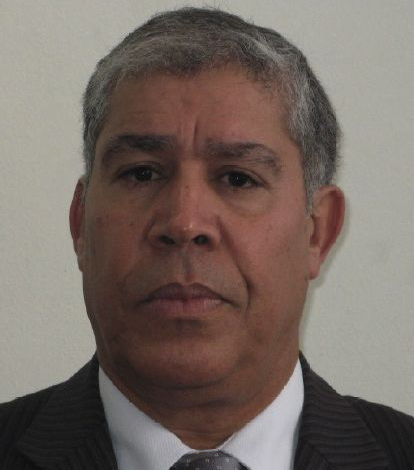
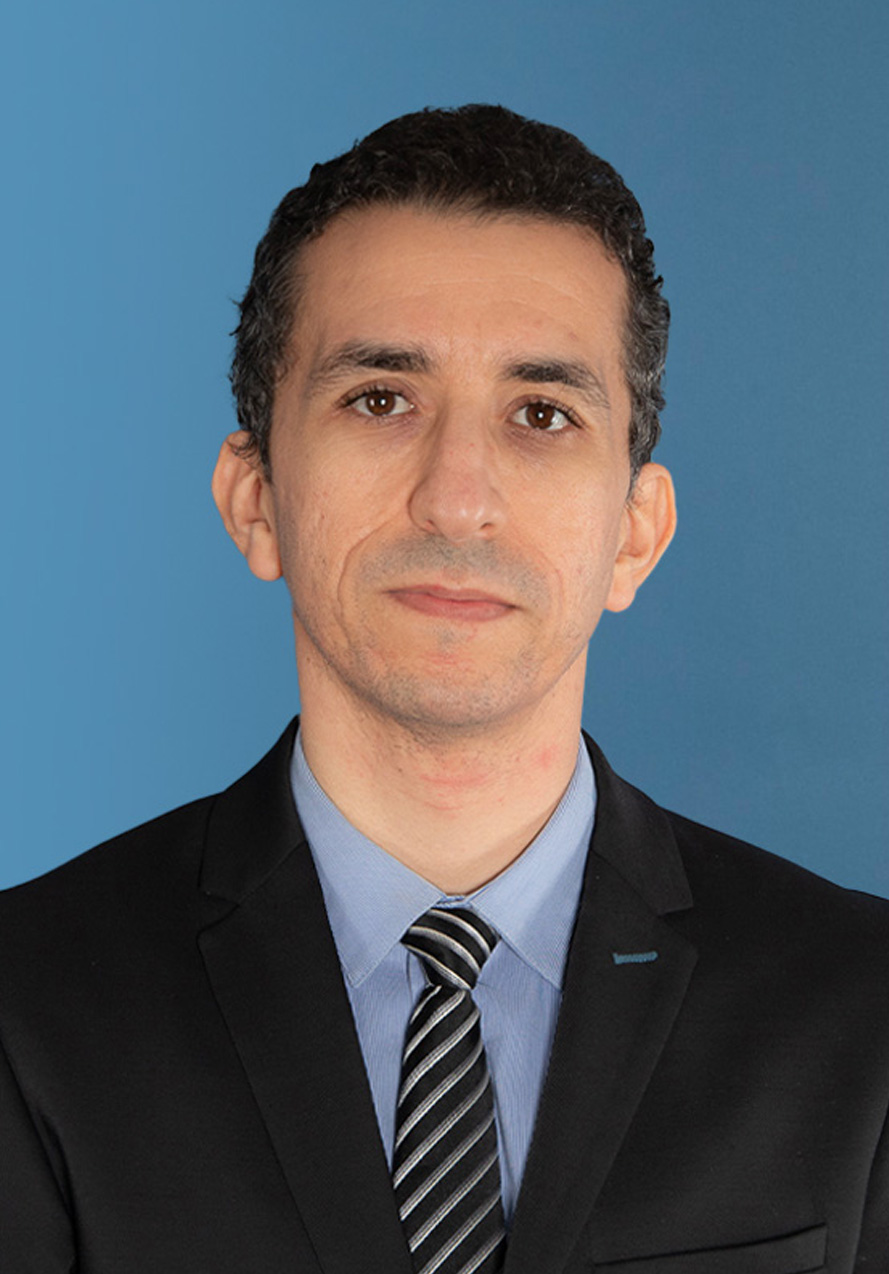
Abdelaaziz Ait Ali
Head - Research in Economics
Abdelaaziz Ait Ali is a principal Economist and head of the Research Department at the Policy Center for the New South. He joined the Center in 2014 after five years of experience at the Central Bank of Morocco. He worked as an economist in the International Studies and Relations Department and was analyzing the real estate price index and financial asset prices for monetary policy and financial stability purposes. Since then, Abdelaaziz has focused on cyclical and structural issues of the Moroccan economy, including macroeconomic management and industrial policy design. He has published articles on the reform of the exchange rate regime in the Moroccan economy and its implications for macroeconomic regulation, as well as on the evolution of the macroeconomic framework over th ...
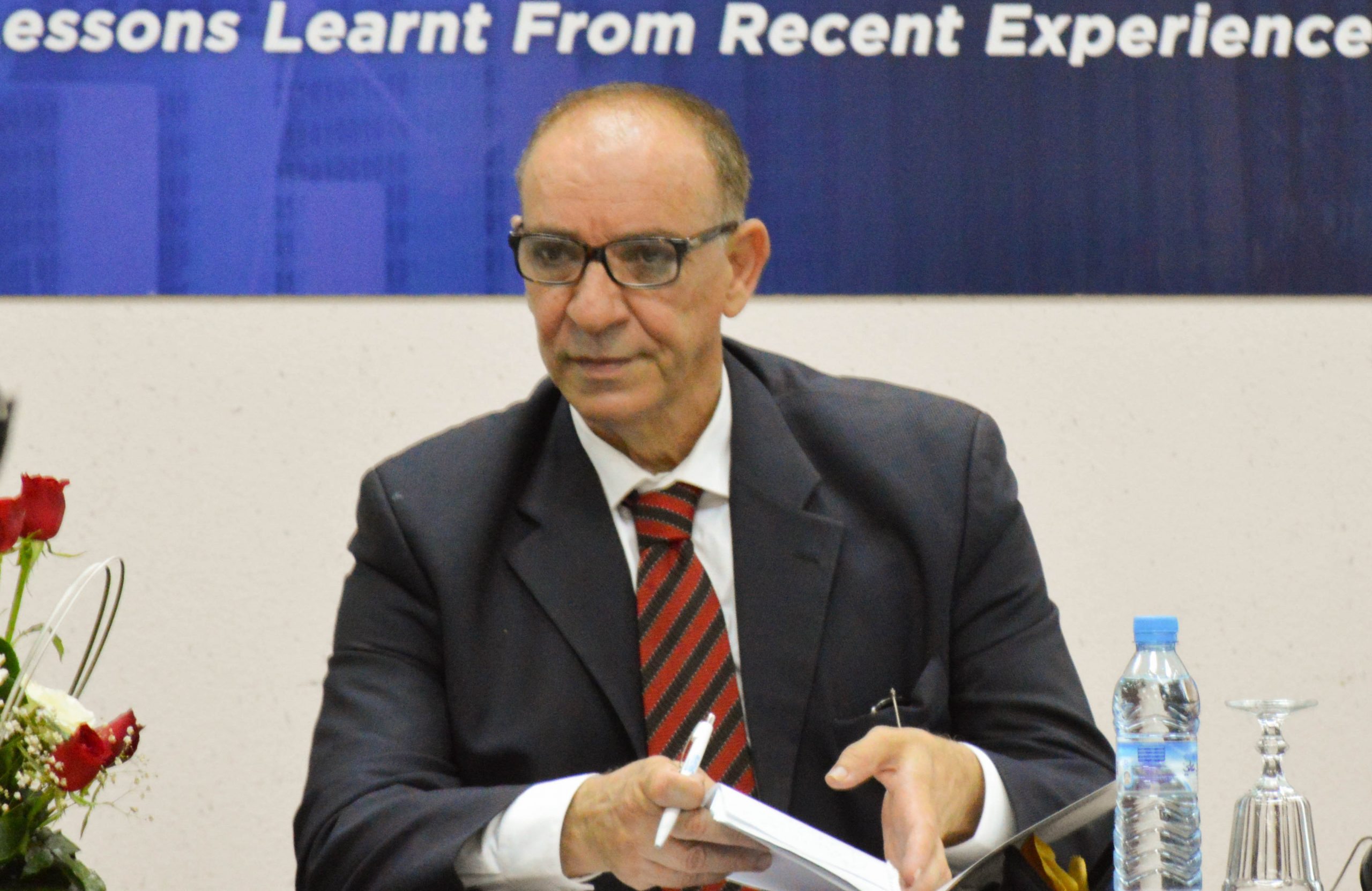
Idriss El Abbassi
Professor of economics, Mohammed V University
Idriss El Abbassi is a Professor of Economics at Mohammed V University in Rabat and coordinator of the Master’s programme in economics. He holds a PhD from Florida State University, and his research focuses on open-economy macroeconomics, growth, and structural transformation. He teaches at both the Master’s and PhD levels and is a founding member of the Laboratory of Applied Economics. A former director of the EMPRETEC/UNCTAD programme in Morocco, he has also been a visiting professor in London. He co-authored Human Capital and Economic and Social Development in Morocco and has recently published in The Economic and Labour Relations Review and Structural Change and Economic Dynamics. ...
Lahcen Oulhaj
Laboratoire d'Economie Appliquée (LEA), FSJES Agdal
...
Larabi Jaïdi
Senior Fellow
Larabi Jaïdi is a Senior Fellow at the Policy Center for the New South and an Affiliate Professor at Mohammed VI Polytechnic University. His areas of expertise include international economy, economic policies, international economic relations, regional economies, social development, international relations, and Mediterranean studies. He also served on the Special Commission on the New Development Model of Morocco, a consultative body created in November 2019 to formulate the country's new developmental guidelines. Jaïdi is a former Professor at Mohamed V University in Rabat-Agdal and a founding member of both the Centre Marocain de Conjoncture and the Groupement d’Etudes et de Recherches sur la Méditerranée.   Prof. Jaïdi previously served as Advisor to the Prime Minist ...
Saïd Tounsi
Professor and Researcher, Mohammed V University
Saïd Tounsi is a Professor and Researcher at Mohammed V University in Rabat. A specialistin economic policies, particularly fiscal policy, he has authored several studies onpublic debt sustainability and exchange rate regimes in developing countries. He has alsoco-edited collective volumes on macroeconomic policies in Morocco. A former trainer atthe IGF and Bank Al-Maghrib, he combines academic expertise with institutional experiencein analysing national and international economic dynamics. ...

RELATED CONTENT

  • Authors
    June 6, 2018
    The spike in US bond yields since mid-April in tandem with the strengthening of the dollar sparked a retrenchment of capital flows to emerging markets (EM), accompanied by a sell-off of assets in some cases. Argentina and Turkey suffered from strong and potentially disruptive exchange rate depreciation pressures in May, with financial markets calming down only after bold domestic policy moves (interest rate hikes in both countries and, in the case of Argentina, a decision to seek a ...
  • Authors
    Sabine Cessou
    May 31, 2018
    What are the best ways forward to enhance the capacity, increase the impact, and ensure the long term viability of think tanks in Africa? These questions have been debated during the 2nd edition of African Think Tank Summit (ATTS) held in Rabat from May 9th to May 11th.  The African think tanks have positively evolved over the years in order to respond to the specific needs of their different countries. They operate as platforms to share knowledge and train young leaders, with ...
  • May 31, 2018
    Avec la refonte des relations entre l’Union Européenne et les pays ACP (Afrique, Caraïbes et Pacifique), prévue pour février 2020, il devient urgent de repenser le cadre du partenariat entre l’Europe et l’Afrique et de proposer des éléments de refondation d’un vouloir vivre collectif. Priorité éducative, création d’emplois pour les jeunes via le développement territorial, promotion des partenariats publicprivé dans les infrastructures, comptent parmi les leviers d’actions possibles. ...
  • Authors
    May 31, 2018
    Salutations Thank you for the invitation to address the 2018 Africa Think Tank Summit  in this memorable city of Rabat. I thank in particular, the OCP Policy Center and the Think Tank and Civil Societies Program of the University of Pennsylvania for hosting the Summit with the theme “Deepening Expertise and Enhancing Sustainability: Insight into Contemporary Challenges Facing African Think Tanks”. Rabat, Morocco has been the sprouting ground of numerous agenda-setti ...
  • Authors
    May 21, 2018
    The main message of this paper is that our world is undergoing a profound transformation in multiple aspects. These, at a minimum, include the following: - the degree and manner of our acceptance of or opposition to increased integration as trading nations - the constantly evolving technologies we use, the way we work, play and interact as social groups and entire societies - the very climate that conditions our living environment. ...
  • May 21, 2018
    Le partenariat Afrique Europe fait son chemin depuis l'adoption de la stratégie commune Afrique-UE et la négociation complexe des Accords de Partenariat Economiques. L’évaluation des volets commercial, financier et humain de ces relations multidimensionnelles fait ressortir la persistance de grands déséquilibres dans les échanges commerciaux de biens et services, des tensions dans la gestion de la mobilité humaine et des dysfonctionnements dans les mécanismes institutionnels de part ...
  • May 15, 2018
    Les réponses de l’expert John Seaman aux questions que nous lui avons posées, permettent de mieux cerner la réalité des investissements chinois en Europe. Ceci en évoquant les craintes qu ...
  • Authors
    May 15, 2018
    Technology and inequality, China's special status, macroeconomic imbalances, and WTO dysfunction, are the challenges confronted by the world trading system, and which lie at the root of resurgent protectionism. Are the trade tensions that have been stoked by Trump unique to him or the outcome of forces that preceded him and will outlast him? ...
  • May 15, 2018
    Dans ce Podcast, nous avons sollicité l’avis de Mr. John Seaman, chercheur à l’Institut Français des Relations Internationales (IFRI), sur les investissements chinois en Europe. Les oppor ...
  • Authors
    May 10, 2018
    The April issue of the IMF’s “World Economic Outlook (WEO)” included a chapter on how globalization has helped knowledge from technology leaders spread faster than before. Cross-border technological diffusion has not only contributed to rising domestic productivity levels in advanced and emerging economies, but also facilitated a partial reshaping of the technological innovation landscape, with some recipients becoming new significant sources of research and development (R&D) an ...