Jean-Pierre FILIU - livre : « Généraux, gangsters et jihadistes »

April 4, 2018
Speakers
Jean-Pierre FILIU
Professeur des universités
Jean-Pierre Filiu est professeur des universités en histoire du Moyen-Orient contemporain, à Sciences Po depuis 2006. Membre du département d’histoire, il enseigne au sein de l’Ecole de Paris des affaires internationales(Paris School of International Affairs/PSIA).  Lauréat de Sciences Po en 1981, il est diplômé de l’Institut national de langues et civilisations orientales(INALCO) (DULCO de chinois en 1983 et d’arabe littéral en 1985). Il a obtenu à Sciences Po un doctorat en histoire (1985) et l’habilitation à diriger des recherches (2008) et a été professeur invité dans les universités américaines de Columbia et de Georgetown.  Jean-Pierre Filiu rejoint le CERI en 2009. De 1988 à 2006, il a servi comme conseiller des Affaires étrangères dans les ambassades de Fra ...
RELATED CONTENT

  • Authors
    February 23, 2016
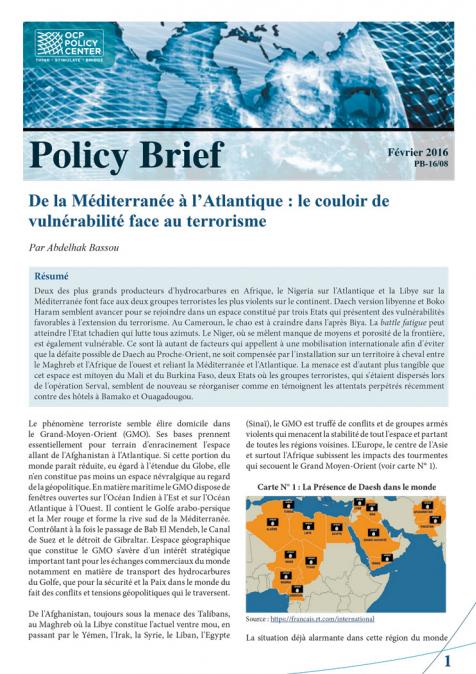
    Deux des plus grands producteurs d'hydrocarbures en Afrique, le Nigeria sur l'Atlantique et la Libye sur la Méditerranée font face aux deux groupes terroristes les plus violents sur le continent. Daech version libyenne et Boko Haram semblent avancer pour se rejoindre dans un espace constitué par trois Etats qui présentent des vulnérabilités favorables à l'extension du terrorisme. Au Cameroun, le chao est à craindre dans l'après Biya. La battle fatigue peut atteindre l'Etat tchadien ...
  • Authors
    February 23, 2016
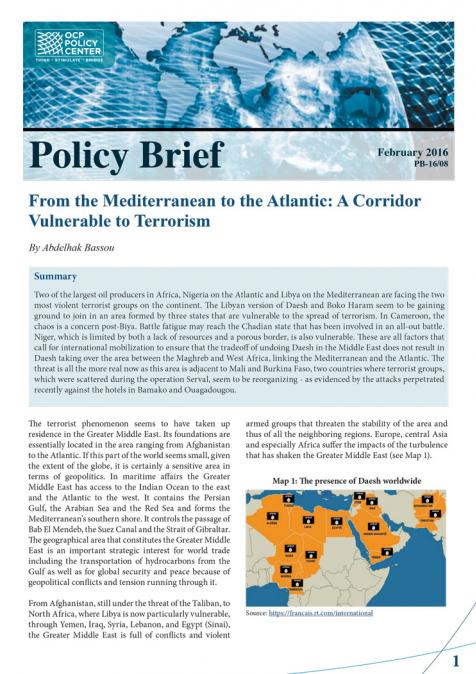
    Two of the largest oil producers in Africa, Nigeria on the Atlantic and Libya on the Mediterranean are facing the two most violent terrorist groups on the continent. The Libyan version of Daesh and Boko Haram seem to be gaining ground to join in an area formed by three states that are vulnerable to the spread of terrorism. In Cameroon, the chaos is a concern post-Biya. Battle fatigue may reach the Chadian state that has been involved in an all-out battle. Niger, which is limited by ...
  • Authors
    December 7, 2015
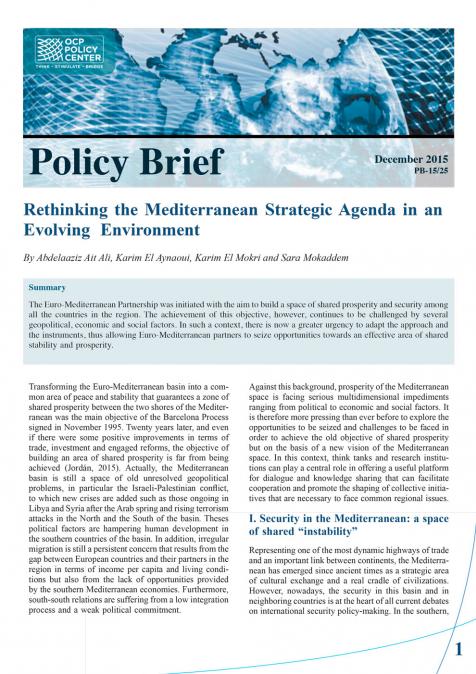
    The Euro-Mediterranean Partnership was initiated with the aim to build a space of shared prosperity and security among all the countries in the region. The achievement of this objective, however, continues to be challenged by several geopolitical, economic and social factors. In such a context, there is now a greater urgency to adapt the approach and the instruments, thus allowing Euro-Mediterranean partners to seize opportunities towards an effective area of shared stability and pr ...