The impact of COVID-19 in Ethiopia and Africa - Interview of Yonas Adeto by Mohammed Loulichki

April 9, 2020

‪In an interview with Mohammed Loulichki, the director of the Institute for Peace and Security Studies, Yonas Adeto, gives his thoughts on the measures taken in Ethiopia and Africa.

Speakers
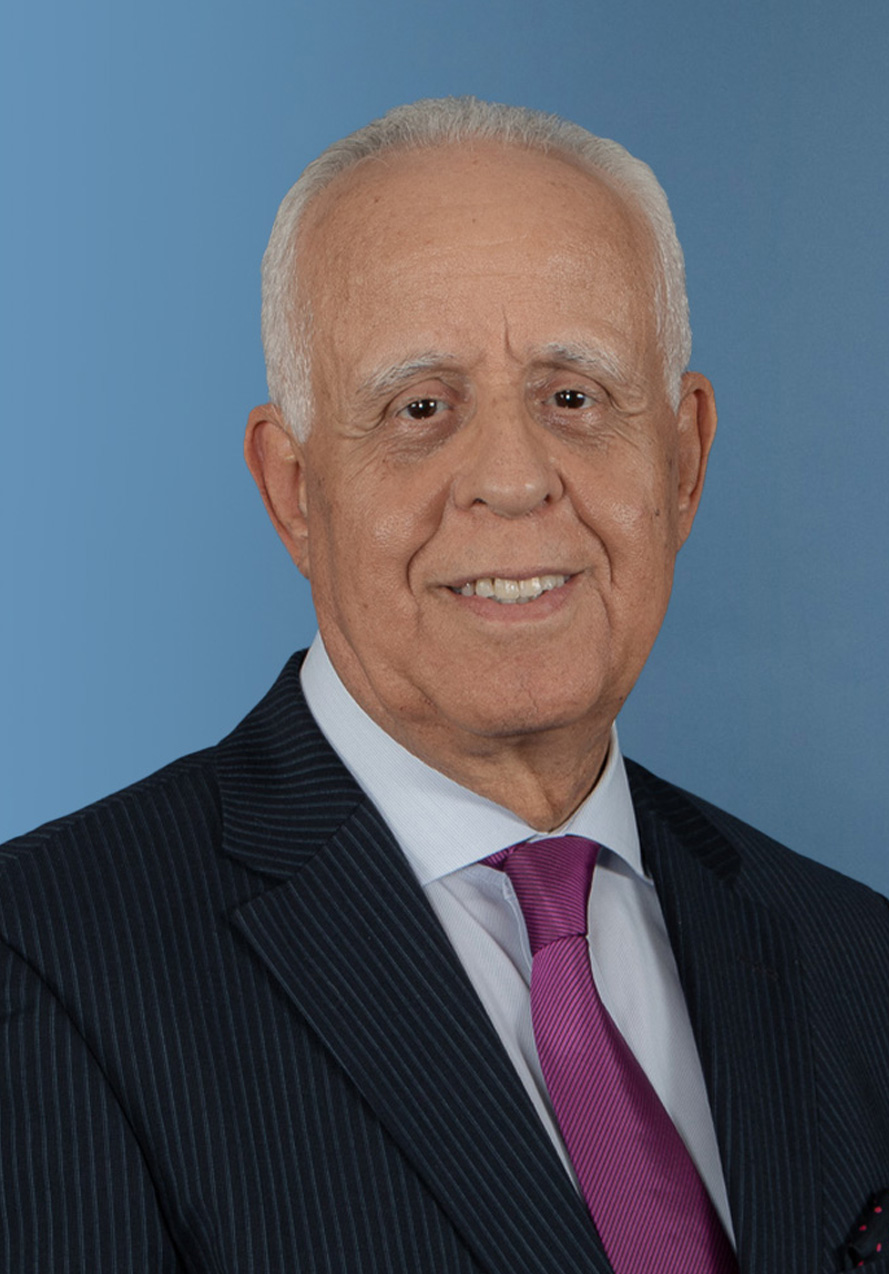
Mohammed Loulichki
Senior Fellow
Mohammed Loulichki is a Senior Fellow at the Policy Center for the New South and an Affiliate Professor at Mohammed VI Polytechnic University. He brings over 40 years of comprehensive experience in diplomacy, conflict resolution, and human rights. He has served in various roles including as a member and Deputy Head of the Moroccan delegation to the 3rd Conference on the Law of the Sea (1982-1990), Head of the Department of Legal Affairs and Treaties at the Ministry of Foreign Affairs (1988-1991), and General Director for Multilateral Affairs in the same ministry (2003-2006).   He also acted as Morocco's Ambassador to Hungary, Bosnia-Herzegovina, and Croatia (1995-1999), and was the Moroccan Government's Ambassador Coordinator with MINURSO (1999-2001). Furthermore, he se ...
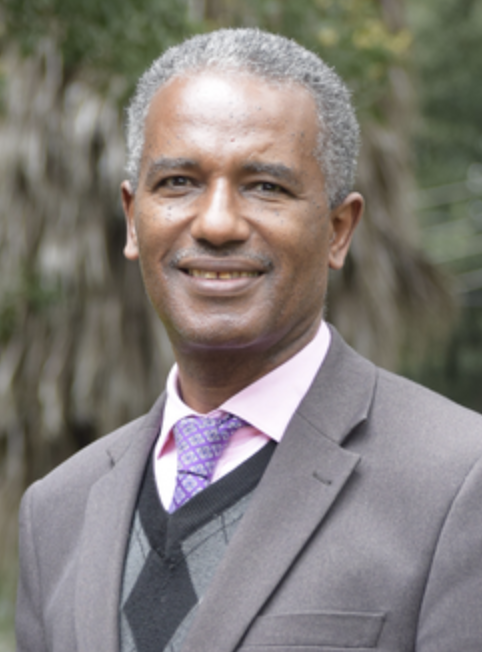
Yonas Adeye Adeto
Commissioner, the Ethiopian National Dialogue Commission and Former Director, Institute for Peace and Security Studies (IPSS)
Associate Professor of Peace Studies, Former Director, Institute for Peace and Security Studies (IPSS), Addis Ababa University (AAU); Current Commissioner, the Ethiopian National Dialogue Commission (ENDC). He has published peer reviewed articles in international journals, and edited book chapters on: Peacebuilding, Conflict Resolution, Security Sector Governance, Peace Education, Preventing Violent Extremism/Terrorism, Diplomacy, International Relations and Global as well as Regional Security. He has taught at Addis Ababa University over twenty-five years and is currently offering various courses related to theories, issues and praxis of Peace, Global and Regional Security to MA and PhD programmes at IPSS and elsewhere in Africa and beyond. Dr. Adeto holds a PhD in Peace Stud ...
RELATED CONTENT

  • Authors
    Jean-Yves Haine
    February 18, 2016
    Bien que les États-Unis soient moins présents en Afrique que la France, leurs politiques de sécurité sur le continent ont des objectifs souvent partagés et parfois poursuivis en commun. Si l’urgence des crises humanitaires a longtemps été au coeur des interventions étrangères, elle tend désormais à s’effacer au profit de la menace terroriste. L’émergence et l’expansion des groupes terroristes à caractère complexe, parfois rivaux les uns des autres, et se réclamant de l’islam radical ...
  • Authors
    Jean-Yves Haine
    February 18, 2016
    Although the United States is less active in Africa than France, their security policies on the continent often have shared objectives and are sometimes pursued jointly. While the urgency of humanitarian crises has been at the centre of foreign interventions for a long time, now it tends to give way to the terrorist threat. The emergence and expansion of terrorist groups with a complex character, which are sometimes rivals of each other and claiming to follow radical Islam, has incr ...
  • Authors
    Onasis Tharcisse A. Guedegbe
    February 17, 2016
    The Food and Agriculture Organization (FAO) consecrated the year 2015 as the International Year of Soils (IYS). Therefore, it has been a year intended to raise the consciousness of humanity about the importance of this resource (soil) and the need to preserve it to ensure sustainable and shared prosperity. The various stakeholders in the management and use of this resource, particularly those of the agricultural sector have been called to enhance their consideration of this fragile ...
  • Authors
    February 16, 2016
    West African countries, on top of which is Côte d’Ivoire, represent the bulk of the world supply of cocoa beans. From the end of the nineteenth century to their independence, and to recent times, their histories have been marked by boom and bust cycles that were sometimes desynchronized from one country to another, especially for Ghana and Côte d’Ivoire, due to differentiated political and economic backdrops. As for now, cocoa producers seem to be insulated from the rout which has h ...
  • February 8, 2016
    Brazil is in a good position to serve as a bridge to Africa and to reignite more cooperation between both sides of the South Atlantic. Brazil has increased its presence in Africa in recent years in terms of trade, investment, development cooperation, and political alliances with the goal to secure a greater say for the global South in the new world order that has been under construction since the of the Cold War. This has been pursued through financial support and proactive economic ...
  • Authors
    Nisrine Ouazzani
    January 6, 2016
    The economic growth of the African continent and its positioning as an emerging force is a reality no longer questioned. Optimism surrounding the Africa rising narrative is supported by a growing young workforce, an expanding middle class, new discoveries of natural resources and minerals, relative political stability and infrastructure developments. Economic and international financial actors now recognize the potential that the continent represents for the world economy, consider ...
  • Authors
    December 23, 2015
    Global economic growth is likely to be a little better in 2016 than this year’s lackluster outcome. The ongoing slow recovery in the United States and Europe is likely to continue. However, weakness in China as well as several large emerging markets, and sluggishness of world trade, mean that risks are weighted on the downside of this forecast. Morocco, which is reliant on European markets, is a heavy importer of oil, and whose currency has devalued in effective terms, should find t ...
  • Authors
    Youssef Amrani
    December 22, 2015
    La situation géopolitique prévalant actuellement dans le pourtour méditerranéen est difficile et complexe, en raison notamment, de l’apparition d’une nouvelle équation stratégique qui laisse craindre une nouvelle flambée de violence. Dans ce contexte perturbé, le Maroc, sous le leadership de SM le Roi Mohammed VI, s’est engagé dans un processus démocratique, fondé sur une approche inclusive qu’il mène avec foi et détermination. La Méditerranée conserve, certes, une triple vocation ...