The Future of Central Banking: Crypto, AI, and Monetary Policies

January 13, 2026

Central banks are facing a new era where crypto and AI are reshaping how money is managed. Traditional monetary policies are evolving to meet these technological and financial challenges. This episode explores the risks, opportunities, and innovations redefining the future of finance. Discover how technology is transforming the heart of global economic decision-making.

Speakers

Ahmed Ouhnini
Economist, Policy Center for the New South
Ahmed Ouhnini is an Economist at the Policy Center for the New South. His research area covers agricultural economics, human and social development. Previously, he has worked as a researcher at the Paris School of Economics (PSE) and has also a record of working in consulting services in Morocco. Ahmed holds an engineering Diploma in Agriculture and Rural Development from the National School of Agriculture of Meknes and a Master’s Degree in Law, Economics and Management from the Paris 1 Pantheon Sorbonne Institute of Development. ...
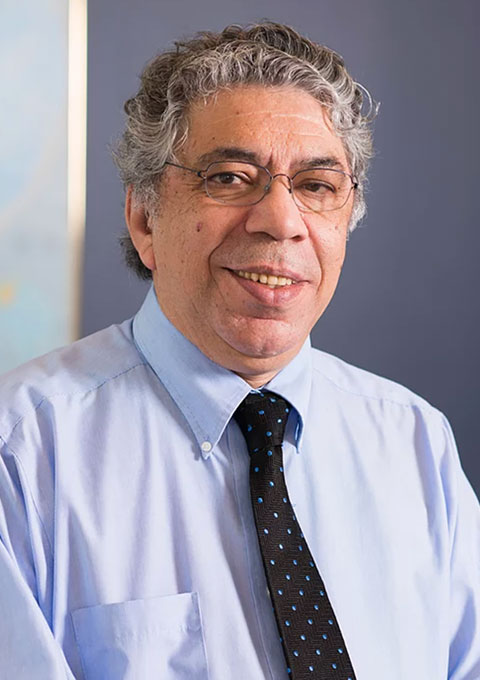
Otaviano Canuto
Senior Fellow
Senior Fellow at the Policy Center for the New South, Affiliate Professor at Mohammed VI Polytechnic University and Non-Resident Senior Fellow at Brookings Institute. Former Vice President and Executive Director at the World Bank, Executive Director at the International Monetary Fund (IMF) and Vice President at the Inter-American Development Bank. ...

RELATED CONTENT

  • Authors
    Mouhamadou Moustapha Ly
    April 18, 2019
    The economic picture in South Africa is clear and well known: low economic growth, high unemployment rates, and constrained fiscal policy threatened by rating agencies. The causes of such situations are diverse and both internal and external. How can growth be boosted? The African continental free trade area offers a great opportunity to South Africa to take advantage of the continent’s more than one billion of potential consumers and build a new growth paradigm based on export (rat ...
  • Authors
    Lorenzo Colantoni
    Giuseppe Montesano
    Nicolò Sartori
    April 12, 2019
    Access to electricity is a key factor for the future of the African continent. Energy poverty and lack of universal access to electricity services are, in fact, remarkably hurting human progress in Africa. Today, sub-Saharan Africa hosts 14 percent of the world’s population but 60 percent of the world’s people without access to electricity: of the more than 1 billion people globally who had no access to electricity, around 600 million lived in the region. In these conditions, many A ...
  • Authors
    March 14, 2019
    China's push for Latin American consumers reflects changes back home. Chinese financing in Latin America is changing. After becoming a major source of capital flows to Latin America and the Caribbean over the past 15 years, a more diverse range of investors has surfaced, interested in channeling resources towards infrastructure, governments and state companies. The profile of the Chinese investment in the region tracks the evolution of China’s economy as it moves toward a higher r ...
  • Authors
    March 7, 2019
    A well-functioning modern infrastructure is essential for social and economic development. It has the power to change the quality of life of populations as well as the prospects of businesses. Despite developing Asia’s remarkable economic performances since the 1980s, the region still faces important difficulties in delivering adequate infrastructure services. “Over 400 million Asians do not have electricity access; 300 million live without safe drinking water and 1.5 billion withou ...
  • Authors
    Mouhamadou Moustapha Ly
    Bertrand Bio Mama
    Onasis Tharcisse A. Guèdègbé
    March 6, 2019
    L’évaluation d’impact des projets et programmes de développement est un exercice qui est de plus en plus adopté dans les pays en développement notamment ceux d’Afrique subsaharienne. Entre autres facteurs explicatifs, il y a la rareté des ressources allouées au développement mais aussi la nécessité de mieux connaître les contraintes structurelles au développement. Saisissant l’occasion de la première conférence de West Africa Capacity building and Impact Evaluation Program (WACIE-3i ...
  • Authors
    Afrique Contemporaine
    February 28, 2019
    Dans son édition n°266, la revue scientifique Afrique Contemporaine consacre son Dossier à la question de l’industrialisation en Afrique. D’après la Rédaction de la publication, le choix de la thématique s’imposait d’autant plus que « la recomposition de l’ordre mondial repose la question de la place du continent à l’échelle planétaire, en l’occurrence sur le plan économique, social et environnemental tout à la fois. » Outre la coordination du Dossier, Dr. Karim Et Aynaoui, Préside ...
  • Authors
    Yassine Msadfa
    February 25, 2019
    La transformation structurelle d’une économie demeure un point de passage nécessaire pour toute nation qui souhaite gravir les échelons du développement, cette transformation est souvent tributaire de la capacité d’une économie à s’ériger d’une société agraire de subsistance, dans son stade initial, vers une économie de productivité. Pour ce qui est du Maroc, le débat a pris de l’ampleur quant à la capacité des dynamiques actuelles à accélérer le rythme de l’activité économique au p ...
  • Authors
    January 31, 2019
    Without reforms, financial markets’ optimism may crumble – and bring the house down. Judging by the reaction of financial markets, the Brazilian economy started the year at high speed. The real is among the world’s best-performing currencies so far in 2019 and the main stock market index Ibovespa hit a string of record highs leading into last week, when it broke the 97,000-point mark. Future interest rates have fallen sharply.  Foreign investors are buying in as well. The pre ...
  • Authors
    Tiago Ribeiro dos Santos
    December 3, 2018
    Daron Acemoglu and James Robinson caught policymaker’s attention to the critical role of institutions for development. Their work gives too much emphasis to the prospects of revolution, however. A reading of the World Bank’s World Development Report of 2017 points to directions that all actors involved in the process, whether domestic or international, elite or non-elite, can take to improve societies. ...
  • Authors
    Yassine Msadfa
    November 5, 2018
    Il y a une dizaine d’années, le nombre et la complexité des taches que pouvaient effectuer les robots semblaient encore limités. Aujourd’hui, certains robots, munis d’une intelligence artificielle développée, réussissent à apprendre et à exceller dans des jeux de stratégie assez complexes, comme les échecs ou le jeu de GO. Le développement de la robotique, de l’intelligence artificielle et de l’automatisation, en général, s’est fait de façon relativement rapide, incitant plusieurs e ...