(FR) The financial and banking industry in Morocco

May 21, 2026

Cette interview revient sur les enjeux du système financier marocain, son rôle dans le développement économique et les défis liés au financement des TPME. Le professeur Ben Moussa analyse également les limites du modèle bancaire actuel, l’internationalisation des banques marocaines en Afrique, ainsi que les réformes nécessaires pour renforcer le financement de l’économie et accompagner les grands projets stratégiques du Royaume
 

Speakers
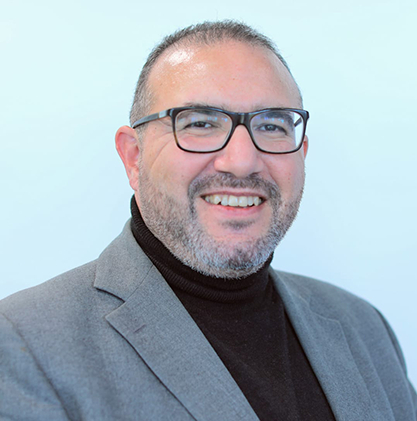
Mohammed Benmoussa
Affiliate Professor, Mohammed VI Polytechnic University, Rabat
Mohammed Benmoussa is a Moroccan economist and senior consultant in economic policy, taxation, and public finance, as well as a former banker and capital market practitioner. He is Professor of Corporate and Market Finance at Mohammed VI Polytechnic University. In December 2019, he was appointed by HM King Mohammed VI to the Special Commission on the New Development Model. He is also President of the Forum of Progressive Economists, President of the Damir Movement and the La Samir Front. He previously served as President of the Brokerage Firms Association and Vice-President of the Casablanca Stock Exchange. ...
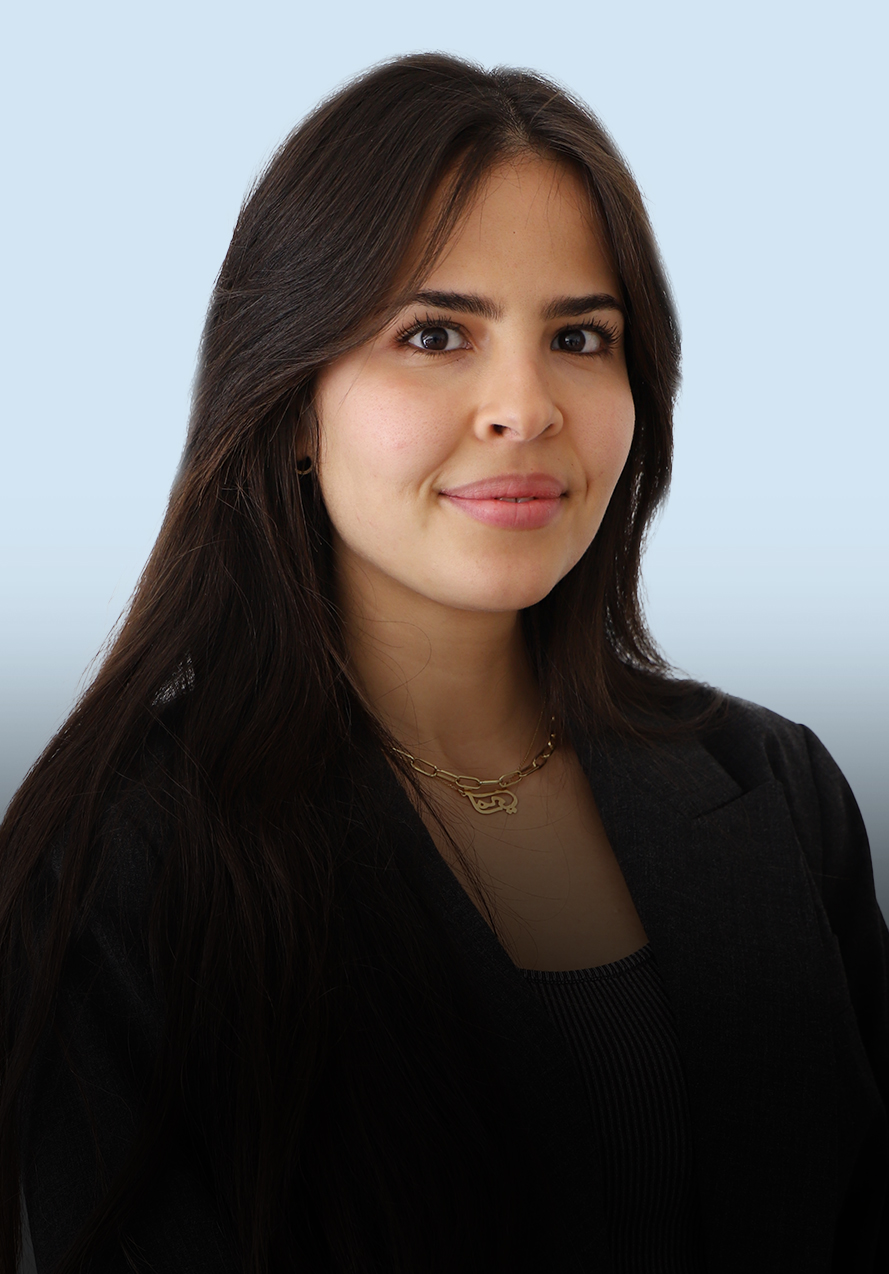
Oumayma Bourhriba
Senior Economist
Oumayma Bourhriba is a Senior Economist at the Policy Center for the New South (PCNS).At the PCNS, which she joined in 2019, Oumayma Bourhriba conducts research focusing on macroeconomic policies and international trade, with a particular emphasis on services.She has contributed to major publications on the Moroccan economy, such as the IMF’s Morocco's Quest for Stronger and Inclusive Growth (2023) and the World Bank’s Trade Policy in Morocco: Taking Stock and Looking Ahead (2023). Beyond her research, she has coordinated the Africa Economic Symposium, one of the flagship convenings organized by the PCNS.Oumayma Bourhriba holds a master’s degree in applied economics from University Mohammed V (UM5), where she is currently a PhD candidate.She is fluent in Arabic, English, ...

RELATED CONTENT

  • April 02, 2016
    Ce podcast est délivré par Guntram Wolff et Karim El Aynaoui. L’émission Tableau de Bord d’Atlantic Radio a reçu samedi 2 avril 2016 M. Guntram Wolff, directeur de Bruegel, et M. Karim El ...
  • March 31, 2016
    In the context of the strategic partnership between OCP Policy Center and the German Marshall Fund of the United States, the Policy Center is a key partner for the Brussels Forum organized by GMF. - Dr. Karim El Aynaoui, Managing Director, OCP Policy Center - Amb. Masafumi Ishii, Amba...
  • Authors
    Mohamed Hamza Sallouhi
    March 23, 2016
     Partie 1. Le ralentissement économique de la Chine : une transition inquiétante  L’incertitude sur les marchés financiers, la transition de l’économie chinoise vers un modèle de croissance moins extraverti et le ralentissement du rythme de la croissance des pays émergents, sont autant de facteurs qui fragilisent considérablement une croissance mondiale durable et synchronisée. Dans ce contexte, l’OCP Policy Center a tenu une table ronde animée par Patrick Artus ...
  • Authors
    Zouhair Aït Benhamou
    March 2, 2016
    Discrepancies in output fluctuations between emerging and developed economies are well documented in the literature. Differences however within developing economies have not been sufficiently scrutinised. This paper argues that global and regional shocks primarily drive the business cycle in emerging economies, and provides estimated results for cycle variance decomposition. The paper also offers a theoretical framework to check on the set of stylized facts common and specific to em ...
  • February 22, 2016
    If one opens the newspapers nowadays, Brazil will come out as a melting opportunity. The country is currently facing its largest economic crisis, mostly resulting from a negative political environment where the current Administration has been deeply swollen by Brazil´s largest corruption scandal, the so-called Lava Jato (Car Wash) Operations, whose investigations have brought to light the fact that billions of US$ dollars were being used for campaign financing, illicit enrichment an ...
  • Authors
    January 12, 2016
    Q: The U.S. Federal Reserve on Dec. 16 raised interest rates, ending what Fed Chairwoman Janet Yellen called an “extraordinary seven-year period” during which policymakers kept the federal funds rate near zero in an effort to support the economy. How will the Fed’s action affect Latin American economies, many of which are struggling with anemic growth and low prices for their commodity exports? How will the interest rate hike affect Latin American countries’ ability to pay off ...
  • Authors
    December 23, 2015
    Global economic growth is likely to be a little better in 2016 than this year’s lackluster outcome. The ongoing slow recovery in the United States and Europe is likely to continue. However, weakness in China as well as several large emerging markets, and sluggishness of world trade, mean that risks are weighted on the downside of this forecast. Morocco, which is reliant on European markets, is a heavy importer of oil, and whose currency has devalued in effective terms, should find t ...