(FR) The financial and banking industry in Morocco

May 21, 2026

Cette interview revient sur les enjeux du système financier marocain, son rôle dans le développement économique et les défis liés au financement des TPME. Le professeur Ben Moussa analyse également les limites du modèle bancaire actuel, l’internationalisation des banques marocaines en Afrique, ainsi que les réformes nécessaires pour renforcer le financement de l’économie et accompagner les grands projets stratégiques du Royaume
 

Speakers

Mohammed Benmoussa
Affiliate Professor, Mohammed VI Polytechnic University, Rabat
Mohammed Benmoussa is a Moroccan economist and senior consultant in economic policy, taxation, and public finance, as well as a former banker and capital market practitioner. He is Professor of Corporate and Market Finance at Mohammed VI Polytechnic University. In December 2019, he was appointed by HM King Mohammed VI to the Special Commission on the New Development Model. He is also President of the Forum of Progressive Economists, President of the Damir Movement and the La Samir Front. He previously served as President of the Brokerage Firms Association and Vice-President of the Casablanca Stock Exchange. ...
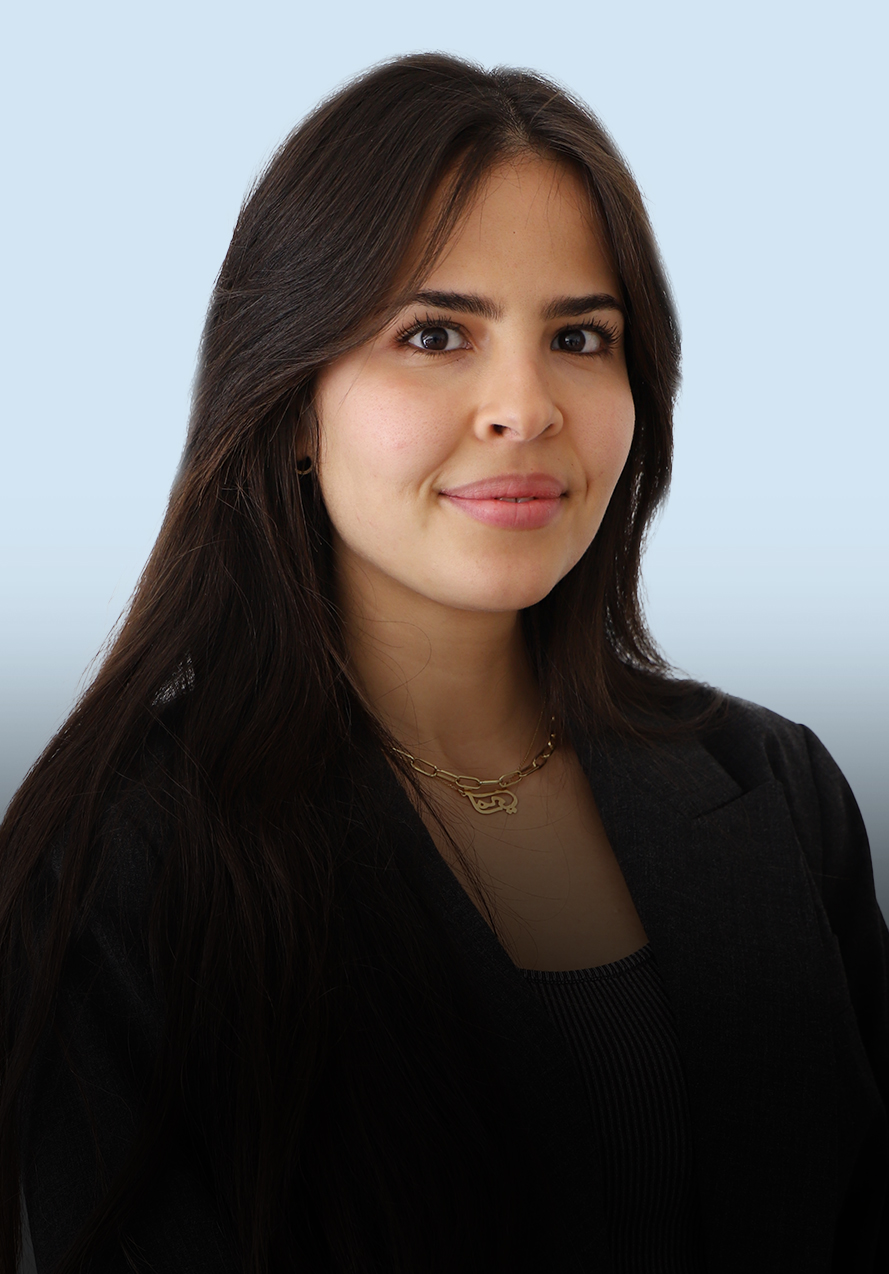
Oumayma Bourhriba
Senior Economist
Oumayma Bourhriba is a Senior Economist at the Policy Center for the New South (PCNS).At the PCNS, which she joined in 2019, Oumayma Bourhriba conducts research focusing on macroeconomic policies and international trade, with a particular emphasis on services.She has contributed to major publications on the Moroccan economy, such as the IMF’s Morocco's Quest for Stronger and Inclusive Growth (2023) and the World Bank’s Trade Policy in Morocco: Taking Stock and Looking Ahead (2023). Beyond her research, she has coordinated the Africa Economic Symposium, one of the flagship convenings organized by the PCNS.Oumayma Bourhriba holds a master’s degree in applied economics from University Mohammed V (UM5), where she is currently a PhD candidate.She is fluent in Arabic, English, ...


RELATED CONTENT

  • Authors
    Aleksandr V. Gevorkyan
    August 15, 2016
    Emerging market economies (EM) as a special class of financial assets have recently been subject to two competing tales. On the one hand, there is evidence of continued financial deepening and further integration within the global financial system, while the offer of higher yields remains hard to find elsewhere. On the other hand, there are frequent bouts of fear of systemic unwinding of positions triggered by investors “exiting” EM that exhibit signs of weak or unclear macroeconomi ...
  • Authors
    July 21, 2016
    The pace of global growth has tapered off since the crisis and the ensuing rebound. The concept of ‘secular stagnation’ was first used in 1938 by Alvin Hanson in reference to the American economy during the Great Depression. It refers to a situation where growth is slow over a protracted period, underemployment prevails and inflation is low. In such situations, the propensity to save tends to increase as a result of uncertainty and pessimism, and liquidity – which depends on interba ...
  • Authors
    Volume 69, Issue 3
    Introduction by Rabah Arezki
    Yaw Nyarko
    July 14, 2016
    OCP Policy Center and its partners, the International Monetary Fund (IMF), and the Center for Technology and Economic Development (CTED) at the New York University are pleased to announce the publication of a Special Issue on "Food Price Volatility and its Consequences" in Oxford Economic Papers. The papers selected in this special issue were first presented in February 2014 at an international conference organized in Rabat in collaboration with the IMF's Research Department and &n ...
  • July 13, 2016
    Housing is part of the United Nations 11th Sustainable Development Goal, which is to “make cities inclusive, safe, resilient and sustainable”. One of the most important targets of such a goal is to “ensure access for all to adequate, safe and affordable housing1 and basic services and upgrade slums”. Since 2007, the world has faced rising inequality, insecurity and climate change impact. According to UN Habitat, 54% of the world´s population currently live in cities. By 2050, this n ...
  • Authors
    July 11, 2016
    The Chinese economy is rebalancing while softening its growth pace. China’s spillovers on the global economy have operated through trade, commodity prices, and financial channels. The global reach of the effects from China’s transition have recently been illustrated in risk scenarios simulated for Latin American and the Caribbean economies.  The Chinese economy is rebalancing while softening its growth pace… The weight of the Chinese economy in the global economy rose on its ...
  • June 30, 2016
    Latin American economies are facing two historically defining challenges. First, how to cope with the end of the commodities “super-cycle” and the prospect of a long period of low prices for basic natural resources. After all, raw materials production and semi-industrialized goods encompass most of their comparative advantages. Second, and even more exacting, how to adjust to the present disruptive transition from an old to a new global economic and social model. The 20th century in ...
  • Authors
    June 27, 2016
    The referendum in favor of the exit of Britain from the European Union (“Brexit”) marks a sad day for Britain and for Europe. It represents a victory of nationalism over the liberal economic order, in the country that inspired the ideas that lie at its foundations. The referendum probably signals the end of an experiment widely supported by the young, the elites and most economists, but which has failed in the eyes of the majority of British people. For Britain, the economic risks a ...