( EN ) Plenary VII: The Next Financial Crisis

December 14, 2019

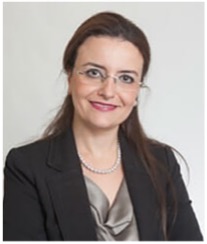
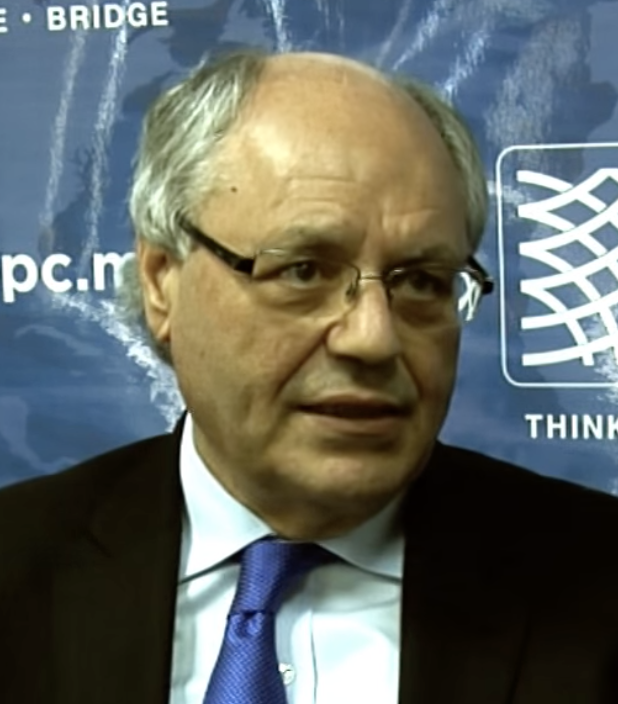
Moderator Alan Kasujja, Lead Presenter, Newsday, BBC News Speakers Rym Ayadi, Founder and Scientific Director, Euro-Mediterranean Network for Economic Studies – EMNES Otaviano Canuto, Senior Fellow, Policy Center for the New South Harinder Kohli, Founding Director and Chief Executive, Emerging Markets Forum Edward Scicluna, Minister of Finance, Malta

Speakers
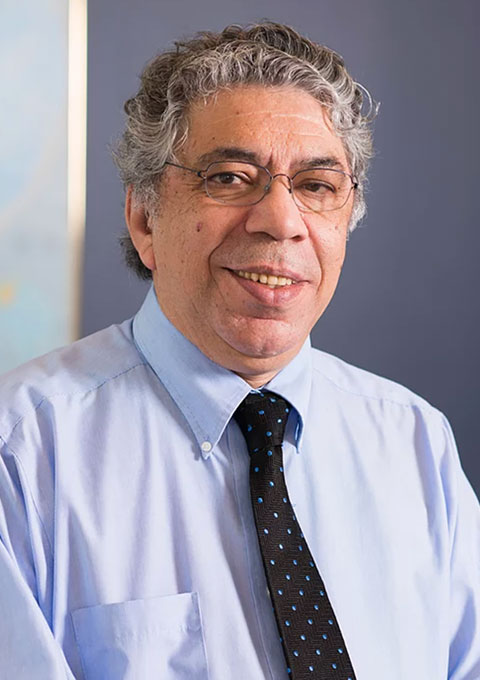
Otaviano Canuto
Senior Fellow
Senior Fellow at the Policy Center for the New South, Affiliate Professor at Mohammed VI Polytechnic University and Non-Resident Senior Fellow at Brookings Institute. Former Vice President and Executive Director at the World Bank, Executive Director at the International Monetary Fund (IMF) and Vice President at the Inter-American Development Bank. ...

Rym Ayadi
Founder and Scientific Director, Euro-Mediterranean Economists Association
Rym Ayadi is the Founder and President of the Euro – Mediterranean Economists Association (EMEA). She is Founder and Director of the Euro-Mediterranean and African Network for Economic Studies (EMANES). She is Senior Advisor at the Centre for European Policy Studies (CEPS); Professor at the Bayes Business School, City University of London and Member of the Centre for Banking Research (CBR); Chair of the European Banking Authority – Banking Stakeholders Group (EBA- BSG). She is also Associated Scholar at the Centre for Relationship Banking and Economics (CERBE) at LUMSA University in Rome. ...

Harinder Kohli
Founding Director and Chief Executive, Emerging Markets Forum (EMF)
...

RELATED CONTENT

  • Authors
    May 13, 2026
    The passage of the US Genius Act in July 2025 has spurred the growth of stablecoins, mostly dollar-based, helping to modernize and improve payment transactions. The market capitalization of stablecoins increased rapidly to $317 billion in April 2026 and is expected to grow to $3-4 trillion by 2030. While still modest in scale, stablecoins—if fully developed, especially in the face of potentially strong competition from tokenized bank deposits—could have multiface ...
  • May 12, 2026
    Why only globally connected, knowledge-intensive services — not local services — can drive long-term development and productivity growth. This Commentary was originally published on stimson.org For decades, manufacturing was considered the indispensable engine of economic development, creating jobs, boosting productivity, and integrating countries into global markets. But automation, robotics, and intensifying global competition have made industrialization far harder for d ...
  • May 12, 2026
    Cet épisode analyse le poids du secteur informel dans l’économie marocaine et ses principaux défis. Les intervenants expliquent que l’informel constitue à la fois un mécanisme de survie pour une grande partie de la population et un frein à la productivité, à la fiscalité et à la protect...
  • Authors
    Liel Maghen
    May 11, 2026
    This Paper was originally published on mitvim.org.il This paper argues that the reconstruction of Gaza will depend not only on the amount of funding mobilized, but on how financing is structured, governed, and anchored within a broader politi`cal context. In a setting shaped by movement restrictions and weak institutions, financial design is not neutral but shapes priorities, distributes power, and determines what can be implemented on the ground. The paper examines the key cha ...
  • Authors
    Hajar Kabbach
    May 11, 2026
    Closing Morocco's gender employment gap could increase GDP per capita by 40-50 percent; yet female labor force participation stands at just 19 percent—among the lowest in the world and still declining. This policy paper argues that investing in the care economy is not merely a social expenditure, but a productive economic strategy with measurable returns. Drawing on international evidence from Uruguay, Mexico, Colombia, and India, the brief demonstrates that well-designed care syste ...
  • May 7, 2026
    Le rapport de diagnostic du secteur privé au Maroc met en lumière les principaux défis qui freinent encore l’investissement privé et la création d’emplois, malgré les avancées réalisées en matière de stabilité macroéconomique, d’infrastructures et de réformes. Il identifie notamment la ...
  • May 6, 2026
    Dans cette interview, l’évolution de la politique industrielle marocaine est analysée : planification étatique (1960–1980), libéralisation (1980–1990), puis intégration dans les chaînes de valeur mondiales (à partir des années 2000). Aujourd’hui, face au protectionnisme et au nearshorin...
  • May 5, 2026
    Présentation du rapport « Croissance et emploi au Maroc » par Javier Diaz Cassou, Économiste Senior à la Banque mondiale, qui analyse les dynamiques de croissance de l’économie marocaine et leur impact sur la création d’emplois. Le rapport met en évidence les principaux moteurs de la cr...