(EN) AD Connect / Welcoming Remarks / Opening Conversation / Plenary I: The Prospects for Populism

December 12, 2019

Speaker Lilia Rizk, Emerging Leaders Program Coordinator, Policy Center for the New South Welcoming Remarks Speaker Karim El Aynaoui, President, Policy Center for the New South Opening Conversation: Living in the Age of Uncertainty Moderator Richard Lui, Journalist and News Anchor, MSNBC Speaker Olusegun Obasanjo, Former President, Federal Republic of Nigeria Plenary I: The Prospects for Populism Moderator Richard Lui, Journalist and News Anchor, MSNBC Speakers María Eugenia Brizuela de Ávila, Former Minister of Foreign Affairs, El Salvador Ana Palacio, Former Minister of Foreign Affairs, Spain J. Peter Pham, United States Special Envoy for the Great Lakes Region of Africa Paulo Portas, Former Minister of Foreign Affairs, Portugal Ignacio Walker, Former Minister of Foreign Affairs, Chile
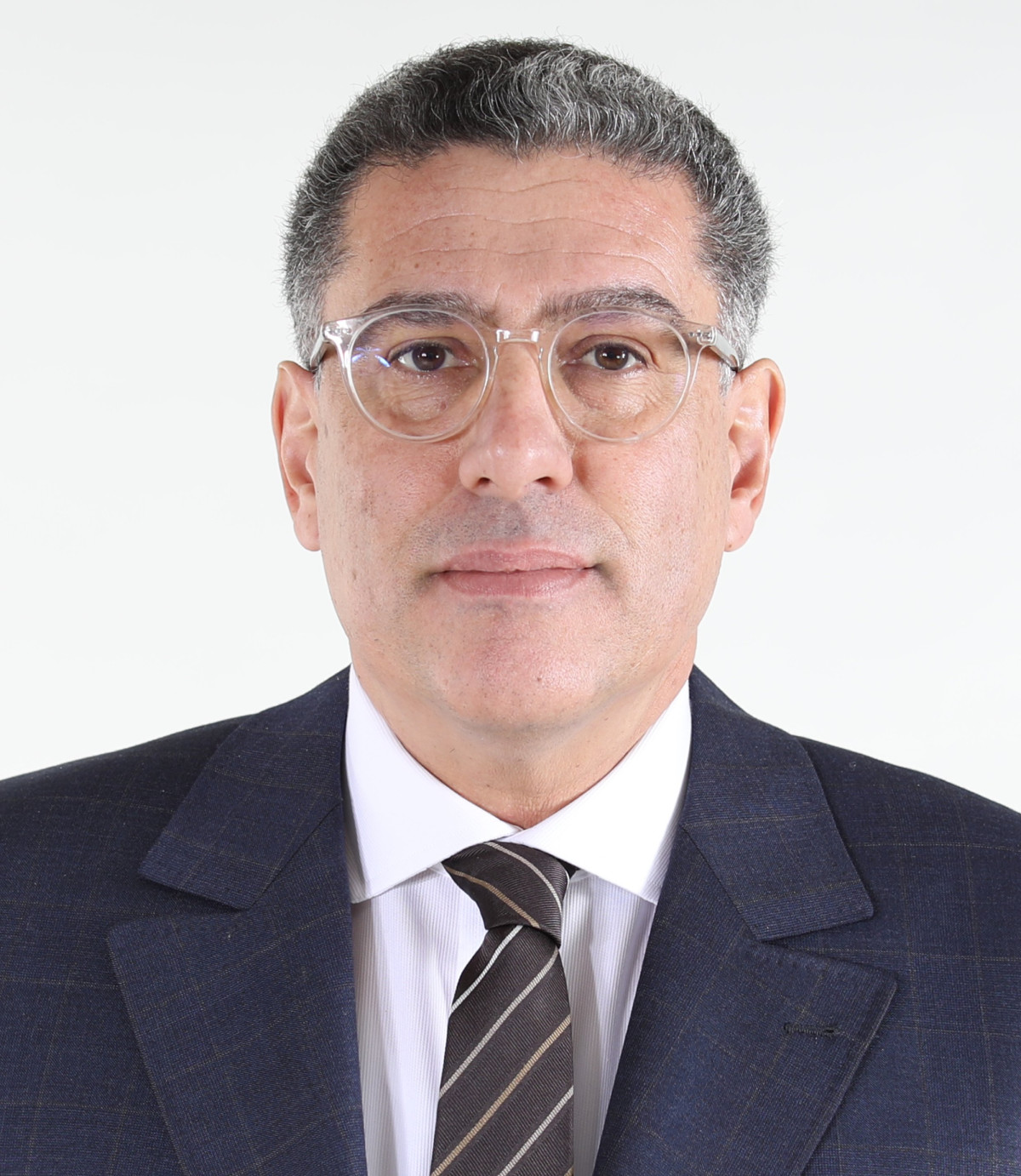

Speakers
Karim El Aynaoui
Executive President
Karim El Aynaoui is Executive President of the Policy Center for the New South. He is also Executive Vice-President of Mohammed VI Polytechnic University and Dean of its Humanities, Economics and Social Sciences Cluster. From 2005 to 2012, he worked at the Central Bank of Morocco (Bank Al-Maghrib) as Director of Economics, Statistics, and International Relations. He also created and headed the Research Department and served as a member of the Governor’s Cabinet. Previously, he worked for eight years at the World Bank as an economist for its regional units of the Middle East and North Africa and Africa. Karim El Aynaoui has published books and journal articles on macroeconomic issues in developing countries. He has co-authored works on growth and the labor market in M ...
Lilia Rizk
Chargée de Mission to the Executive President
...
Ana Palacio
Spain
Former Foreign Affairs Minister, Kingdom of Spain
...
J. Peter Pham
Director, Africa Center, Atlantic Council of the United States
J. Peter Pham is the director of the Atlantic Council's Africa Center. He is also the incumbent vice president of the Association for the Study of the Middle East and Africa (ASMEA), and is editor-in-chief of ASMEA's Journal of the Middle East and Africa. Pham was previously senior vice president of the National Committee on American Foreign Policy, and editor of its bimonthly journal, American Foreign Policy Interests. He was also a tenured associate professor of justice studies, political science, and Africana studies at James Madison University in Harrisonburg, Virginia, where he was director of the Nelson Institute for International and Public Affairs. Pham is the author of more than 300 essays, and reviews, and the author, editor, or translator of over a dozen books, most ...
Paulo Portas
Former Deputy Prime Minister, Former Minister of Foreign Affairs, Portugal
...

RELATED CONTENT

  • Authors
    July 31, 2026
    Ethiopia continues to struggle to lay the economic foundations of food security for all, more than 30 years after first adopting the East Asian Developmental State Model (EADS) under Zenawi (1911-2012), continued under Hailemariam Desalegn (2012-April 2018), and later shifting toward a neo-liberal, Washington consensus-oriented approach under Abiy Ahmed (2018-present). The achievements recorded under the EADS approach—particularly double-digit annual growth, substantial poverty ...
  • Authors
    July 28, 2026
    The term “K-shaped recovery” was introduced to describe the economic recovery from the recession triggered by the Covid-19 pandemic. It refers to the uneven and divergent growth pattern between leading industries or sectors (the upper arm of the letter K—mainly the high-technology sector) and laggards, or the rest of the economy (the lower arm—the traditional industries). Since then the term has become popular in portraying divergent growth patterns within and between countries, esp ...
  • Authors
    July 27, 2026
    Is Europe Prepared for War?European public opinion is moving from treating a major conflict as unthinkable to regarding it as a possibility for which governments must prepare. Attention is increasingly focused on Russian hybrid operations, vulnerabilities in critical infrastructure and the risk of fragmentation within NATO. European defence policy is consequently undergoing a rapid transition from post-Cold War complacency towards preparations for high-intensity warfare. Recent ...
  • July 15, 2026
    تناقش هذه الحلقة واقع المنافسة في الأسواق المغربية وعلاقتها بتطور الأسعار والقدرة الشرائية للمواطنين. كما تسلط الضوء على أبرز العوامل المؤثرة في الأسعار، سواء المرتبطة بالمنافسة أو بتكاليف الإنتاج وسلاسل التوزيع. ويتناول الحوار دور مجلس المنافسة والسلطات العمومية والفاعلين الاقتصاديين ف...
  • Authors
    July 15, 2026
    We Are Watching You In April 2026, the UK Ministry of Defence revealed that it had tracked a covert Russian submarine operation apparently intended to map critical undersea cables and pipelines in the North Atlantic and the North Sea. A Russian attack submarine and two specialised intelligence vessels operated by the Main Directorate of Deep-Sea Research, commonly known as GUGI, were reportedly monitored for four weeks by the Royal Navy, including HMS St Albans and P-8 Poseidon ...
  • Authors
    Mohamed Benabid
    July 7, 2026
    The rise of generative artificial intelligence technologies is profoundly reshaping the dynamics of disinformation on a global scale. On the African continent, this development is unfolding against a particularly tense backdrop: accelerating digital adoption, persistent institutional vulnerabilities, and an unprecedented series of elections. Synthetic disinformation—deepfakes, automated content, coordinated campaigns—is not an isolated phenomenon there, but acts as a multiplier of p ...
  • July 6, 2026
    Cette interview explore les grands enjeux de l’urbanisation au Maroc, en mettant l’accent sur les défis de gouvernance, de planification et de politiques publiques. Elle revient sur l’évolution des modèles de développement urbain, les effets du changement climatique sur les villes, ains...
  • July 3, 2026
    Depuis plusieurs semaines, l'Afrique du Sud vivait au rythme d'une échéance sans existence légale. Au 30 juin, des mouvements anti-immigration avaient fixé la date à laquelle les étrangers en situation irrégulière devaient, selon eux, avoir quitté le pays. Le gouvernement Sud-africain a même dû démentir qu'il s'agissait d'une directive officielle du ministère de l'Intérieur. L’initiative a pourtant produit des effets importants : des milliers de ressortissants mozambicains, malawite ...