Economic Nationalism in the Era of Geofragmentation: What Does it Mean for Developing Countries?

December 6, 2023

The Policy Center for the New South is organizing a webinar on “Economic Nationalism in the Era of Geofragmentation: What Does it Mean for Developing Countries?” on December 6th, 2023 at 3.00 PM (GMT+1), in the framework of the PCNS Webinar Series – The Global Economy in Transition: Implications for Developing Countries.

The global economic landscape is witnessing a surge in economic nationalism and geofragmentation, presenting challenges for developing countries. The Policy Center for the New South is organizing a webinar to delve into the potential impact of these trends on developing nations worldwide.

This webinar aims to explore how economic nationalism policies, including protectionism and import substitution, may result in heightened trade barriers and restrictions on foreign investment. Such developments could diminish the integration of developing countries into the global economy, with consequential effects on growth and poverty alleviation.

Moreover, the webinar will assess the influence of rising economic nationalism and geofragmentation on developing countries' endeavors to integrate into regional trading blocs. While the African Continental Free Trade Area (AfCFTA) aspires to establish a single market for goods across the continent, the emergence of regional trading blocs in other parts of the world may pose challenges to global economic integration efforts.

The potential implications extend to the realm of investment, where developing countries heavily depend on foreign investment for economic development. Any obstacles to such investment could impede growth prospects. Additionally, the industrialization efforts of developing nations may be affected if economic nationalism policies stimulate the establishment of domestic industries that could compete with their nascent industrial sectors.
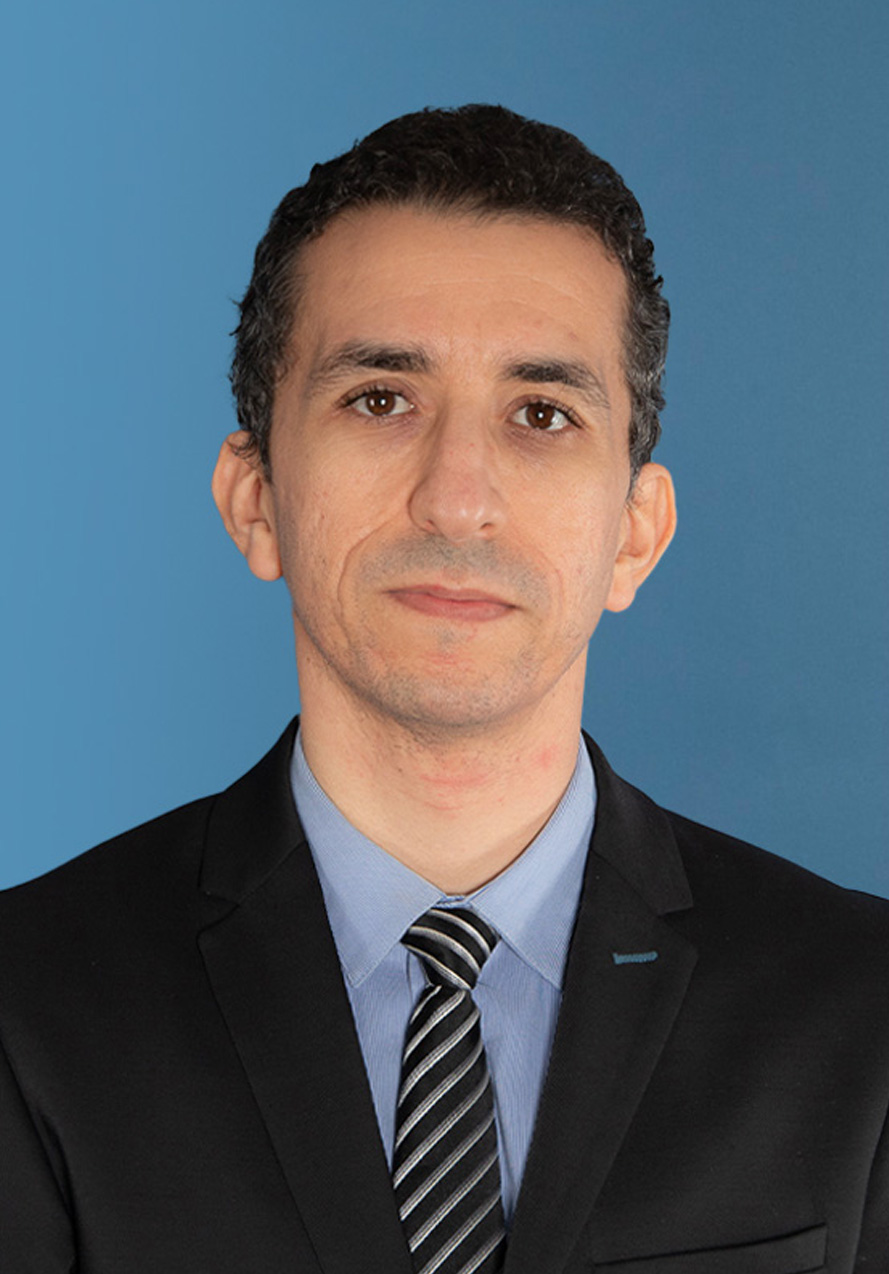

Speakers
Abdelaaziz Ait Ali
Head - Research in Economics
Abdelaaziz Ait Ali is a principal Economist and head of the Research Department at the Policy Center for the New South. He joined the Center in 2014 after five years of experience at the Central Bank of Morocco. He worked as an economist in the International Studies and Relations Department and was analyzing the real estate price index and financial asset prices for monetary policy and financial stability purposes. Since then, Abdelaaziz has focused on cyclical and structural issues of the Moroccan economy, including macroeconomic management and industrial policy design. He has published articles on the reform of the exchange rate regime in the Moroccan economy and its implications for macroeconomic regulation, as well as on the evolution of the macroeconomic framework over th ...
Guntram Wolff
Director, Bruegel , Belgium
Guntram Wolff is Director of Bruegel. His research focuses on the European economy and governance, on fiscal and monetary policy and global finance. He regularly testifies to the European Finance Ministers' ECOFIN meeting, the European Parliament, the German Parliament (Bundestag) and the French Parliament (Assemblée Nationale). From 2012-16, he was a member of the French primeminister's Conseil d'Analyse Economique.  Guntram Wolff is also a member of the Solvay Brussels School's international advisory board of the Brussels Free University. He joined Bruegel from the European Commission, where he worked on the macroeconomics of the euro area and the reform of euro area governance. Prior to joining the Commission, he was coordinatin ...

RELATED CONTENT

  • Authors
    Rafael Benke
    December 14, 2016
    The government of Argentina’s new president, Mauricio Macri, has many challenges ahead. In the initial 10 months of his government, he has devalued the currency, lifted significant trade and capital barriers, and launched conversations with international investors and creditors, and has changed international perceptions toward Argentina. Macri’s election immediately generated a positive reaction from the private sector toward the new government. However, indicators for 2016 show a w ...
  • Authors
    December 6, 2016
    In September 2015, Heads of State met at the United Nations General Assembly to announce the end of the term of “Millennium Development Goals” (MDGs) and commit to a new set of Sustainable Development Goals (SDGs). The 17 SDGs were written by disciplinary teams, and as they are formulated now, they recognize the interlinkages between well-being, economic prosperity and a healthy environment. The SDGs include a wide spectrum of topics and issues: food security, poverty, gender inequa ...
  • Authors
    Edité par
    Idriss El Abbassi
    Lahcen Oulhaj
    Aziz Ragbi
    November 28, 2016
    Le présent ouvrage se propose d’apporter quelques éléments d’appui supplémentaires aux policy-makers pour une meilleure identification des défaillances des marchés au Maroc et une mise en place d’une stratégie de diversification et une politique industrielle efficientes, sans toutefois tomber dans la situation inverse où une stratégie mal définie et des outils mal choisis peuvent se traduire par une défaillance des politiques publiques. L’appréhension des difficultés qu’éprouve l’é ...
  • Authors
    Matheus Cavallari
    November 15, 2016
    U.S. assets reacted in a see-saw fashion to Donald Trump’s victory. Stock futures first dove deeply before climbing up to strong gains as investors developed a view on what kind of economic policy president-elect Trump is likely to pursue. They seem to be pricing in an expectation of higher growth and inflation, as well as an earlier Federal Reserve exit from ultra-low interest rates and from holding U$ 4.45 trillion of Treasury bonds. Shock waves hit international financial market ...
  • Authors
    Prakash Loungani
    November 9, 2016
    The global unemployment rate inched up to 5.7 percent this year after several years of decline. This reflects sharp increases in unemployment in the Latin America and Caribbean region and among fuel-exporting countries. Hence, while the total number of people unemployed around the globe will remain somewhat stable at about 175 million, several million people will be added to the ranks of the unemployed in these two groups of countries. Unemployment rates are expected to decline in m ...
  • Authors
    November 7, 2016
    Despite the gloomy tone of much discussion at the just-concluded IMF and World Bank annual meetings, the global economy is not in as bad shape as many think. The concerns about “secular stagnation” in advanced countries are also overplayed, and nor are developing countries directly exposed to such risks. By contrast, the pessimism about the prospects for MENA are unfortunately largely justified. Most importantly, at the global and at the MENA level the biggest concerns are not econo ...
  • Authors
    November 4, 2016
    Discussions around large current account imbalances among systemically relevant economies as a threat to the stability of the global economy faded out in the aftermath of the global financial crisis. More recently, some signs of a possible resurgence of rising imbalances have brought back attention to the issue. We argue here that, while not a threat to global financial stability, the resurgence of these imbalances reveals a sub-par performance of the global economy in terms of fore ...
  • Authors
    October 14, 2016
    Brazil’s GDP contraction since mid-2014 has multiple non-fiscal roots - Canuto (2016a; 2014) – but it has morphed into an unsustainable fiscal trajectory (Canuto, 2016b). Dealing with the latter has become a precondition for full economic recovery and the Brazilian government has submitted to Congress a constitutional amendment bill mandating a public spending cap for the next 20 years. This piece considers how the Brazilian landscape evolved toward such a precipice and wh ...
  • Authors
    Karim EL Mokri
    October 13, 2016
    Le Maroc est actuellement plus que jamais menacé par le piège des économies à revenu intermédiaire. Il se retrouve pris entre, d'une part, la concurrence accrue exercée par des pays à faible revenu sur les secteurs à faible productivité et intensifs en main d'œuvre et, d'autre part, la difficulté d'accélérer son rythme de transformation structurelle vers des activités à plus forte valeur ajoutée et à contenu technologique plus élevé. L'expérience internationale nous montre que rares ...
  • Authors
    Karim EL Mokri
    October 13, 2016
    Morocco is now more than ever threatened by the trap of middle-income economies. On one hand, it is caught between increased competition from low-income countries in low productivity and labor-intensive sectors and, on the other hand, the difficulty of accelerating its pace of structural transformation towards activities with higher value added and higher technological content. International experience shows that few countries have managed to climb to the status of an advanced econo ...