COP28: Upholding Commitments and Setting New Goals

November 28, 2023

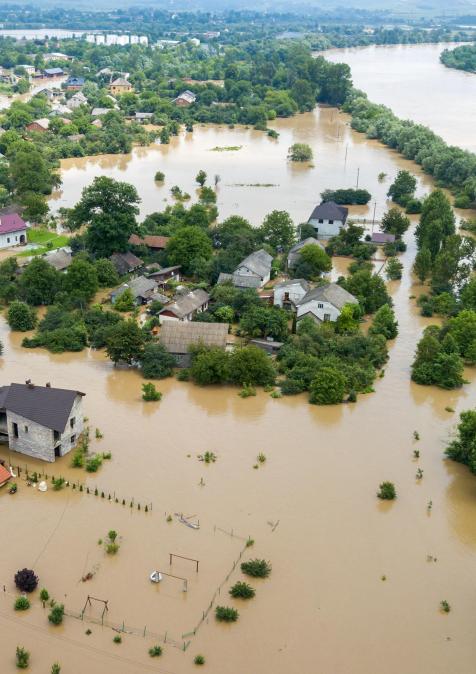
COP27 in Sharm El Sheikh marked a significant milestone with the establishment of a historic Loss and Damage (L&D) fund, signaling progress in global climate justice. Collaboration between developed and developing economies played a pivotal role in this achievement. The conference also witnessed a growing consensus on the need to reform the global financial architecture, with several developed countries endorsing PM Mia Mottley's Bridgetown initiative. Looking forward to COP28, priorities include sustaining momentum for climate justice by fulfilling L&D fund commitments, increasing financing for global net-zero efforts, promoting justice in energy transition, and enhancing investments in climate resilience and adaptation. These initiatives aim to strengthen collaboration between developed and developing economies, addressing the pressing challenges posed by climate change.

Speakers
Afaf Zarkik
Senior Economist
Afaf Zarkik is an economist at the Policy Center for the New South and a graduate in energy strategies from Ecole des Mines de Paris. Among her areas of research and reflection: energy commodities monitoring and energy transition and sustainable development policies analysis. Before joining the Policy Center, A. Zarkik was an analyst in oil and gas mergers and acquisitions, a venture capital analyst in a cleantech fund, and a senior analyst in asset management. Afaf Zarkik est économiste au Policy Center for the New South et ingénieur titulaire d'un Master en stratégies énergétiques de l'École des Mines de Paris. Parmi ses axes de recherche et de réflexion : la veille des marchés des matières premières énergétiques et l'analyse des politiques de transition éne ...

RELATED CONTENT

  • Authors
    July 2, 2026
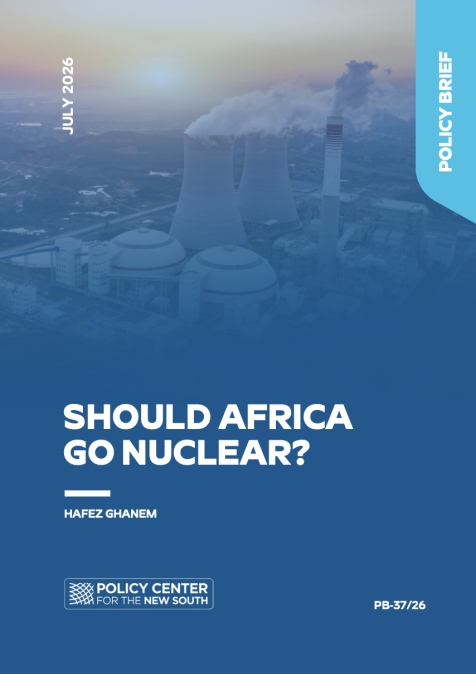
    Africa is facing a massive electricity deficit that is impacting its economic and social development, and its ability to catch up with the rest of the world. It is imperative that the continent increase its electricity production to connect the 600 million people who are currently without access and to improve the quality of service for the millions who are suffering from frequent blackouts and load-shedding. Economic development in the 21st century will crucially depend on the digi ...
  • June 30, 2026
    This episode explores Morocco’s green transition, examining the country’s progress in renewable energy alongside the challenges of reducing dependence on fossil fuels. It discusses the economic and social impacts of climate change, particularly on water, agriculture, and health, while h...
  • April 9, 2026
    Cet entretien explore le Nexus Eau-Énergie-Alimentation comme un défi systémique majeur pour le Maroc, dans un contexte de rareté croissante des ressources et de pressions sur la souveraineté. Il met en lumière les interdépendances critiques entre ces trois secteurs et les limites d’app...
  • March 30, 2026
    L’épisode explore les mutations profondes du secteur énergétique mondial, marqué par une transition complexe entre crise des prix et crise des systèmes. Après une période de tensions extrêmes sur les coûts de l’énergie (pétrole, charbon, gaz), 2025-2026 marque un tournant : les prix se ...
  • February 5, 2026
    In this episode, we explore the tough questions facing agriculture in a changing climate. Rising temperatures, water scarcity, and extreme weather are straining food systems and rural livelihoods like never before. At the same time, technologies such as artificial intelligence, renewabl...
  • Authors
    January 13, 2026
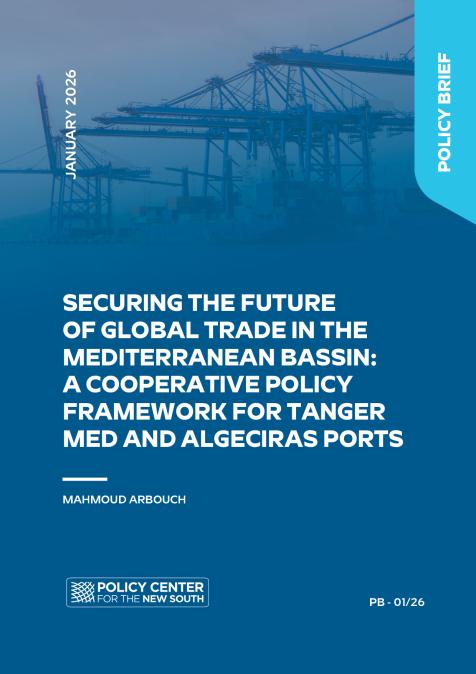
    This policy brief was originally published on : euromesco.net This paper examines the nexus between governance structures, digital transformation, sustainability, and port service efficiency through an international comparative lens, with a specific focus on the Tanger Med–Algeciras corridor in the strait of Gibraltar. Using global best practices—from Singapore to Busan and Kaohsiung—it explores how public-private coordination, digital innovation, and green transition policies ...