Embracing the AI-Energy-Climate Nexus for Agriculture

February 5, 2026

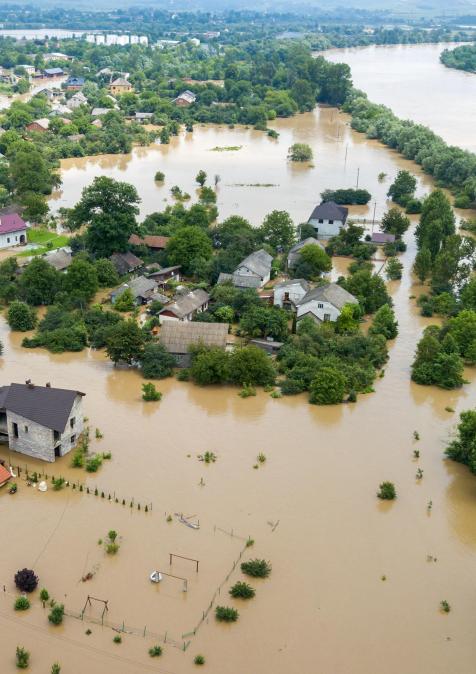
In this episode, we explore the tough questions facing agriculture in a changing climate. Rising temperatures, water scarcity, and extreme weather are straining food systems and rural livelihoods like never before. At the same time, technologies such as artificial intelligence, renewable energy, and climate analytics are creating new ways to boost productivity, optimize resources, and reduce emissions. But can these tools be scaled effectively to build truly resilient and sustainable agricultural systems?

Speakers

RELATED CONTENT

  • June 30, 2026
    This episode explores Morocco’s green transition, examining the country’s progress in renewable energy alongside the challenges of reducing dependence on fossil fuels. It discusses the economic and social impacts of climate change, particularly on water, agriculture, and health, while h...
  • Authors
    June 24, 2026
    Africa today remains far from food secure. Chronic malnutrition, widespread anemia among women of childbearing age, stunting and wasting among young children, pervasive underemployment in both rural and urban areas, and a youth bulge frustrated by high unemployment are key features of a continent that is seriously off track with respect to the SDG deadline: only 6% of SDGs have been implemented (Mo Ibrahim Forum, 2025).Despite this dismal progress, Africa can still achieve “The Afri ...
  • April 9, 2026
    Cet entretien explore le Nexus Eau-Énergie-Alimentation comme un défi systémique majeur pour le Maroc, dans un contexte de rareté croissante des ressources et de pressions sur la souveraineté. Il met en lumière les interdépendances critiques entre ces trois secteurs et les limites d’app...
  • February 5, 2026
    In this episode, we explore the tough questions facing agriculture in a changing climate. Rising temperatures, water scarcity, and extreme weather are straining food systems and rural livelihoods like never before. At the same time, technologies such as artificial intelligence, renewabl...
  • Authors
    Michael Terungwa David
    April 22, 2025
    The author of this opinion, David Michael Terungwa, is a 2017 alumnus of the Atlantic Dialogues Emerging Leaders Program. As the world commemorates Earth Day 2025 under the theme "Planet vs. Plastics," it is a timely moment to turn our attention to one of the planet’s most overlooked heroes: the soil. Often hidden beneath our feet and largely absent from climate conversations, soil plays a vital role in sustaining life, supporting biodiversity, and buffering the impacts o ...
  • Authors
    April 26, 2023
    It is estimated that $1 trillion to $6 trillion per year (up to 2050) needs to be invested globally if the world is to stay below the 2°C global warming ceiling of the Paris Agreement and to meet its adaptation goals. Currently, investments stand at about $630 billion per year, way below the original target. And although great efforts have been made in the climate-finance area, more than 70% of the funds deployed have gone to one sector, renewable energy, followed by the transportat ...
  • Authors
    Bruno Souza
    June 18, 2021
    This paper estimates the economic impacts of climate change over the Brazilian regions until the end of the century. We estimate the direct and indirect impact of the projected changes in climate on the yield of the country’s main crops. The results point to a broad spatial heterogeneity of impacts across the country. Using the extreme scenarios created by the Intergovernmental Panel on Climate Change (IPCC) (RCP 2.6 and 8.5), our predictions indicate that the average annual losses ...
  • June 26, 2020
    The securitization of climate change has important implications in terms of how the issue is framed and addressed, at national and international policy levels. It has become clear that climate change poses multiple and overlapping security challenges, including in terms of livelihood insecurity, disruption to agriculture and energy infrastructure, can fuel social tensions, conflict, and displacement. But consensus is growing around a more moderate view that climate change is exacerb ...