Chiedu Osakwe - WTO Accessions and Trade Multilateralism

April 13, 2016
Speakers
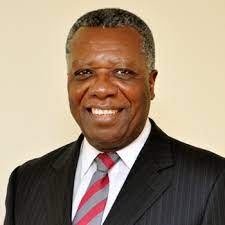
Chiedu Osakwe
WTO Director of the Accessions Division
Chiedu Osakwe is WTO Director of the Accessions Division. His previous WTO positions include Special Coordinator for LDCs and Head of the Secretariat Working Group on the Integrated Framework for LDCs, Office of the Director-General (1999-2001).  In this position he was Chairman of the Inter Agency Working Group (IAWG) for the Integrated Framework.  He has also served as Director of the Technical Cooperation Division (2001-2002); Director, Textiles Division (2003-2005), Director, Doha Development Agenda – DDA Special Duties Division, Office of the Director-General (2005-2008).  Prior to joining the WTO Secretariat, Mr. Osakwe was a Nigerian Foreign Service Officer (1979-1998).  In this period, he served at the Permanent Missions of Nigeria to the United Nat ...
RELATED CONTENT

  • Authors
    Marie-Noelle Nwokolo
    October 6, 2026
    The author of this opinion, Marie-Noelle Nwokolo, is a 2024 alumna of the Atlantic Dialogues Emerging Leaders Program.In September 1978, delegations from 138 countries gathered in Buenos Aires, Argentina, around a powerful idea: developing countries had knowledge, experience and capabilities worth sharing with one another. The Buenos Aires Plan of Action gave institutional form to what we now call South-South Cooperation, part of a wider post-colonial effort by developing ...
  • October 02, 2026
    Building on his Policy Brief "Latin America, World Politics and the Great Powers", Nizar Messari examines how recent developments are reshaping U.S. influence in the region and affecting ...
  • September 25, 2026
    Dans cet épisode d’Africafé, Amadou Diop analyse les défis de sécurité maritime auxquels font face les pays de l’Afrique atlantique, de la piraterie aux trafics transfrontaliers. Il souligne la nécessité de mutualiser les moyens et de partager l’information entre États. L’échange aborde...
  • Authors
    September 23, 2026
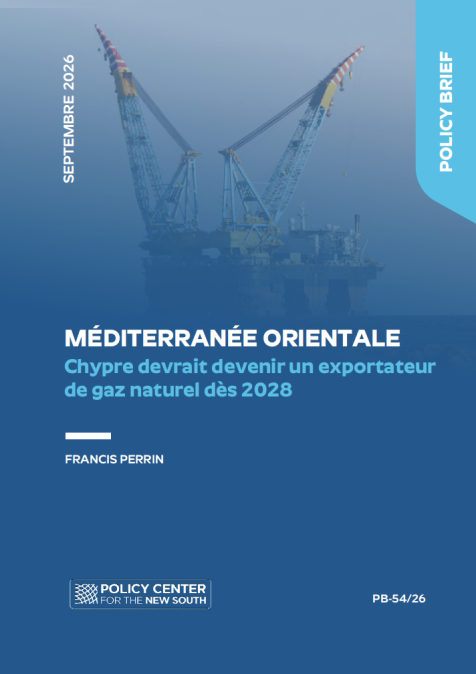
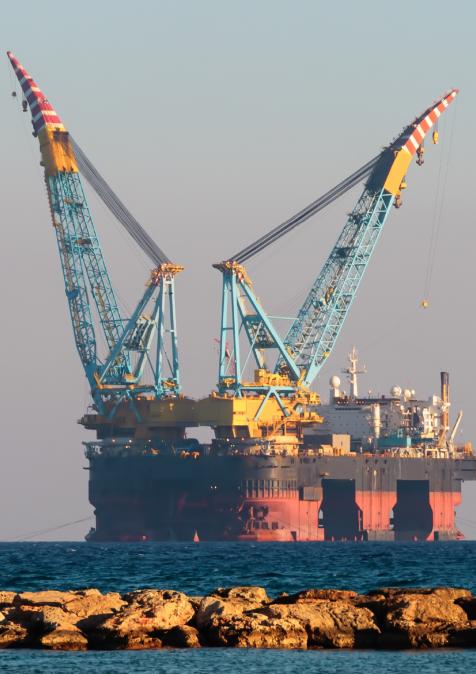
    Depuis 2010, environ, on sait que la Méditerranée orientale est une nouvelle province gazière. Des ressources gazières ont en effet été découvertes au large de quatre pays ou territoires, l’Égypte, Israël, Chypre et Gaza. Deux d’entre eux sont devenus producteurs et exportateurs de gaz naturel, l’Égypte et Israël. Au large de Gaza, le champ gazier de Gaza Marine n’a jamais été développé et il est très peu probable qu’il le soit prochainement en raison des très fortes tensions entre ...
  • Authors
    September 23, 2026
    Since around 2010, it has been known that the Eastern Mediterranean is a new gas province. Gas resources have indeed been discovered offshore four countries or territories: Egypt, Israel, Cyprus and Gaza. Two of them have become producers and exporters of natural gas, Egypt and Israel. Off the coast of Gaza, the Gaza Marine gas field has never been developed, and it is highly unlikely to be developed anytime soon given the very high tensions between the State of Israel and Hamas. By ...
  • Authors
    September 17, 2026
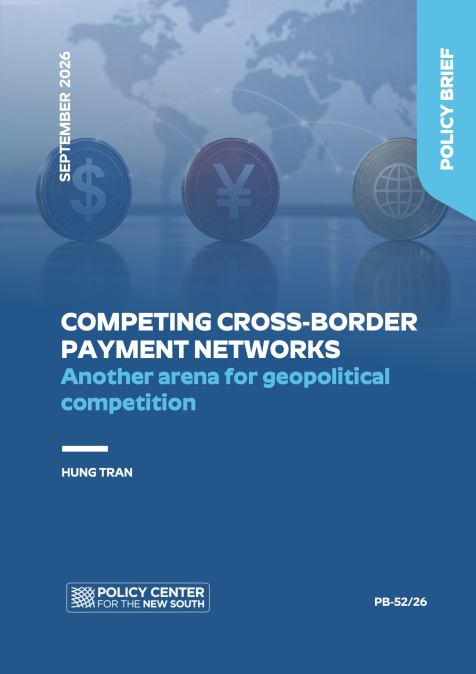
    Various competing cross-border payment networks have become vehicles for geopolitical competition. As tensions have risen, many countries want to secure access to cross-border payment systems by joining with like-minded countries to form interoperable networks, either via tokenization or Instant Payment Systems (IPSs). Three major projects are under development, serving the strategic interests of the US, China and the Rest of the World—corresponding to the three trading spheres taki ...
  • Authors
    Andy Sumner
    Stephan Klingebiel
    September 4, 2026
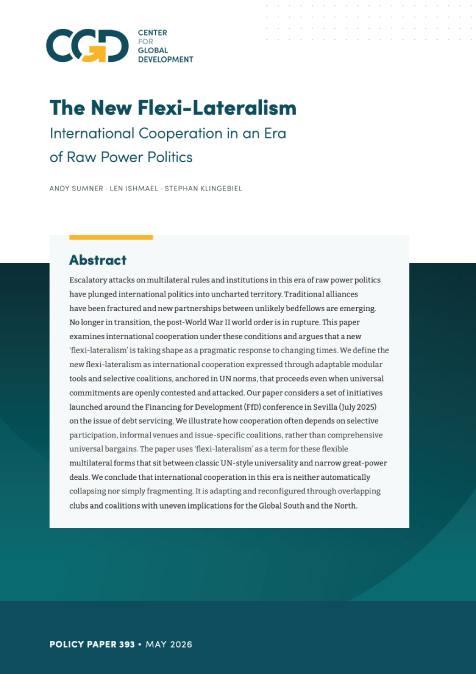
    This Paper was originally published on cgdev.org. Escalatory attacks on multilateral rules and institutions in this era of raw power politics have plunged international politics into uncharted territory. Traditional alliances have been fractured and new partnerships between unlikely bedfellows are emerging. No longer in transition, the post-World War II world order is in rupture. This paper examines international cooperation under these conditions and argues that a new "flexi-l ...
  • August 25, 2026
    Predictions of American decline have become increasingly prevalent. The United States has run persistent trade deficits for decades, but its public debt now exceeds its annual economic output. Meanwhile, and new centers of industrial and technological power continue to emerge across Asia. Yet despite these developments, no country has so far replaced the United States as the main organizing power of the international economy. Conventional explanations explain this in terms of U.S. m ...
  • Authors
    Meryam Amarir
    August 13, 2026
    Les crises récentes au Moyen-Orient, notamment les attaques ciblant les navires commerciaux en mer Rouge et les tensions autour du détroit d'Ormuz, ont mis en évidence la vulnérabilité des principaux corridors stratégiques du commerce mondial. Plus qu'un bouleversement de l'organisation des échanges, elles accélèrent une transformation déjà engagée, fondée sur la recherche de chaînes de connectivité plus résilientes, la diversification des itinéraires commerciaux et le développement ...
  • Authors
    Meryam Amarir
    August 13, 2026
    Recent crises in the Middle East, particularly attacks targeting commercial vessels in the Red Sea and tensions surrounding the Strait of Hormuz, have highlighted the vulnerability of the main strategic corridors of global trade. Rather than fundamentally disrupting the organization of trade flows, these crises are accelerating an ongoing transformation driven by the search for more resilient connectivity chains, the diversification of trade routes, and the development of logistics ...