Building the Afri-LAC Agenda: Green Industrial Policy in a Changing World

June 24, 2026

Africa, Latin America, and the Caribbean have both the potential and the desire to transform their people's lives through Green Industrial Policy. Yet they have long been constrained by structural obstacles embedded in the international system. The current rupture in that system, which has eroded the legitimacy and functionality of international institutions, has further weakened collective responses to shared crises: climate instability, conflict, and economic insecurity.

Compounding this, policy volatility has surged. Swings in industrial subsidies, the rise of green protectionism, sanctions, and the securitisation of trade have deepened uncertainty, falling hardest on countries in the Global South. These dynamics further compress the policy space available to governments at precisely the moment when bold economic transformation is most needed. Yet the same crisis that narrows room for manoeuvre also creates openings. Disruption to existing international arrangements brings with it the possibility, and the necessity, of building something better.

In this context, there is huge potential in the fact that Africa and Latin America and the Caribbean, which have long shared values and interests, are now increasingly strengthening their collaboration. In doing so they have started to lay a pathway to build collective agency in a fragmented global system. The growing strengthening of Afri–LAC ties represent an opportunity not only to deepen South–South cooperation, but to reshape global narratives, shift global policies and reorient global systems. 

The question is no longer whether green industrial transformation is possible. It is how Africa and LAC can shape it together.

Speakers
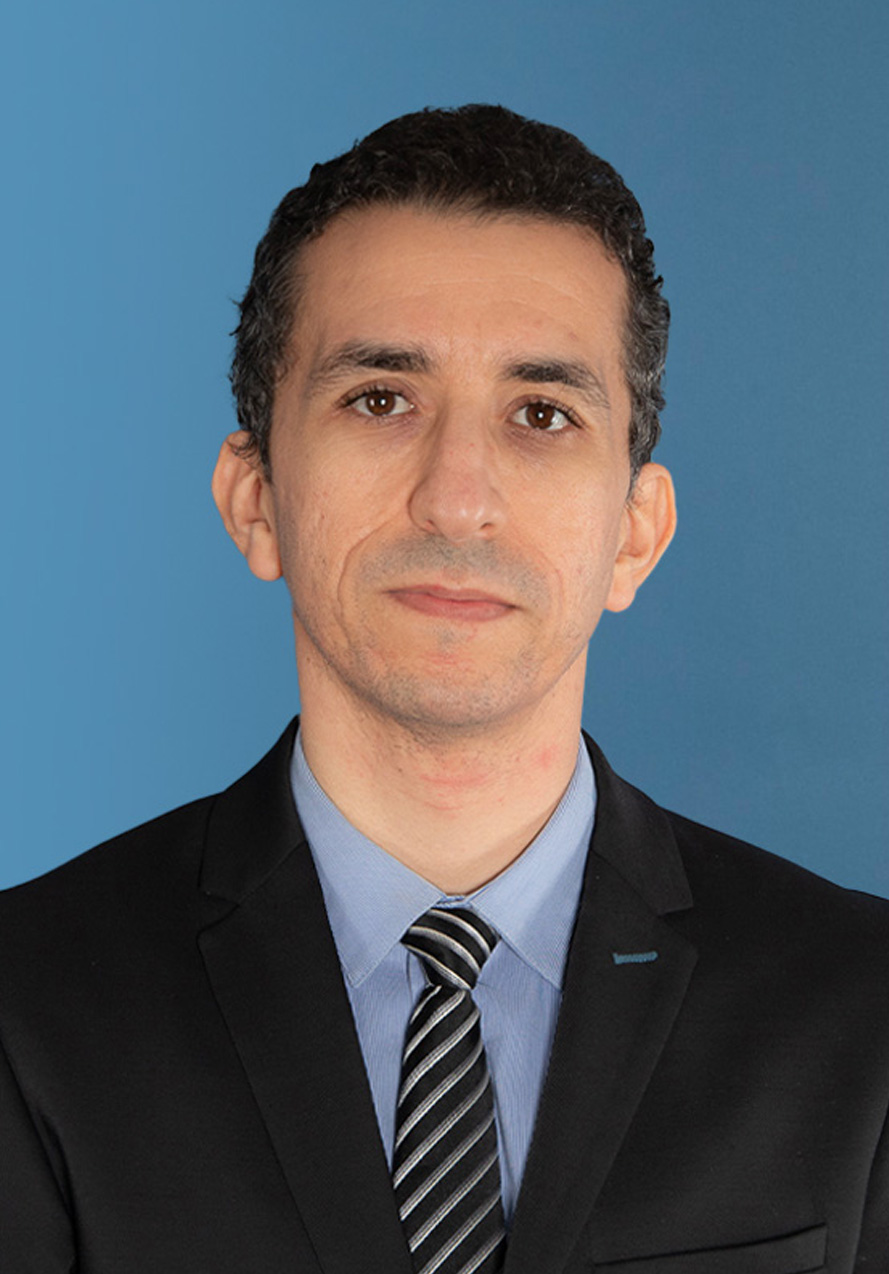
Abdelaaziz Ait Ali
Head - Research in Economics
Abdelaaziz Ait Ali is a principal Economist and head of the Research Department at the Policy Center for the New South. He joined the Center in 2014 after five years of experience at the Central Bank of Morocco. He worked as an economist in the International Studies and Relations Department and was analyzing the real estate price index and financial asset prices for monetary policy and financial stability purposes. Since then, Abdelaaziz has focused on cyclical and structural issues of the Moroccan economy, including macroeconomic management and industrial policy design. He has published articles on the reform of the exchange rate regime in the Moroccan economy and its implications for macroeconomic regulation, as well as on the evolution of the macroeconomic framework over th ...

RELATED CONTENT

  • Authors
    October 8, 2021
    Annoncé le 16 septembre dernier, l’arrêt définitif de l’enquête annuelle sur le climat des affaires est une erreur. Véritable référence pour l’analyse économique et entrepreneuriale dans 190 pays, c’est un instrument perfectible, mais indispensable. Dans la foulée d’une enquête indépendante menée par le cabinet d’avocats WilmerHale, qui pointait les pressions inopportunes exercées par la Chine et par d’autres pays lors de la préparation de son rapport annuel Doing Business, la ...
  • Authors
    Youssef El Jai
    September 15, 2020
    Avant l'ère coloniale, l'émission d'argent en Afrique de l'Ouest dépendait de la traite des esclaves. Avec l'avènement du régime colonial, les pièces d'argent ont été importées puis progressivement imposées comme outil de coercition. La trajectoire postcoloniale a été différente pour les anciennes colonies britanniques et françaises. Alors que les premières ont retrouvé leur souveraineté monétaire, les secondes ont conservé une union monétaire sous l’égide de la France. La propositi ...
  • Authors
    Alioune Sall
    August 17, 2020
    The transformation of the Economic Community of Western African States (ECOWAS) into a « Confederation of States » is sometimes considered, including by the Heads of State of the Community, as a natural next step in the process of deeper integration in West Africa. The purpose of this study is to explore its feasibility and relevance, based on the experience of other continents. A confederation of states can be defined as an association of sovereign states which, by means of an int ...
  • Authors
    Manfred Hafner
    Simone Tagliapietra
    Lucia de Strasser
    October 4, 2018
    This blog post summarizes the key findings of the new book Energy in Africa: Challenges and Opportunities, co-authored by Manfred Hafner, Simone Tagliapietra and Lucia de Strasser of the Italian think-tank, Fondazione Eni Enrico Mattei. The book, published by Springer, is freely available online. The book presents a picture of the current energy challenges on the African continent- the Sub-Saharan region in particular- and proposes pathways to an accelerated energy t ...
  • Authors
    September 21, 2018
    This blog is based on remarks delivered at the Think-Tank Summit in Buenos Aires on 18 September 2018 held under the G-20’s Argentine Presidency.  Africa has an enormous infrastructure gap that impedes its development. The Compact with Africa (CwA) is an international policy initiative sponsored under the German presidency of the G-20 in 2017 designed to bridge that gap. Intended to draw in the private sector in developing Africa’s infrastructure through a combination of Priva ...
  • May 21, 2018
    Le partenariat Afrique Europe fait son chemin depuis l'adoption de la stratégie commune Afrique-UE et la négociation complexe des Accords de Partenariat Economiques. L’évaluation des volets commercial, financier et humain de ces relations multidimensionnelles fait ressortir la persistance de grands déséquilibres dans les échanges commerciaux de biens et services, des tensions dans la gestion de la mobilité humaine et des dysfonctionnements dans les mécanismes institutionnels de part ...
  • June 21, 2017
    Ce podcast est présenté par Moubarack Lo. Il y analyse l’apport de l’adhésion marocaine à la CEDEAO suite à l’accord de principe donné par ses membres au 51e sommet de Monrovia le 4 juin ...