
Président
- Nobumitsu Hayashi, Gouverneur, Banque japonaise pour la coopération internationale (JBIC)
Présentateur
- Rajat Nag, Distinguished Fellow, Emerging Markets Forum (EMF)
Discutants
- María Eugenia Brizuela de Avila, Directrice, Inversiones Vision
- Larabi Jaïdi, Senior Fellow, Policy Center for the New South (PCNS)
- Abdoulie Janneh, directeur exécutif et membre du conseil d'administration, Fondation Mo Ibrahim
- Djoomart Otorbaev, ancien premier ministre du Kirghizstan
- Sommai Phasee, président de l'Association thaïlandaise du marché obligataire
Lancement de la dernière publication de la FEM : "From Here to Denmark ...the importance of institutions for good governance" par Rajat Nag et Harinder Kohli
RELATED CONTENT
-
 August 11, 2026Lorsqu’une crise éclate, elle donne lieu à l’actionnement des réflexes pour sa gestion et la limitation de ses effets. Commencent, alors, les analyses et les suppositions sur les dysfonctionnements, les manquements et les défaillances ayant entrainé ladite crise. Dans certains cas, la théorie du complot s’ingère et les hypothèses cherchent les auteurs ayant provoqué la crise, leurs desseins et leurs buts.Cependant, la théorie de gestion des crises nous apprend qu’une crise inte ...
 -
 August 5, 2026This paper addresses the persistent challenge of resource dependence in the world's poorest countries, focusing on the ten poorest African nations where natural- resource rents average 14% of income. It argues that four decades of conventional policy advice, which treated resource dependence primarily as a revenue management problem, have failed to help these countries. While stabilization funds and permanent-income frameworks aim to smooth consumption, they do not answer the fundam ...
 -
 August 4, 2026This paper was originaly published on Middle East Development Journal This article examines the impact of remittances on human capital formation, living conditions, and economic participation of women in North African countries. While prior research has explored remittances’ effects on women’s access to fundamental rights, it has not fully captured the social and economic transformations induced by these funds. Our findings indicate that remittances significantly enhance w ...
 -
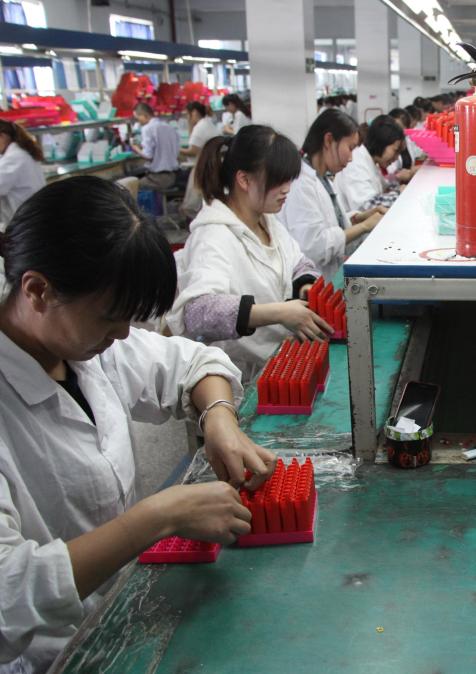 August 3, 2026This Opinion was originally published in Project Syndicate and republished by The Edge Malaysia, DT Next, and The Japan Times. Data from a period in which both China and India pursued deliberate industrial policies show that neither country's development route is accessible to other countries. At best, their experience can alert policymakers to structural limitations and coordination problems that will require their own homegrown solutions.RABAT—What is the most reliable develo ...
 -
 August 3, 2026This policy paper explores how China’s economic development model—rooted in pragmatism, long-term planning, and civilizational renewal—has become its most compelling soft power asset, particularly in the eyes of the Global South. While critically engaging with Joseph Nye’s original conception of soft power as a primarily cultural and normative force, the paper argues that China’s ability to transform itself from an impoverished postimperial state into the world’s largest trading nat ...
 -
 July 31, 2026This episode explores the macroeconomic challenges facing African economies, highlighting debt, inflation, exchange rate pressures, and vulnerability to external shocks. Kingsley Moghalu ...
 -
 July 31, 2026Ethiopia continues to struggle to lay the economic foundations of food security for all, more than 30 years after first adopting the East Asian Developmental State Model (EADS) under Zenawi (1911-2012), continued under Hailemariam Desalegn (2012-April 2018), and later shifting toward a neo-liberal, Washington consensus-oriented approach under Abiy Ahmed (2018-present). The achievements recorded under the EADS approach—particularly double-digit annual growth, substantial poverty ...
 -
 July 29, 2026En un siècle, le cours de l’once d’or est passé de 20 dollars à 5 300 dollars au premier trimestre 2026. Cette étude, consacrée à l’analyse de cette envolée, comporte deux parties.La première privilégie une approche historique. Elle retrace tout d’abord le changement de statut du précieux métal jaune, monétisable jusqu’en 1971 puis démonétisé par la suite. Elle rappelle ensuite que cette évolution, loin d’être linéaire, est ponctuée de phases de forte hausse, de stagnation et d ...
 -
 July 28, 2026The term “K-shaped recovery” was introduced to describe the economic recovery from the recession triggered by the Covid-19 pandemic. It refers to the uneven and divergent growth pattern between leading industries or sectors (the upper arm of the letter K—mainly the high-technology sector) and laggards, or the rest of the economy (the lower arm—the traditional industries). Since then the term has become popular in portraying divergent growth patterns within and between countries, esp ...
 -
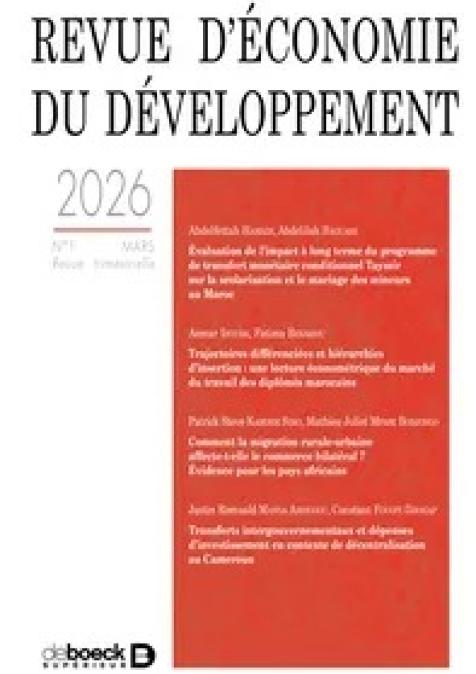 July 28, 2026This Paper was originally published on cairn.infoL’insertion professionnelle des jeunes, et particulièrement des diplômés de l’enseignement supérieur, constitue un enjeu majeur pour le développement économique et la cohésion sociale de toute nation. Au Maroc, cette question revêt une acuité particulière et s’attache à un paradoxe persistant : malgré une démocratisation et une progression notable de l’accès à l’enseignement supérieur au cours des deux dernières décennies, le tau ...

