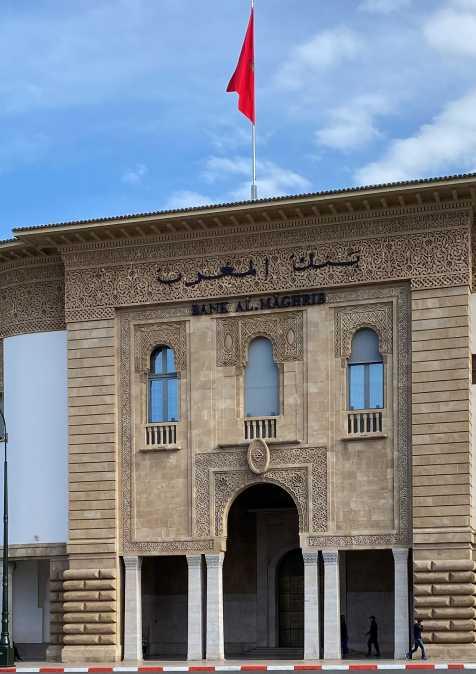
السياسة النقدية في المغرب

June 3, 2026

تقدّم هذه الحلقة قراءة حليلية لتطور السياسة النقدية في المغرب في سياق دولي يتسم بارتفاع معدلات التضخم وتزايد التقلبات الاقتصادية والجيوسياسية. وتهدف إلى تسليط الضوء على دور بنك المغرب في إدارة التوازنات الاقتصادية الكبرى، من خلال أدواته النقدية الرامية إلى كبح التضخم، ودعم النمو الاقتصادي، والحفاظ على استقرار سعر الصرف، وضمان تمويل سليم للاقتصاد الوطني. كما تناقش هذه الحلقة مدى نجاح قرارات بنك المغرب في تحقيق التوازن بين محاربة التضخم وتشجيع الاستثمار، إلى جانب أبرز التحديات الراهنة المرتبطة بارتفاع الأسعار، وتغيرات سوق الشغل، وتقلبات الاقتصاد العالمي. وفي الأخير، تستشرف هذه الحلقة التوجهات المستقبلية الممكنة للسياسة النقدية في المغرب من أجل تعزيز صلابة الاقتصاد الوطني، ودعم المقاولات، والحفاظ على الاستقرار المالي خلال السنوات المقبلة


Speakers
Ahmed Ouhnini
Economist, Policy Center for the New South
Ahmed Ouhnini is an Economist at the Policy Center for the New South. His research area covers agricultural economics, human and social development. Previously, he has worked as a researcher at the Paris School of Economics (PSE) and has also a record of working in consulting services in Morocco. Ahmed holds an engineering Diploma in Agriculture and Rural Development from the National School of Agriculture of Meknes and a Master’s Degree in Law, Economics and Management from the Paris 1 Pantheon Sorbonne Institute of Development. ...
Faiçal Hossaini
Academic Associate, Mohammed VI Polytechnic University, Rabat
Faiçal Hossaini teaches economics at the Faculty of Governance, Economics and Social Sciences (FGSES) of Mohammed VI Polytechnic University (UM6P) in Benguerir. He holds a Doctorate in Macroeconomics from Mohammed V University, along with a Master’s degree in Economics and a Master’s degree in Finance, both from the University of Quebec in Montreal (UQAM). Prior to joining FGSES, he spent over 10 years as an economist at the Economic Studies Department of the Moroccan Central Bank, where he gained extensive experience in economic policy. He has also taught economics and econometricsin Morocco and abroad. ...

RELATED CONTENT

  • Authors
    Arkebe Oqubay
    November 17, 2025
    Morocco has emerged as one of Africa's success stories, achieving significant progress in economic transformation and the green transition over the past 25 years. Continuing and deepening this transformation is essential to reach the country’s goal of becoming a high-income economy in the coming decades. Significant challenges include managing the risk of the middle-income trap, addressing demographic pressures, promoting inclusive growth, ensuring environmental sustainability, and ...
  • Authors
    Elhoussaine Wahyana
    January 12, 2024
    The debate on global value chains (GVCs) has emphasized countries’ contributions to value-added creation. From an intercountry perspective, a new body of research is addingto this debate by studying how subnational regions contribute to the indicators in specific countries. Proper assessment of economic contributions is essential for designing incentive policies. This paper analyzes the role played by the main trading partners of Moroccan regi ...
  • December 26, 2023
    في ختام هذا العام، يُخصص مركز السياسات من أجل الجنوب الجديد حلقة خاصة من برنامجه الأسبوعي"حديث الثلاثاء"، لاستعراض أبرز تطورات الاقتصادية خلال عام 2023. هذا العام شهد تحولات عديدة وتحديات غير اعتيادية ، فكيف أثرت هذه التغيرات على الاقتصادات العالمية؟ وما هو الدور الذي أضافته الجغرافيا ا...
  • December 5, 2023
    في حلقة هذا الأسبوع سنحاول مناقشة موضوع القطاع غير المُهيكَل في المغرب، أبرز التحديات وأفاق المستقبل. حيث أن ظاهرة العمالة غير الرسمية أصبحت تأخذ حيزا كبيرا في مختلف النقاشات العالمية الدائرة حول مسألة التنمية، والمغرب يعد من بين الدول التي تبقى فيها الظاهرة عند مستويات مرتفعة كون منظو...
  • Authors
    Ali Elguellab
    Elhadj Ezzahid
    November 1, 2023
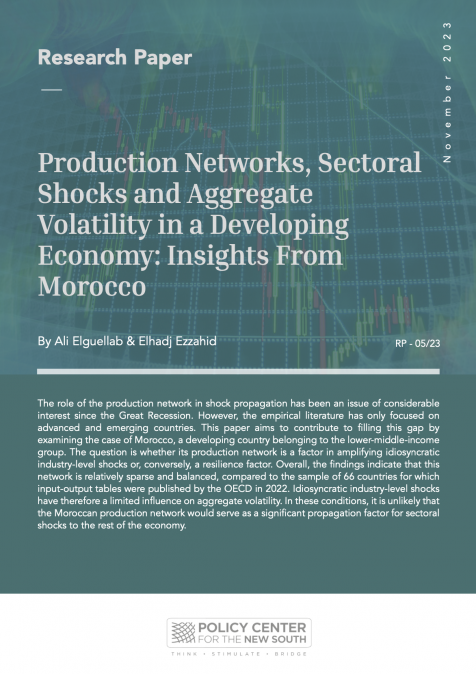
    The role of the production network in shock propagation has been an issue of considerable interest since the Great Recession. However, the empirical literature has only focused on advanced and emerging countries. This paper aims to contribute to filling this gap by examining the case of Morocco, a developing country belonging to the lower-middle-income group. The question is whether its production network is a factor in amplifying idiosyncratic industry-level shocks or, conversely, ...
  • Authors
    April 5, 2023
    The Policy Center for the New South and the Economic Research Forum held on March 20 a workshop titled ‘Stabilization and adjustment towards inclusive and sustainable policies in MENA: The Moroccan case study’. The event took place at the PCNS headquarters in Rabat, Morocco. It brought together renowned Moroccan economists and scholars to discuss the issue of public debt sustainability in the context of the Moroccan economy. It was an occasion to revisit the main features of the Mor ...
  • Authors
    Inácio F. Araújo
    Fatna El Hattab
    Soulaimane Anis
    June 30, 2022
    Depuis l’année 2015, le Maroc a fait de la régionalisation avancée un choix stratégique pour concrétiser sa volonté politique de mettre en œuvre une approche de développement territorial plus intégrée. Cette initiative vise à assurer un développement territorial durable, robuste et inclusif mais aussi à capitaliser sur les potentialités de chaque région en termes de ressources. Ainsi, de nouvelles structures ont été mises en place pour moderniser les services publics et améliorer le ...
  • June 7, 2022
    يعتبر التضخم مقياسا اقتصاديا يعنى بتطور الأسعار في أسواق السلع والخدمات كما انه يرصد القدرة الشرائيّة. وقد شهد معدل التضخم مؤخرا ارتفاعات غير مسبوقة في بقاع عدة، قارن بعض الخبراء الاقتصاديين بينها وبين مرحلة الركود التضخمي في سبعينيات القرن الماضي، اخذين كمنطلق مجموعة من ...
  • Authors
    December 21, 2021
    The Policy Center for The New South (PCNS) joined an inter-institutional effort between the Ibero-American General Secretariat (SEGIB), the United Nations Development Program (UNDP) and the International Development Research Centre (IDRC) in an international research project called ‘’Purpose-driven companies and the regulation of the Fourth Sector in Ibero-America’’. As this project grew to cover countries outside of Ibero-America, the PCNS was invited to write a chapter about ...