African Continental FTA: Opportunities & Challenges for a Unified, Prosperous & Developed Continent

December 16, 2022


Speakers
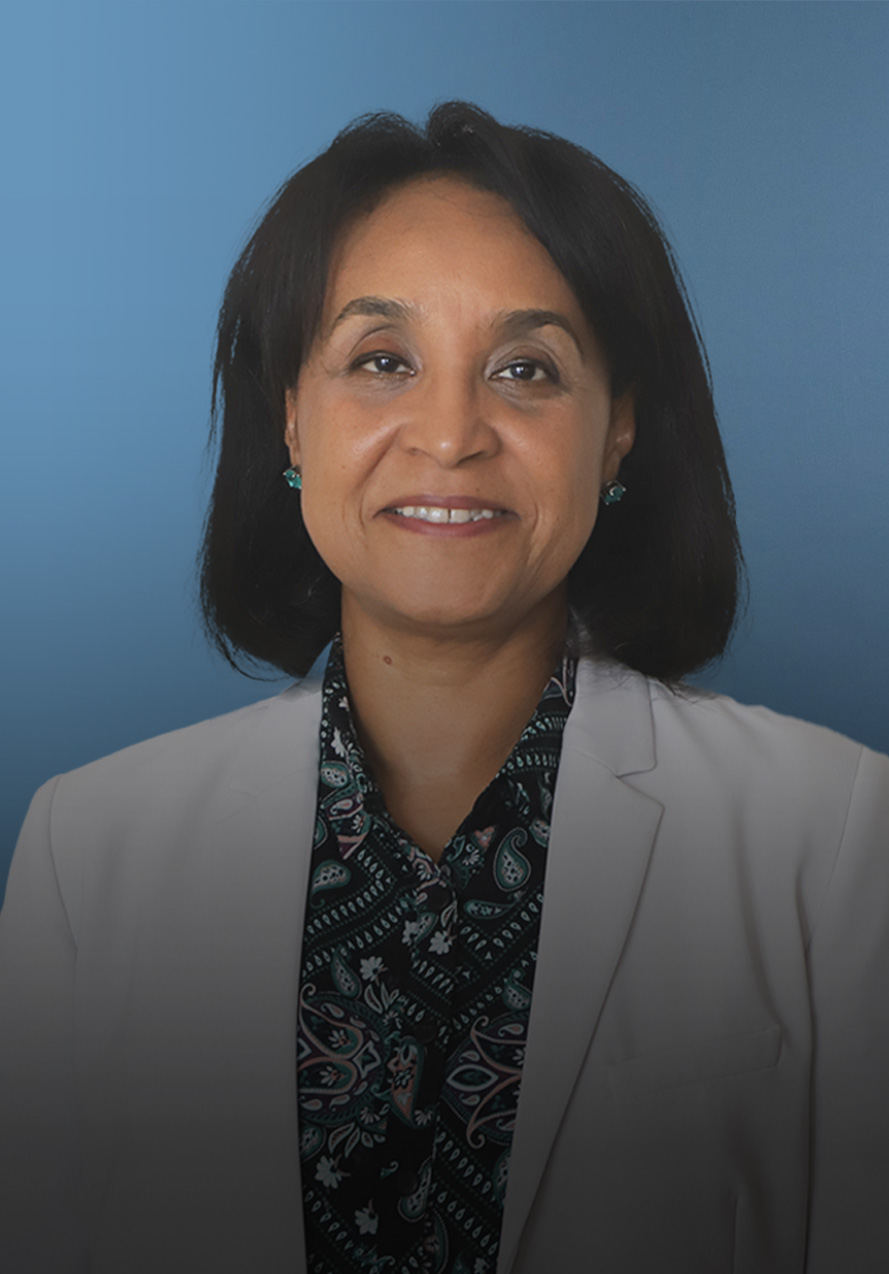
Mounia Boucetta
Senior Fellow
Senior Fellow at the Policy Center for the New South, Mounia Boucetta has over 20 years of experience in public administration, holding numerous managerial and leadership roles, and working particularly on the development of industrial and commercial policies. She was most recently Secretary of State to the Minister of Foreign Affairs and International Cooperation of Morocco from 2017 to 2019.   A graduate from the prestigious Mohammadia School of Engineers (Morocco), Mounia Boucetta joined the Ministry of Industry and Trade in 1991 where she held numerous positions before her appointment as its Secretary General in 2010. In this context, she contributed to numerous projects including, but not limited to, reorganizational projects, implementatio ...

Hamza Saoudi
Senior Economist
Hamza Saoudi is a Senior Economist at the Policy Center for the New South (PCNS).At the PCNS, Hamza Saoudi conducts research on labor market dynamics, social protection systems, and inclusive growth, with a particular focus on Morocco and Africa. He is also interested in macroeconomic stabilization policies, international trade, and long-term economic development.He has contributed to PCNS projects and publications addressing informality, social protection, and inequality in developing economies.He also served as the project coordinator of the upcoming Oxford Handbook of the Moroccan Economy, to be published by Oxford University Press in 2026.Before joining the PCNS in 2017, Hamza Saoudi contributed to the development of quantitative models for bank credit risk management.Hamz ...

RELATED CONTENT

  • Authors
    Sofia Formigli
    February 13, 2026
    There is a story told by Václav Havel, the Czech dissident writer who later became president after the fall of communism. In his essay The Power of the Powerless, Havel describes a shopkeeper who, every morning, places a sign in his window reading: “Workers of the world, unite!” He does not believe in it. Nor do the people around him. Yet the sign remains. ...
  • Authors
    Amine Ghoulidi
    February 5, 2026
    This Paper was originally published on orient-online.com  The Western Mediterranean’s exposure to the Sahel is usually framed in terms of security spillovers and crisis management. This paper argues that this framing misreads how Sahelian access conditions now shape Mediterranean integration. Morocco’s Atlantic Initiative is a state-led corridor strategy combining Atlantic port infrastructure, inland transit routes, and energy systems to connect landlocked Sahelian economi ...
  • January 30, 2026
    En 2019, Donald Trump a proposé d’acheter le Groenland, déclenchant un refus catégorique du Danemark et une tension diplomatique transatlantique. Cette initiative reflétait l’intérêt stratégique et économique des États-Unis pour l’Arctique et ses ressources. L’épisode a mis en lumière l...
  • Authors
    January 27, 2026
    This paper revisits Big Push industrialization theory in the context of open economies deeply integrated into global value chains (GVCs). While classical Big Push models emphasize demand complementarities and coordination failures in largely closed economies, many middle-income countries now industrialize through foreign-owned, import-intensive production networks. We develop an extended Big Push framework that incorporates GVC integration and import leakage, and show how these feat ...
  • January 23, 2026
    The post-1945 international order, an architecture born of war-weariness and colonial twilight, is now a majestic but empty shell. Its foundational promise—a universal system of rules administered impartially—has been hollowed out by decades of selective enforcement, instrumentalized law, and a chasm between the rhetorical ideals of its custodians and their geopolitical practice. This is not a temporary dysfunction, but a systemic failure of legitimacy. From the invasion of Iraq und ...
  • Authors
    January 21, 2026
    In response to developing countries’ dissatisfaction with the New Collective Quantified Goal (NCQG) of $300 billion, which was decided at the Twenty-Ninth Conference Of the Parties (COP29) to the United Nations Framework Convention on Climate Change, in 2024 in Baku, Azerbaijan, the COP29 and COP30 presidencies promised to develop a roadmap to achieve $1.3 trillion in external climate finance that developing countries need, and to present it at COP30 in Belém, Brazil[1]. The two pre ...
  • Authors
    January 20, 2026
    This policy brief examines what the 2025–2026 period reveals about the future of global energy risk and the energy transition. After the shocks of 2021–2023, 2025 brought broad price easing: oil and coal prices declined as supply growth outpaced demand, and the World Bank projects further declines in the global energy price index in 2026, offering short-term relief for energy-importing economies. The brief argues, however, that the macroeconomic relevance of energy entering 202 ...
  • Authors
    Stephan Klingebiel
    Andy Sumner
    January 9, 2026
    Global cooperation is under stress. It hardly requires detailed analysis: the international system is in a profound crisis, when seen from many Northern vantage points. What if we see the same turbulence but from a different vantage point? For many in the Global South the current period signals risk, but also opportunity. That the same events could spark a sense of crisis in one group but opportunity in another is nothing new. However, the sheer scale, speed, and scope of recen ...
  • Authors
    Edited by Mohammed Loulichki
    December 11, 2025
    Available soon on Livremoi & Amazon. The 12th edition of Atlantic Currents explores how the Wider Atlantic can remain a space of cooperation and renewal in an age marked by instability. As geopolitical rivalries, technological competition, and climate pressures reshape the global order, the Atlantic Basin emerges not as a periphery but as a vital arena for pragmatic partnerships, shared problem-solving, and credible collective action. This 2025 edition traces the shift ...