Africafé: L’économie africaine à l’ère des incertitudes

October 4, 2023

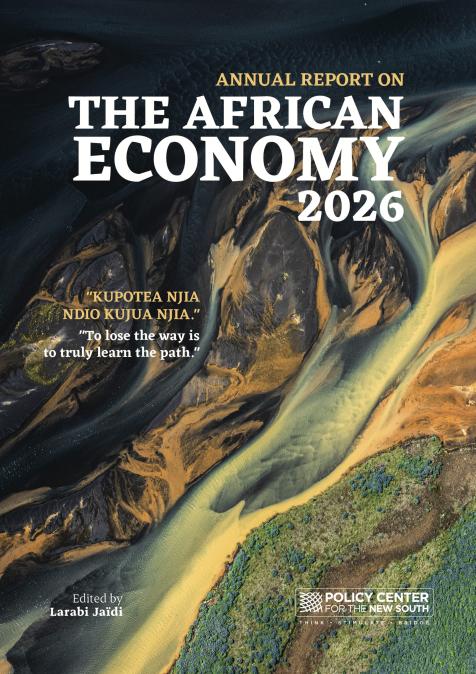
Dans ce numéro spécial de notre émission, nous explorerons les contours et les performances de l'économie africaine face aux multiples défis planétaires. La pandémie de Covid-19 continue de susciter des inquiétudes avec l'émergence de nouveaux variants, tandis que les catastrophes climatiques et écologiques menacent la stabilité mondiale, en particulier en Afrique. La guerre en Ukraine aggrave la fragmentation géoéconomique et géopolitique mondiale, laissant planer l'incertitude quant à un éventuel retour à la coopération internationale. Les perturbations financières suscitent également des préoccupations, avec la montée de l'inflation et de la dette, ainsi que l'imprévisibilité de leur évolution, mettant en péril la stabilité du système financier mondial. Au-delà de ces défis anticipés, d'autres facteurs imprévisibles se dessinent, notamment les bouleversements technologiques qui contraignent les entreprises africaines à s'adapter rapidement pour combler le fossé technologique avec les pays du Nord. Ces changements ont également des répercussions sur les relations internationales, remettant parfois en question le multilatéralisme qui était au cœur des aspirations à une prospérité partagée. Au cours de cette émission, nous explorerons la manière dont l'économie africaine réagit face à ces incertitudes et discuterons des défis à venir ainsi que des choix délicats qui se profilent dans les années à venir.

Speakers
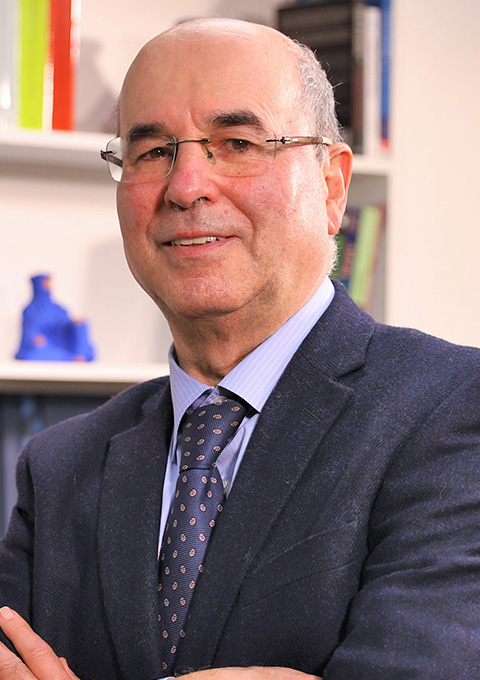
Larabi Jaïdi
Senior Fellow
Larabi Jaïdi is a Senior Fellow at the Policy Center for the New South and an Affiliate Professor at Mohammed VI Polytechnic University. His areas of expertise include international economy, economic policies, international economic relations, regional economies, social development, international relations, and Mediterranean studies. He also served on the Special Commission on the New Development Model of Morocco, a consultative body created in November 2019 to formulate the country's new developmental guidelines. Jaïdi is a former Professor at Mohamed V University in Rabat-Agdal and a founding member of both the Centre Marocain de Conjoncture and the Groupement d’Etudes et de Recherches sur la Méditerranée.   Prof. Jaïdi previously served as Advisor to the Prime Minist ...
Ahmed Ouhnini
Economist, Policy Center for the New South
Ahmed Ouhnini is an Economist at the Policy Center for the New South. His research area covers agricultural economics, human and social development. Previously, he has worked as a researcher at the Paris School of Economics (PSE) and has also a record of working in consulting services in Morocco. Ahmed holds an engineering Diploma in Agriculture and Rural Development from the National School of Agriculture of Meknes and a Master’s Degree in Law, Economics and Management from the Paris 1 Pantheon Sorbonne Institute of Development. ...

RELATED CONTENT

  • Authors
    May 15, 2026
    This paper is the third in a series of country and comparative studies that together comprise a research program on services as drivers of economic growth and structural transformation in the Global South. The paper analyzes the pattern of Tunisia's services-led economic growth from 2012- 2022 using a specialized three-category framework: knowledge services (KS), enabling services (ES), and local services (LS). Using data from the OECD Trade in Value Added (TiVA), Trade in Employmen ...
  • May 15, 2026
    In this podcast recorded during the Growth Summit, Naomi Kengurungu, Director of Marketing and Communication at the African Management Institute, discusses the key conditions needed for h ...
  • May 14, 2026
    In this episode of Africafé, Neema CHUSSI discusses the opportunities and challenges artificial intelligence presents for Africa. She highlights the need for the continent to develop its own AI governance approach, rooted in African democratic values, while addressing critical issues su...
  • Authors
    Hajar Kabbach
    May 11, 2026
    Closing Morocco's gender employment gap could increase GDP per capita by 40-50 percent; yet female labor force participation stands at just 19 percent—among the lowest in the world and still declining. This policy paper argues that investing in the care economy is not merely a social expenditure, but a productive economic strategy with measurable returns. Drawing on international evidence from Uruguay, Mexico, Colombia, and India, the brief demonstrates that well-designed care syste ...
  • May 6, 2026
    Dans cette interview, l’évolution de la politique industrielle marocaine est analysée : planification étatique (1960–1980), libéralisation (1980–1990), puis intégration dans les chaînes de valeur mondiales (à partir des années 2000). Aujourd’hui, face au protectionnisme et au nearshorin...
  • April 30, 2026
    يشهد المغرب تحولًا سريعًا في صناعة السيارات الكهربائية، مدفوعًا باستثمارات كبيرة وطموح للانتقال من مجرد منصة تركيب إلى فاعل صناعي متكامل. وبين فرص بناء صناعة بطاريات محلية وخلق وظائف جديدة، تبرز أيضًا تحديات مرتبطة بنقل التكنولوجيا، والتشغيل، والاستدامة. في هذه الحلقة، نفكك هذا التحول و...
  • April 29, 2026
    Cet épisode revient sur la politique monétaire au Maroc, en soulignant sa capacité à maintenir une inflation faible et stable sur le long terme grâce à un cadre macroéconomique solide. Il met en avant le rôle central des réformes institutionnelles et de la Banque centrale dans le renfor...
  • Authors
    April 20, 2026
    This paper was published as a book chapter in “The Economic Potential of Islamic Countries, Part B: Sustainability, Governance, Energy and Digital Transformation,” released by Emerald Publishing. The COVID-19 pandemic exposed significant deficiencies within social protection systems worldwide, especially in Middle Eastern and North African (MENA) countries. This underscores the urgent need to fortify these social protection schemes to ensure resilience in the face of crises (Sa ...
  • Authors
    Markus Goldstein
    Chema Triki
    Charley Ward
    April 16, 2026
    This blog was originally published on cgdev.org We recently wrapped up the second edition of the Growth Summit, organized by our three organizations and hosted by the Policy Center for the New South. The event was filled with eclectic voices. To give you a sense of the discussions, we’ve tried to capture some of the key messages from the 12 sessions (with no direct attribution).Overall, the eclecticism of the debate points to an uncomfortable truth: there is today no shared pla ...