Africafé: La régulation de l’intelligence artificielle en Afrique

February 22, 2024

La révolution intelligence artificielle submerge l’Afrique, en proie à d’importantes transitions. Reposant sur un processus d’imitation de l’intelligence humaine qui se base sur la création et l’application d’algorithmes, l’intelligence artificielle qui constitue le pilier de la quatrième révolution industrielle, est en mesure d’assoir l’émergence de l’Afrique, tout en accélérant la transformation de nombreux secteurs dont dépendra le futur du continent, notamment l’économie, l’agriculture, la santé, l’éducation et les services financiers. Cependant, bien que l’intelligence artificielle prend une place de plus en plus importante dans l’économie et les sociétés africaines, ses applications diverses, balbutiantes ou bien installées dans des secteurs d’activités variés, rendent sa régulation difficile au regard des enjeux industriels et éthiques qui l’accompagnent. La régulation de l’intelligence artificielle en Afrique qui consiste à encadrer le développement des technologies de l’IA, tout en favorisant l’innovation technologique, est dès lors indispensable pour éviter toute forme de dérive juridique. Si les Etats-Unis et l’UE ont un temps d’avance dans le domaine de la régulation de l’IA l’intelligence artificielle, l’Afrique compte bien rattraper son retard 

Speakers
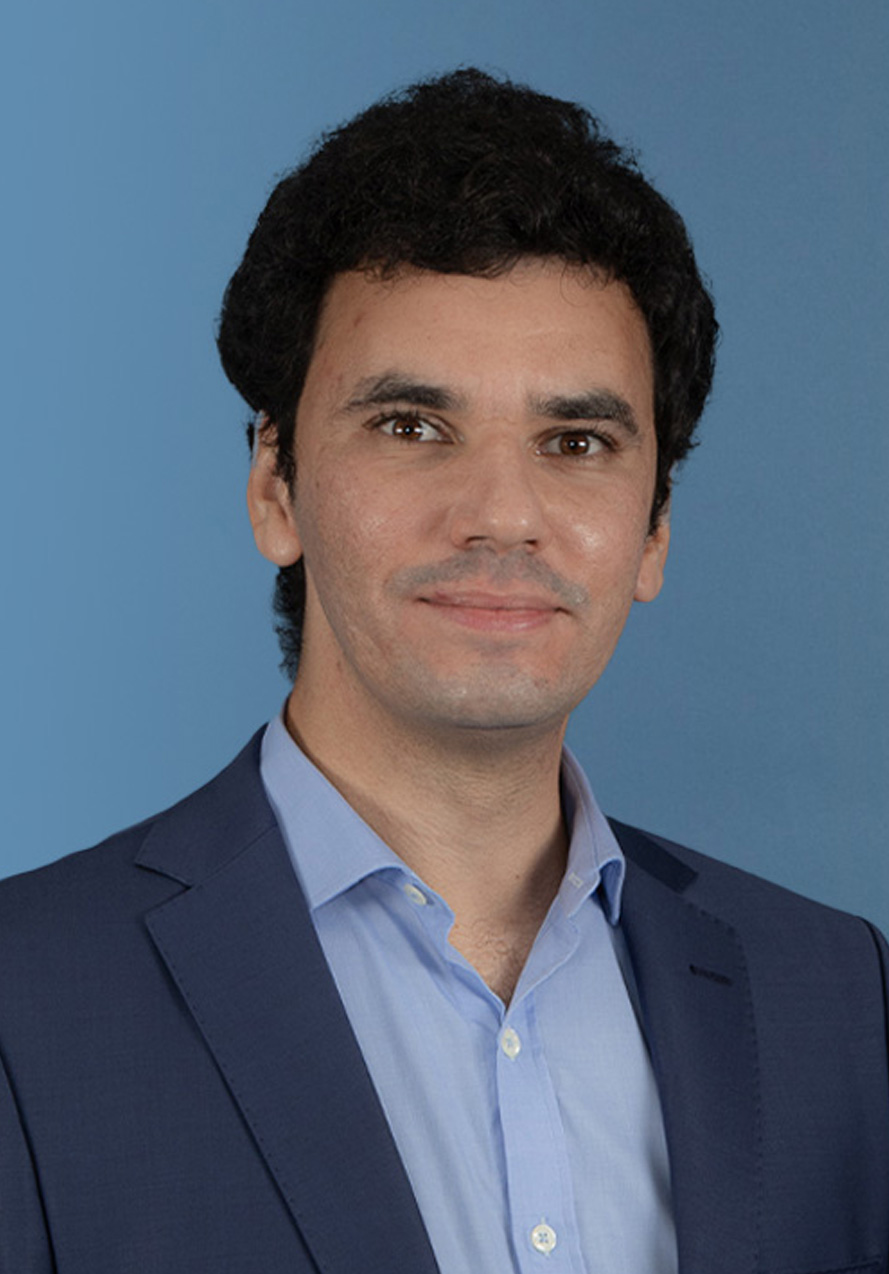
Abdessalam Saad Jaldi
Senior International Relations Specialist
Abdessalam Saad Jaldi was a Senior International Relations Specialist at the Policy Center for the New South (PCNS).He also served as an Affiliate Professor of Digital Law and Emerging Technologies at University Mohammed VI Polytechnic (UM6P)At the PCNS, Jaldi conducted research encompassing the Maghreb, the European Union (EU), India, and the evolving landscape of international law, with a particular focus on artificial intelligence (AI) and maritime lawHe notably represented the PCNS as a member of the T20 Brasil task force 6 (TF 06) on “Strengthening Multilateralism and Global Governance”.Abdessalam Saad Jaldi holds a PhD in Law from the University of Strasbourg, as well as two master’s degrees: One in Public and Private International Law from the University of Strasbourg, ...

RELATED CONTENT

  • Authors
    Françoise Nicolas
    January 1, 2011
    La montée en puissance de la Chine et de l’Inde domine les débats économiques depuis quelques années déjà. Poursuivant une stratégie d’internationalisation résolue, les entreprises chinoises et indiennes sont désormais présentes dans bon nombre de régions du globe. Ce dynamisme n’a pas manqué de susciter des inquiétudes mais aussi des espoirs, notamment dans le monde en développement, où ces deux pays sont perçus comme des partenaires potentiellement plus bienveillants que les pays ...
  • Authors
    Radhi Meddeb
    September 17, 2010
    The Gulf Cooperation Council (GCC) is a regional organization which was created in 1981, reassembling six Arab countries together: Saudi Arabia, Kuwait, Bahrain, Oman, Qatar, and the United Arab Emirates (UAE). Thanks to their oil income, GCC countries have enjoyed economic boom since 2002, hence breaking with the 1990s economic slow-down. The year 2002 corresponds to the oil prices’ entry in an upward spiral which has resulted in an increase of both income and foreign assets. This ...
  • Authors
    Kassim Bouhou
    September 17, 2010
    Before the 9/11 events, US-Maghreb relations were growing stronger, especially after the United States had long left the floor to the Maghreb’s “natural” European partner. Therefore the American action in this region was in line with a mechanism previously set off by Clinton Administration member, Stuart Eizenstat, which aimed at reducing intra regional obstacles and stimulating American investments towards an area where Americans were little-represented. Hence Washington seemed mor ...
  • Authors
    Flore Gubert
    September 1, 2010
    The potential synergy between development and migration has become a key feature of most international migration politics. However, this relationship is far from evident. Flore Gubert helps better understand the complexity of this relationship through the comparison of two regional contexts (Mexico and North Africa), and shows how the political and economic context prevailing in the countries of origin modifies the link between migration and development. This Note de l'Ifri is the ...
  • Authors
    Dida Badi
    February 20, 2010
    The industrial revolution underwent by Europe in the 18th century has triggered the need for the major colonial powers to find new markets for their manufactured products. It is in this colonial competitive framework that European explorers delivered information about the different access roads, as well as the Tuareg tribes, notably the Kel Ajjer and the Kel Ahaggar. ...
  • Authors
    Jean-Luc Peduzzi
    February 20, 2010
    On November 5th 2009, a cocaine-loaded Boeing 727 aircraft arriving from Venezuela was discovered torched and emptied on a makeshift airstrip in the Malian desert (Gao region). The sahel-saharan area is clearly a contact zone between very distant worlds. ...
  • June 25, 0021
    African Futures evolved from a conference to a digital platform and fund that helped impact-driven entrepreneurs and secure the funding and partnerships they need to scale their businesses across the continent. African Futures goal is to help turn national level sustainable business suc...
  • From

    02
    5:30 pm July 2026
    This episode explores Russia’s growing influence in Africa through media, information warfare, and anti-Western narratives. It examines how Moscow uses historical ties, social media, local influencers, and security partnerships to shape perceptions, while questioning the real scope and long-term impact of its presence on the continent. ...