AFRICAFE: Brazil's relationship with Africa

February 19, 2026

This Africafe's episode examines Brazil-Africa relations: historical ties shaped by the slave trade and diaspora, Lula’s trade expansion, and competition with China/EU. It explores South-South diplomacy’s potential to reshape global institutions, the role of “South Atlanticism,” and future cooperation opportunities and limits. How can these partnerships redefine post-Cold War dynamics?

Speakers
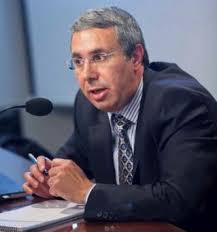
Nizar Messari
Professor of International Relations at Al Akhawayn University
...
Khadija Mamouni
Junior Analyst - International Relations Research Department
...

RELATED CONTENT

  • Authors
    Sabine Cessou
    July 19, 2021
    With no hesitation, Daniela Varela describes herself as a “good-listener, and a perseverant person with a positive-attitude”. Born and raised in Posadas, Misiones, a province of North-East Argentina bordering Paraguay and Brazil, she knew from a young age she wanted to work in international relations. Today, she is an International affairs advisor in the Ministry of Education of Argentina. She also holds the position of Secretary for International Affairs of the Latin American ...
  • Authors
    Seleman Kitenge
    March 30, 2020
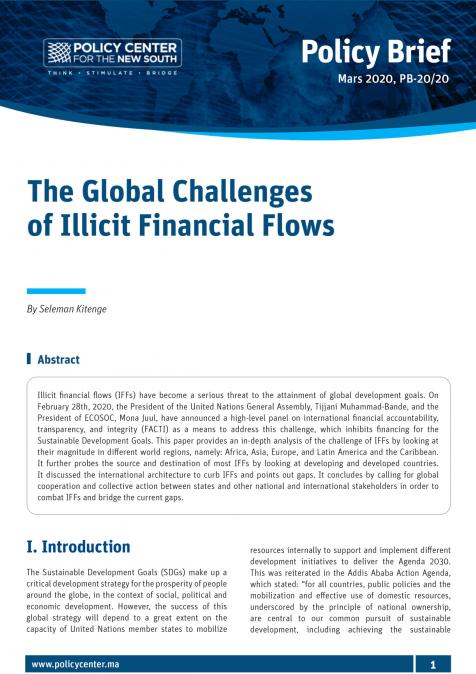
    Illicit financial flows (IFFs) have become a serious threat to the attainment of global development goals. On February 28th, 2020, the President of the United Nations General Assembly, Tijjani Muhammad-Bande, and the President of ECOSOC, Mona Juul, have announced a high-level panel on international financial accountability, transparency, and integrity (FACTI) as a means to address this challenge, which inhibits financing for the Sustainable Development Goals. This paper provides an ...
  • Authors
    Leonardo Parraga
    September 5, 2019
    Leonardo Parraga is an alumnus of the Atlantic Dialogues Emerging Leaders Program 2016.  The rise of globalization has given space to cooperation across borders in unprecedented ways. The interconnectedness between different actors allows for the creation of synergies and catalyzing progress in different areas, a feature that was previously unthinkable. When it comes to cooperation amongst young people, the increasing wave of meeting spaces facilitating the encounter ...
  • Authors
    July 3, 2019
    Twenty years after negotiations began between Mercosur and the European Union (EU), a trade agreement between ministers was reached last Friday in Brussels. Its first phase, from 1999 to 2014, had among the motivations on the European side not to be left behind while the US then pursued a Free Trade Agreement for Latin America (FTAA). Symptomatically, such enthusiasm cooled after FTAA negotiations came to a halt and the United States embarked on bilateral agreements with some c ...
  • Authors
    Pedro da Motta Veiga
    Sandra Polónia Rios
    June 24, 2019
    The cooperation between Brazil and Morocco dates back to the 19th century, when Moroccan migrants came to Brazil attracted by the then booming exploration of rubber in the Amazon rainforest. In 1861, the Brazilian government opened its first consulate in Tangier.  But it was only since 1961, with the Moroccan independence, that the bilateral relations began to diversify. At the political sphere, there has been a fluid dialogue, driven by convergent views on several i ...
  • Authors
    Carlos Antonio Carrasco
    Pascal Chaigneau
    Nicolas Desgrais
    Thierry Garcin
    Firmin Edouard Matoko
    Bouchra Rahmouni
    Michel Raimbaud
    Olivier Tramond
    April 10, 2019
    À travers cette publication conjointe, le Centre HEC de Géopolitique et le Policy Center for the New South ont souhaité présenter seize papiers discutés et enrichis au cours de la sixième édition des Dialogues Stratégiques qui s’est tenue le 3 octobre 2018. Cette rencontre avait choisi d’analyser l’espace politique et les enjeux géostratégiques de notre monde contemporain en se focalisant sur deux sujets d’actualité internationale : les crises et sorties de crises en Amérique l ...
  • Authors
    Youssef Amrani
    December 22, 2015
    La situation géopolitique prévalant actuellement dans le pourtour méditerranéen est difficile et complexe, en raison notamment, de l’apparition d’une nouvelle équation stratégique qui laisse craindre une nouvelle flambée de violence. Dans ce contexte perturbé, le Maroc, sous le leadership de SM le Roi Mohammed VI, s’est engagé dans un processus démocratique, fondé sur une approche inclusive qu’il mène avec foi et détermination. La Méditerranée conserve, certes, une triple vocation ...