Advancing Inclusive and Sustainable Industrial Development

October 3, 2025

In this episode, we explore Africa’s industrial challenges and opportunities, showing how AfCFTA-driven integration, green sectors, and inclusive policies for women, youth, and SMEs can foster sustainable growth, resilience, and domestic value capture.

Speakers
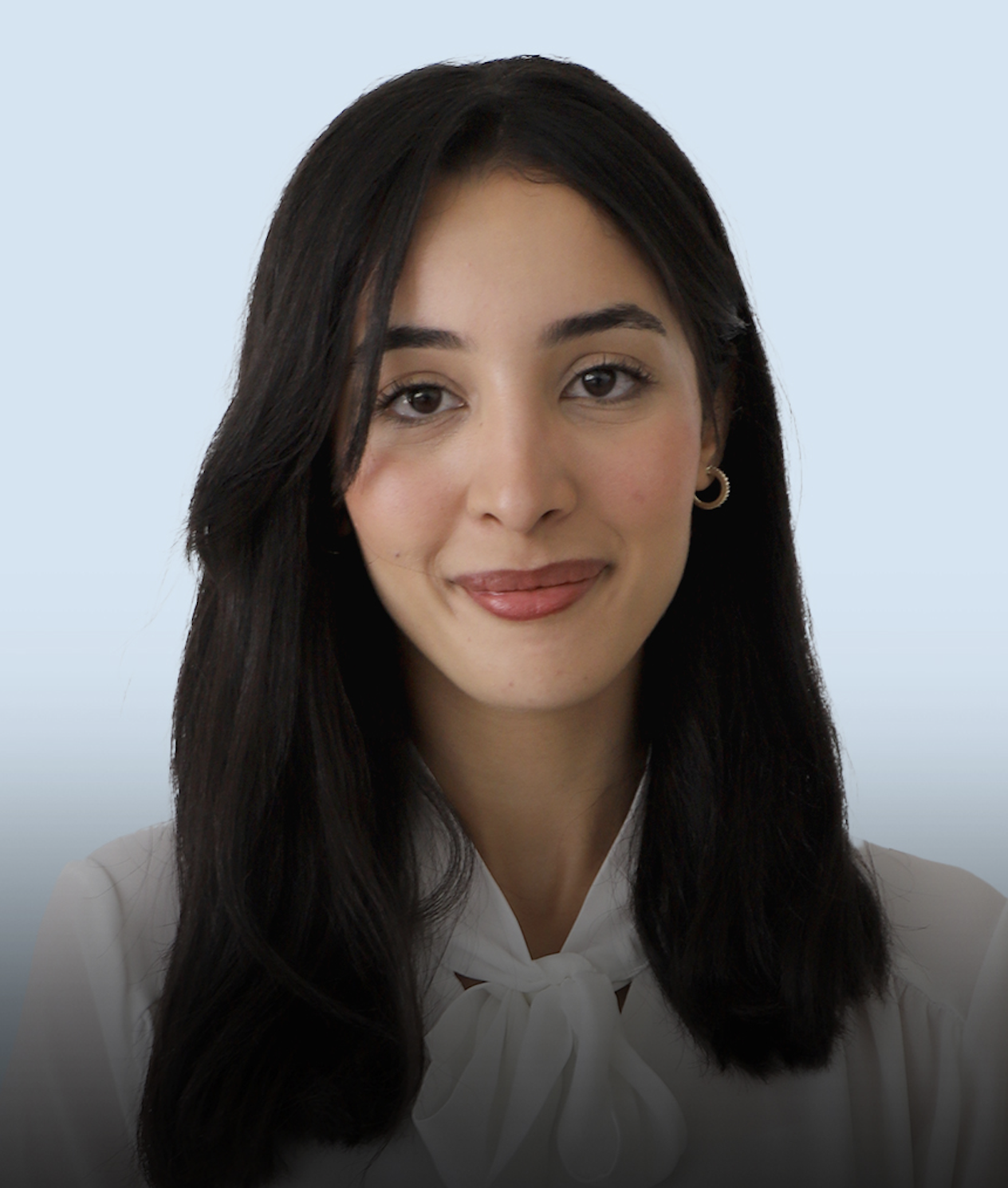
Saloi El Yamani
Economist
Saloi El Yamani is an Economist at the Policy Center for the New South. Since joining the center in November 2022, she has focused primarily on issues related to industrial policy and Global Value Chains. Saloi holds dual master’s degrees in International Economics and Development from the Paris Dauphine University, and International Economic Studies from the Faculty of Governance, Economic, and Social Sciences at Mohamed VI Polytechnic University. ...
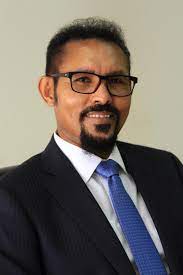
Arkebe Oqubay Metiku
British Academy Global Professor, SOAS University of London
 Arkebe Oqubay (PhD) is a distinguished scholar-practitioner. He is a British AcademyGlobal Professor at SOAS University of London. He is a former Senior Minister and hasserved as a Special Advisor to three successive prime ministers of Ethiopia. He has been atthe centre of policymaking in Ethiopia for over 30 years, successfully leading bold reformsand playing a pivotal role in Ethiopia’s economic transformation. He is the former Mayorof Addis Ababa, recognized for transforming the city. He has led the boards of key publicenterprises, including Ethiopian Airlines. Dr Arkebe’s research focuses on structural transformation,catch-up, green transformation, and industrial policy with a focus on Africa. DrArkebe currently gives policy advice to, and consults for, African gover ...
RELATED CONTENT

  • July 18, 2023
    Le secteur informel est une composante essentielle de l'économie marocaine, employant une large partie de la population, mais nuisant à la productivité, aux recettes fiscales de l’État et à la croissance économique à long terme. Sur la base de la définition adoptée dans cette étude et qui définit les travailleurs informels comme étant ceux qui ne sont pas couverts par les régimes contributifs de sécurité sociale de la Caisse nationale de sécurité sociale (CNSS) et d ...
  • Authors
    Zakaria Elouaourti
    July 1, 2023
    This paper was originally published on erf.org.eg   The digital divide in the financial sector has occurred through the development of financial technologies. These latest “FinTech” refers to technological innovations that have emerged in the financial system in recent years, which are the new channels for providing financial services. These innovations have disrupted traditional financing models by making financial transactions more secure and by reducing spatiotemporal ...
  • Authors
    Gladys Lopez-Acevedo
    Marco Ranzani
    Nistha Sinha
    Adam Elsheikh
    June 23, 2023
    This report was originally published on openknowledge.worldbank.org The long-standing informality debate in the Middle East and North Africa (MENA) Region has taken on a new urgency as it looks for a pathway to more socially inclusive growth that is less reliant on fossil fuels. This is occurring against a backdrop of subpar labor market outcomes, further growth setbacks, and deteriorating fiscal and current account de ficits in the aftermath of the COVID-19 pandemic—and in the wak ...
  • June 13, 2023
    يعد ميثاق الاستثمار الجديد، الصادر، في دجنبر 2022، والذي تم تطبيق أول مراسيمه، في يناير المنصرم، خارطة الطريق الإستراتيجية لإعطاء نفس جديد للاستثمار بالمغرب، الذي من شأنه أن يعزز تنافسية ...
  • June 6, 2023
      يعد ميثاق الاستثمار الجديد، الصادر، في دجنبر 2022، والذي تم تطبيق أول مراسيمه، في يناير المنصرم، خارطة الطريق الإستراتيجية لإعطاء نفس جديد للاستثمار بالمغرب، الذي من شأنه أن يعزز تنافسية الاقتصاد الوطني، فضلا عن تثمين دور الفاعلين في القطاع الخاص، وكذا منظومة الإنتاج المغربية. م...
  • Authors
    Pierre Sauvé
    May 29, 2023
    Morocco has made important strides in reducing poverty in the last three decades, thanks in large part to trade and industrial policies aimed at durably inserting the country into world flows of goods, services, and cross-border investment. Since 1992, per capita incomes have tripled (in current US$), contributing to a threefold drop in the Kingdom’s poverty headcount. The country of 37 million features consistently as one of the better-performing and more stable economies in the No ...
  • Authors
    Inkyo Cheong
    Lillyana Daza Jaller
    Siwook Lee
    Jean-Christophe Maur
    Martin Molinuevo
    Sahar Sajjad Hussain
    Pierre Sauvé
    Shane Sela
    Aleksandar Stojanov
    Iryna Klytchnikova
    Edited by Pierre Sauvé and Uri Dadush
    May 23, 2023
    The broad thrust of Morocco’s trade and industrial policies over the last thirty years has been to anchor Morocco into world flows of goods, services, and cross-border investment. Despite the challenges posed by the COVID-19 pandemic, rising international prices, and a complex geopolitical environment, Moroccans continue to derive significant benefits from their economy’s openness. These include improved consumer choice and welfare, the growing insertion of Moroccan firms into cross ...
  • Authors
    Abdelmonim AMACHRAA
    May 17, 2023
    Nothing better illustrates the positive contribution of the integration of national economies into global value chains than the fact that in the 1990s, the automotive sector barely existed in Morocco. Now, it is the leading export sector, with a production and assembly capacity of 700,000 vehicles, making it an attractive and competitive hub linking Africa and Europe in the automotive value chain. However, the automotive industry is on the cusp of change, with advances in electric a ...