• Authors
    Gabriela Keseberg Dávalos
    January 26, 2026
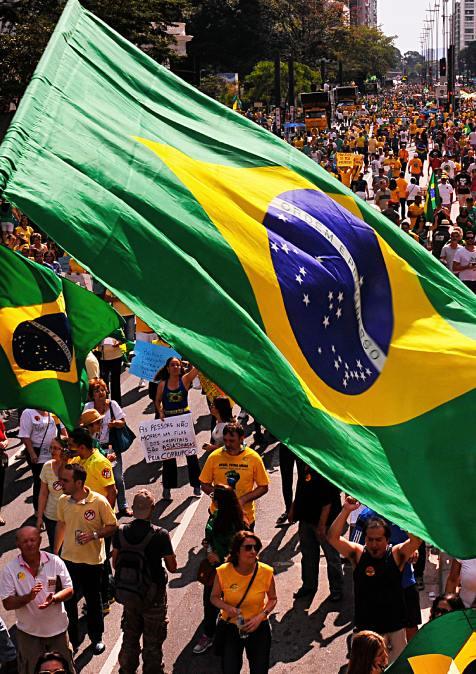
    This Opinion was originally published by the Hanns Seidel Stiftung on January 19th, 2026. The author of this opinion, Gabriela Keseberg Dávalos, is a 2013 alumna of the Atlantic Dialogues Emerging Leaders Program. The signing of the EU–Mercosur agreement is a small geopolitical miracle. Signed on 17 January 2026 in Paraguay, it arrives at a moment when Europe is unmistakably being cast aside by the United States. Meanwhile Latin America, and with it, the Mer ...
  • January 23, 2026
    The post-1945 international order, an architecture born of war-weariness and colonial twilight, is now a majestic but empty shell. Its foundational promise—a universal system of rules administered impartially—has been hollowed out by decades of selective enforcement, instrumentalized law, and a chasm between the rhetorical ideals of its custodians and their geopolitical practice. This is not a temporary dysfunction, but a systemic failure of legitimacy. From the invasion of Iraq und ...
  • January 23, 2026
    This episode of AfriCAFÉ examines how Africa’s development aid landscape is shifting amid major cuts by traditional donors and changing global priorities. Through a discussion with Stephen Klingebiel and Andrew Sumner, it questions whether aid has truly driven development or fostered de...
  • Authors
    January 21, 2026
    In response to developing countries’ dissatisfaction with the New Collective Quantified Goal (NCQG) of $300 billion, which was decided at the Twenty-Ninth Conference Of the Parties (COP29) to the United Nations Framework Convention on Climate Change, in 2024 in Baku, Azerbaijan, the COP29 and COP30 presidencies promised to develop a roadmap to achieve $1.3 trillion in external climate finance that developing countries need, and to present it at COP30 in Belém, Brazil[1]. The two pre ...
  • January 21, 2026
    The Policy Center for the New South hosted a seminar on January 16, 2026, titled “Crisis or Opportunity? Multilateralism in a Polycentric World.”The discussion addressed the growing strain on global cooperation amid overlapping financial, climate, security, and technological shocks, occ...
  • Authors
    Stephan Klingebiel
    Andy Sumner
    January 9, 2026
    Global cooperation is under stress. It hardly requires detailed analysis: the international system is in a profound crisis, when seen from many Northern vantage points. What if we see the same turbulence but from a different vantage point? For many in the Global South the current period signals risk, but also opportunity. That the same events could spark a sense of crisis in one group but opportunity in another is nothing new. However, the sheer scale, speed, and scope of recen ...