Publications /
Policy Brief

Back
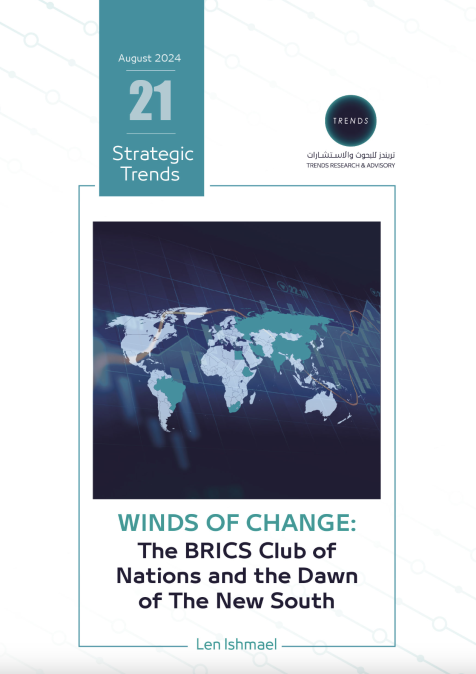
WINDS OF CHANGE: The BRICS Club of Nations and the Dawn of The New South
Authors
November 4, 2024

This paper was originaly published on trendsresearch.org


In this era of polycrises, where a global health pandemic coincides with wars in Europe and the Middle East, alongside Great Power rivalries and climate emergencies, countries around the world—rich and poor alike— are feeling the profound impacts. The Global South,1 in particular, has been disproportionately affected, with the World Bank warning of a ‘decade of lost development.’ As geopolitical tensions rise, security concerns are reshaping the nature of economic relationships between nations. This shift is especially evident in the complex interactions surrounding new technologies and the raw materials they depend on.

The traditional Western-led liberal world order, founded on principles of competition, open markets, free trade, and comparative advantage, is increasingly being challenged by protectionist behaviors in Western markets. The recent focus on de-risking and friend-shoring, justified by both security and economic concerns, has led to the adoption of anti-competitive practices. While the need for economic resilience is widely acknowledged, some argue that these measures are designed to undermine China’s comparative advantage in certain strategic sectors, thereby impeding its challenge to the hegemonic status of the United States and Western power more broadly. Regardless of the rationale, these new policies are adding another layer of disruption to global supply chains, already strained by recent crises. This trend raises concerns about the future of global trade as a critical tool for development, which has historically lifted millions out of poverty.

The specter of twelve rounds of Western sanctions on Russia as a consequence of the latter’s war in Ukraine since February 2022, and most recently, G7 initiatives to bankroll Ukraine’s war efforts through funds derived from interests on frozen Russian assets, has led several countries -spearheaded by BRICS members - to consider alternatives to the Western financial institutional architecture in a bid to safeguard their own interests. These measures risk fragmenting the existing global financial infrastructure and derailing benefits derived from decades of economic integration in the face of new barriers to cross border investment, commerce, and trade. Recent research shows that trade restrictions have more than tripled since 2019, financial sanctions have expanded and the geopolitical risk index has also spiked, following Russia’s invasion of Ukraine.2 While this and other reports suggest an absence of clear signs of de-globalization, the point is nonetheless being made that below-the-surface trends speak to increasing fragmentation with “trade and investment flows being redirected along geopolitical lines.”3 After decades of accepting the West’s rules, there is a sense that the era of the Global South is dawning, and that Western interests are no longer de facto those of the rest of the world. It is in this milieu that the BRICS and their initiatives take on heightened economic and political significance.


  • October 15, 2026
    The Policy Center for the New South, in partnership with The Asian Network, is organizing a webinar titled “Emerging Powers and the Remaking of Global Order” to examine the growing role of emerging powers and the Global South at a time of profound transformation in the international sys...
  • October 14, 2026
    في ظل التوترات الجيوسياسية المتصاعدة، تتغير طرق التجارة العالمية وتتبدل معها موازين الممرات الاستراتيجية. تفتح هذه الحلقة من «حديث الثلاثاء» النقاش حول التقاء المسارات البحرية والبرية داخل هذه الممرات، والعوامل التي تتحكم في طبيعة السلع التي تعبرها. وتبحث كذلك في ما يمكن للمغرب أن يجنيه...
  • Authors
    October 13, 2026
    “Every gun that is made, every warship launched, every rocket fired signifies in the final sense, a theft from those who hunger and are not fed, those who are cold and are not clothed.”President Dwight Eisenhower, April 16, 1953 This paper examines the economic and human impacts of the first six months of the Iran war—from February to the end of August 2026—on Iran’s Arab neighbors and compares these impacts with those on the three countries directly involved—Iran, Israel and t ...
  • Authors
    Florent Parmentier
    October 12, 2026
    Cet article soutient que le Chief Geopolitical Officer (CGO) doit être repensé à partir de l’expérience des entreprises africaines. Dans un environnement multipolaire et fragmenté, leur principal défi n’est pas seulement la gestion des risques, mais la préservation de plusieurs options stratégiques simultanément selon une logique de hedging. Trois modèles de CGO sont à distinguer : l’intermédiation (Office chérifien des Phosphates (OCP), Tanger Med), l’intégration régionale (Ethiopi ...
  • Authors
    Paul Isbell
    October 9, 2026
    In the first seven Policy Briefs of this ongoing series of analysis on Pan-Atlanticism: The Atlantic Basin in a Multipolar-Transnational World, we developed the argument that the strategic significance of the Atlantic Basin is on the rise for a range of international actors (states, regions and non-state agents) and from distinct political or ideological perspectives. In addition, in the most recently published Policy Brief -- “The U.S. and the Current International Reconfiguration: ...
  • Authors
    Lina Jaoid
    October 8, 2026
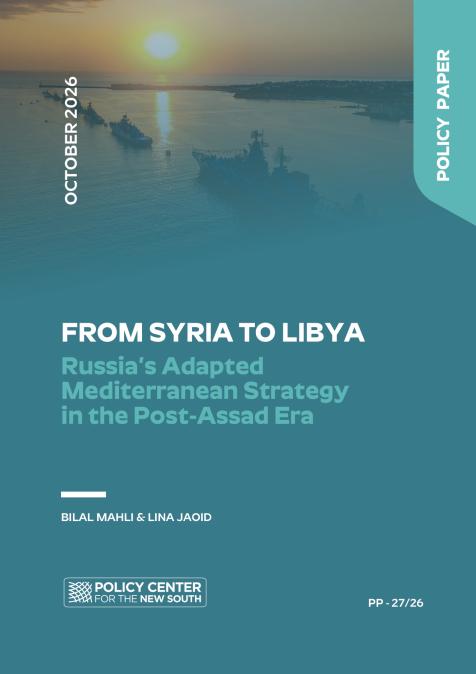
    In the two years since the fall of Bashar al-Assad in Syria, Russia has restructured its Mediterranean presence. Although Russia’s limited and increasingly conditional access to the Khmeimim and Tartus facilities in Syria has been preserved, its presence in the country has morphed from Assad’s ‘patron-client’ configuration to a more negotiated engagement. Simultaneously, Russia has upgraded its force-projection and logistical infrastructure in eastern Libya, giving it an access path ...
  • October 7, 2026
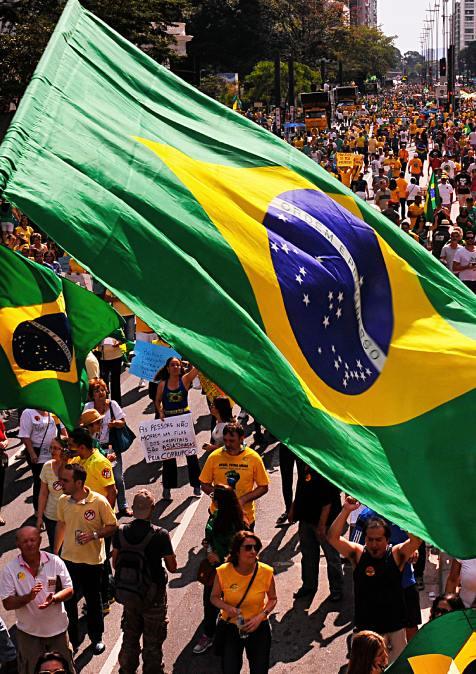
    Brazil's election poses a question that extends well beyond Latin America: how much freedom does a country retain to define its international role when external pressure collides with domestic political exhaustion? For the Global South, the answer matters more than any foreign government's preference regarding the next occupant of the presidential palace. Strategic autonomy remains fragile if every change of government puts a country's freedom of action back up for negotiation. ...
  • Authors
    Marie-Noelle Nwokolo
    October 6, 2026
    The author of this opinion, Marie-Noelle Nwokolo, is a 2024 alumna of the Atlantic Dialogues Emerging Leaders Program.In September 1978, delegations from 138 countries gathered in Buenos Aires, Argentina, around a powerful idea: developing countries had knowledge, experience and capabilities worth sharing with one another. The Buenos Aires Plan of Action gave institutional form to what we now call South-South Cooperation, part of a wider post-colonial effort by developing ...
  • October 02, 2026
    Building on his Policy Brief "Latin America, World Politics and the Great Powers", Nizar Messari examines how recent developments are reshaping U.S. influence in the region and affecting ...
  • Authors
    October 2, 2026
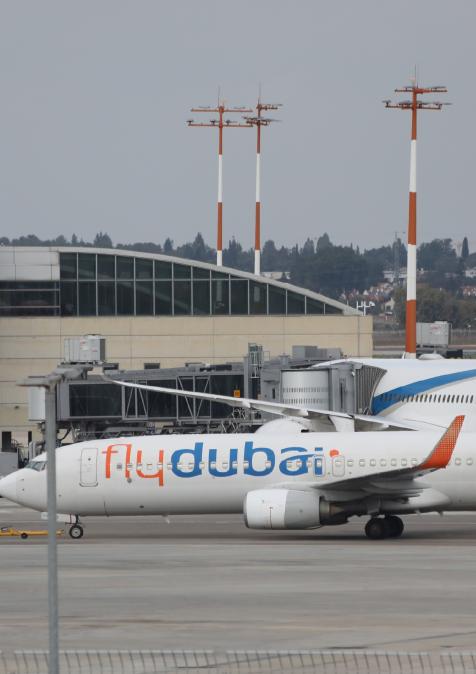
    The incident involving Flydubai Flight FZ1073 between Dubai and Tel Aviv does not yet support any definitive attribution. It does, however, provide a useful warning sign: as aviation security closes off traditional avenues of intrusion, threats may shift towards alternative pathways by exploiting the people, service providers, and systems that the aviation ecosystem must necessarily trust.  ...