Publications /
Policy Paper
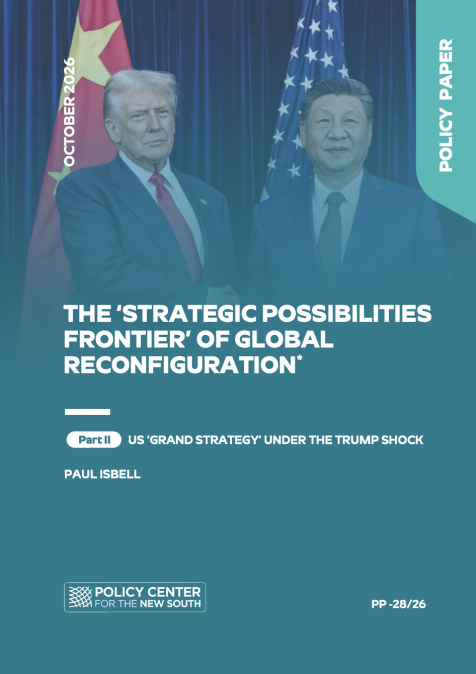
In the first seven Policy Briefs of this ongoing series of analysis on Pan-Atlanticism: The Atlantic Basin in a Multipolar-Transnational World, we developed the argument that the strategic significance of the Atlantic Basin is on the rise for a range of international actors (states, regions and non-state agents) and from distinct political or ideological perspectives. In addition, in the most recently published Policy Brief -- “The U.S. and the Current International Reconfiguration: Implications for Pan-Atlanticism and International Relations in the Atlantic Basin (PART 1)” – we began to develop a related thesis: that the material conditions for pan-Atlanticism, pan-Atlantic cooperation, and even Atlantic Basin regionalism could materialize -- despite their current, apparently, unlikely prospects -- under some possible future trajectories for the international system, and under certain scenarios for the United States.
As we wrote in that last Policy Brief, “the ‘fortunes’ of the Atlantic Basin concept and its episteme—pan-Atlanticism—and of budding pan-Atlantic cooperation and potential pan-Atlantic regionalism, will depend on how the structure of international power actually evolves into the future, in interaction with the Trump 2 shock”.
In this Policy Paper (and in those to follow), we extend and complete this analysis to demonstrate these two related theses. The central question is: what opportunities might open up for pan-Atlantic cooperation and Atlantic Basin regionalism within the new international configuration that is emerging over the middle term from the collision between the Trump 2 Shock (i.e. the U.S.’s ‘restoration’ attempt) and a maturing multipolarity that is coming to define the structure of international power within the global system (i.e. what will come to be defined as either the ‘reformation’ or ‘revolution’ scenarios)?