Publications /
Research Paper

Back
The impact of “reciprocal tariffs” on developing countries: a dynamic analysis
Authors
Cuong Le Van
August 26, 2025

This paper develops a continuous-time optimal control model to analyze the economic effects of the U.S. administration’s newly imposed “reciprocal tariffs,” which are determined by bilateral trade deficits. The model focuses on a small, open developing economy integrated into global value chains and facing limited policy space. We demonstrate how reciprocal tariffs, endogenously linked to the trade balance, affect production, consumption, capital accumulation, and overall welfare. We derive the full dynamic system, characterize its steady state, and explore the implications of domestic policy responses. The paper concludes with detailed policy recommendations for developing countries navigating this new trade environment, highlighting the roles of import substitution, export diversification, and regional cooperation in mitigating vulnerability to reciprocal tariffs.


RELATED CONTENT

  • October 15, 2026
    The Policy Center for the New South, in partnership with The Asian Network, is organizing a webinar titled “Emerging Powers and the Remaking of Global Order” to examine the growing role of emerging powers and the Global South at a time of profound transformation in the international sys...
  • Authors
    Paul Isbell
    October 9, 2026
    In the first seven Policy Briefs of this ongoing series of analysis on Pan-Atlanticism: The Atlantic Basin in a Multipolar-Transnational World, we developed the argument that the strategic significance of the Atlantic Basin is on the rise for a range of international actors (states, regions and non-state agents) and from distinct political or ideological perspectives. In addition, in the most recently published Policy Brief -- “The U.S. and the Current International Reconfiguration: ...
  • October 02, 2026
    Building on his Policy Brief "Latin America, World Politics and the Great Powers", Nizar Messari examines how recent developments are reshaping U.S. influence in the region and affecting ...
  • Authors
    September 30, 2026
    You can imagine how often I've been asked to comment on where the Brazilian economy is headed after the election. With polls pointing to a runoff on October 25 and currently showing a statistical tie between Luiz Inácio Lula da Silva and Flávio Bolsonaro in vote simulations, I'm naturally asked about their economic programs and about the country's relations with the United States. ...
  • August 3, 2026
    This policy paper explores how China’s economic development model—rooted in pragmatism, long-term planning, and civilizational renewal—has become its most compelling soft power asset, particularly in the eyes of the Global South. While critically engaging with Joseph Nye’s original conception of soft power as a primarily cultural and normative force, the paper argues that China’s ability to transform itself from an impoverished postimperial state into the world’s largest trading nat ...
  • Authors
    Jorge Arbache
    October 9, 2025
    Conventional wisdom holds that the United States has undergone massive deindustrialization in recent decades, with the country's manufacturing sector supposedly withering as it lost ground to China. This narrative has fueled debates about industrial policy, economic nationalism, and the reshoring of manufacturing production. But what if this story is only partially true? What if, instead of disappearing, American industry simply changed its address?  ...
  • Authors
    Cuong Le Van
    August 26, 2025
    This paper develops a continuous-time optimal control model to analyze the economic effects of the U.S. administration’s newly imposed “reciprocal tariffs,” which are determined by bilateral trade deficits. The model focuses on a small, open developing economy integrated into global value chains and facing limited policy space. We demonstrate how reciprocal tariffs, endogenously linked to the trade balance, affect production, consumption, capital accumulation, and overall welfare. W ...
  • Authors
    Gabriela Keseberg Dávalos
    August 26, 2025
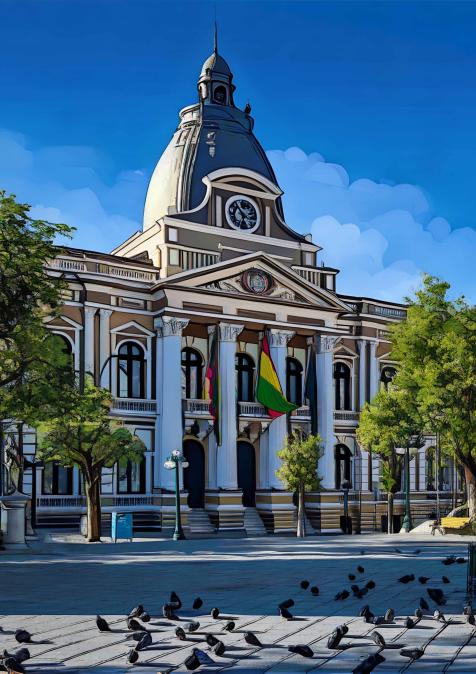
    The author of this opinion, Gabriela Keseberg Dávalos, is a 2013 alumna of the Atlantic Dialogues Emerging Leaders Program.On August 17, 2025, Bolivians did what once seemed unthinkable: they voted the Movement for Socialism (MAS) out of power, after almost two decades of dominance. For a country where last-minute surprises are the political norm, this outcome feels extraordinary. But the verdict is clear: MAS, the party that defined Bolivia’s politics for an entire generation, ...
  • Authors
    August 19, 2025
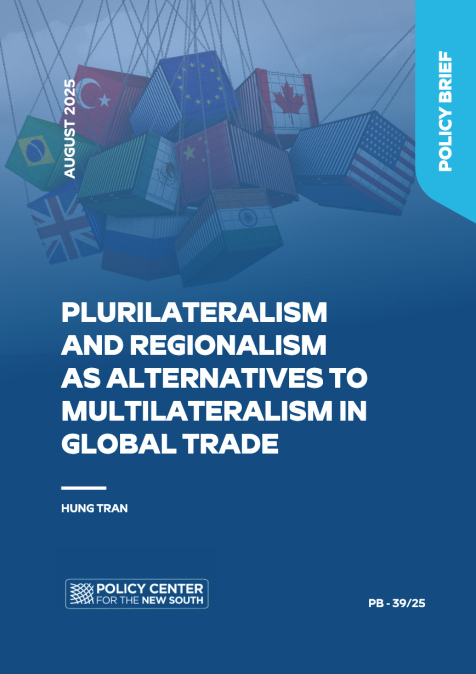
    The multilateral, rule-based trading system underpinned by the World Trade Organization (WTO) has been undermined by the unilateral imposition of U.S. tariffs. Crucially, the foundational principle of non-discrimination among WTO members has been abandoned. While many countries have attempted to negotiate with the U.S. to resolve tariff disputes, they have simultaneously sought to deepen trade ties with each other through plurilateral and regi ...