Publications /

Back
Future of African Cities Project: Rabat and Salé – Bridging the Gap
Authors
Nchimunya Hamukoma
Nicola Doyle
Archimedes Muzenda
November 29, 2018

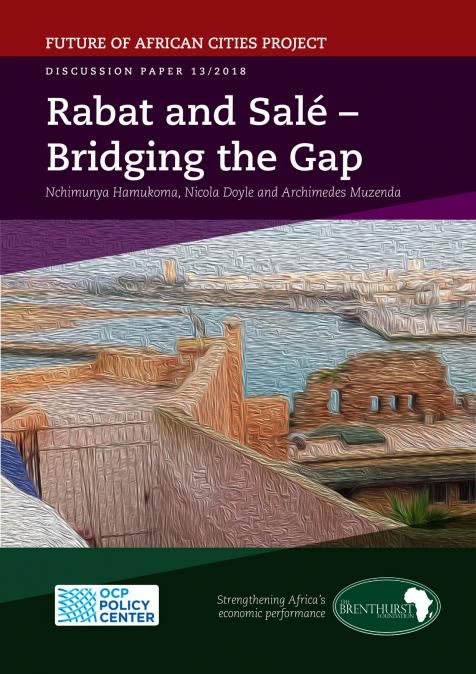
The twin cities of Rabat and Salé on Morocco’s west coast embody prominence in Morocco’s past and present, Rabat as capital and Salé as the third most populous city. Less than 20 years ago, however, Salé was charac¬terised by large slums, high unemployment, poor service delivery and limited mobility. Today, it is a changed city, providing housing to the majority of Rabat’s working class, with a modern tram linking the two cities.

Morocco’s ‘Cities without Slums’ programme, launched in 2004, has changed the face of cities across the country. With 60 per cent of the population now living in urban areas, this heroic effort, underpinned by strong economic growth, offers lessons to other African cities facing rapid urbanisation and social unrest. In Rabat and Salé, a shift towards decentralised governance and a clear focus on encouraging private invest¬ment in infrastructure projects have also contributed to rapid improvement.

This Paper investigates the success and shortcomings of Rabat and Salé in the areas of governance, security, economic growth, housing, transportation and service delivery. The story of these cities show that while history is important, it is not deterministic, and that with a combination of consistent urban policy, strong leadership and effective public-private partnerships, it is possible to turn a city around within 20 years.

RELATED CONTENT

  • May 16, 2023
    يزخر المغرب بتراث ثقافي جعله يتبوأ بأعلى المراتب على الصعيد الإفريقي من حيث عدد التسجيلات الثقافية على قائمة اليونسكو للتراث العالمي، وهو الشيء الذي مكن المغرب من إطلاق مجموعة من المشاريع والمبادرات المؤطـرة التي يتم دعمها وطنيا ودوليا. وعلى الرغم من هذه الدينامية الإيجابية التي مكنت من...
  • Authors
    Inácio F. Araújo
    May 5, 2023
    This paper presents a synthetic view of the socioeconomic and environmental impacts of the economic sectors and regions that make up the Moroccan economy, taking into account the current economic structure and production technologies. Therefore, the potential effects must be understood as signals to think about interventions aimed at redirecting the desired trajectories of sustainable development. The application of the tools developed to give scientific support to this analysis rev ...
  • April 25, 2023
    يعتبر الحق في الحصول على المعلومات إحدى آليات الشفافية وتيسير الرقابة على السياسات العمومية والمشاركة في الحياة العامة، باعتباره حقا مدنيا وسياسيا نادت به كل المواثيق الدولية. وبالرج ...
  • April 18, 2023
    يعتبر الحق في الحصول على المعلومات إحدى آليات الشفافية وتيسير الرقابة على السياسات العمومية والمشاركة في الحياة العامة، باعتباره حقا مدنيا وسياسيا نادت به كل المواثيق الدولية. وبالرجوع إلى الوثيقة الدستورية المغربية لسنة 2011، نجدها قد كرست هذا الحق من أجل تقوية المسار الديمقراطي ا...
  • Authors
    April 5, 2023
    Davantage qu'un acte de piété personnelle, le Ramadan est un phénomène éminemment social. Il renvoie à des dimensions complexes : de religion, de solidarité, d’éthique et aussi d’économie. Le jeûne du mois de Ramadan est évidemment l'une des obligations rituelles de l'Islam. Mais, plus que religieux (qui renvoie à l'institutionnalisation et l'objectivation), le Siyam est un fait spirituel (qui renvoie davantage à l’individuation et la subjectivation). Il donne lieu à des prières sur ...
  • April 04, 2023
    يرتبـط مفهـوم الطبقـة الوسـطى ارتباطـاً جوهريـاً بمفهـوم الطبقـة الاجتماعية وبدراسـة التقسـيم الاجتماعي كما يتطلــب توســيع هذه الطبقــة  حركيــة اجتماعيــة هدفهــا القضــاء علــى ال ...
  • Authors
    March 29, 2023
    The activity rate of Moroccan women (*) has been on a structural decline for some twenty years. This trend is all the more critical given its low level, regarded as one of the lowest in the world. And yet, a host of reforms, programs and actions have been implemented or are underway to improve the condition of women, both economically and socially, and in both urban and rural areas. Are we dealing with a societal phenomenon or simply with economic growth issues? What lessons can we ...