Publications /
Research Paper

Back
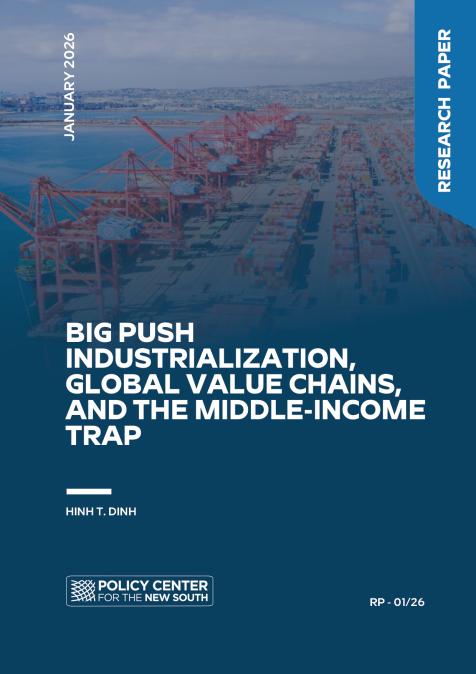
Big Push Industrialization, Global Value Chains, and the Middle-Income Trap
Authors
January 27, 2026

This paper revisits Big Push industrialization theory in the context of open economies deeply integrated into global value chains (GVCs). While classical Big Push models emphasize demand complementarities and coordination failures in largely closed economies, many middle-income countries now industrialize through foreign-owned, import-intensive production networks. We develop an extended Big Push framework that incorporates GVC integration and import leakage, and show how these features can prolong the middle-income trap, despite rapid manufacturing expansion. Importantly, the analysis shows that without careful and well-designed industrial policy, large-scale investment programs inspired by Big Push logic may unintentionally reinforce import leakage, rather than generate self-reinforcing domestic demand spillovers. In this case, a Big Push can prolong the middle-income trap and lead to adverse outcomes. We characterize the conditions under which the domestic modern industry is left unviable, derive the critical industrial-policy threshold required to redirect domestic demand toward local production, and establish welfare rankings across alternative development strategies.

Using a panel of ten middle-income economies from 1989 to 2024, we provide empirical evidence consistent with the model’s predictions: greater trade openness and higher investment-income payments are associated with systematically larger GDP-GNI wedges, reflecting structural income leakage rather than transitory price effects. Distributed-lag estimates show that investment-income outflows affect the wedge immediately, while trade integration operates with longer lags. The results imply that GVC participation alone does not guarantee national income convergence, and that successful late industrialization requires deliberate policy sequencing to convert export-led growth into domestic value capture.


RELATED CONTENT

  • October 15, 2026
    The Policy Center for the New South, in partnership with The Asian Network, is organizing a webinar titled “Emerging Powers and the Remaking of Global Order” to examine the growing role of emerging powers and the Global South at a time of profound transformation in the international sys...
  • Authors
    Florent Parmentier
    October 12, 2026
    Cet article soutient que le Chief Geopolitical Officer (CGO) doit être repensé à partir de l’expérience des entreprises africaines. Dans un environnement multipolaire et fragmenté, leur principal défi n’est pas seulement la gestion des risques, mais la préservation de plusieurs options stratégiques simultanément selon une logique de hedging. Trois modèles de CGO sont à distinguer : l’intermédiation (Office chérifien des Phosphates (OCP), Tanger Med), l’intégration régionale (Ethiopi ...
  • October 09, 2026
    Can Nigeria’s Dangote refinery help strengthen Africa’s energy security amid disruptions to global supply routes? This discussion considers how expanding local refining capacity can reduc ...
  • Authors
    Marie-Noelle Nwokolo
    October 6, 2026
    The author of this opinion, Marie-Noelle Nwokolo, is a 2024 alumna of the Atlantic Dialogues Emerging Leaders Program.In September 1978, delegations from 138 countries gathered in Buenos Aires, Argentina, around a powerful idea: developing countries had knowledge, experience and capabilities worth sharing with one another. The Buenos Aires Plan of Action gave institutional form to what we now call South-South Cooperation, part of a wider post-colonial effort by developing ...
  • Authors
    Luladay Berhanu Mengistie
    Guillaume Gérout Suominen
    September 21, 2026
    The African Union Summit of February 2026 instructed the African Continental Free Trade Area (AfCFTA) Council of Ministers to negotiate a Protocol on Industrial Policy and Development. This work, handled without adequate preparation, is likely to reproduce the weaknesses it is meant to remedy. This paper is a conceptual mapping exercise, written to raise the preparatory questions before drafting begins, rather than to prescribe outcomes.It proceeds in five sections:1. It works towar ...
  • Authors
    September 9, 2026
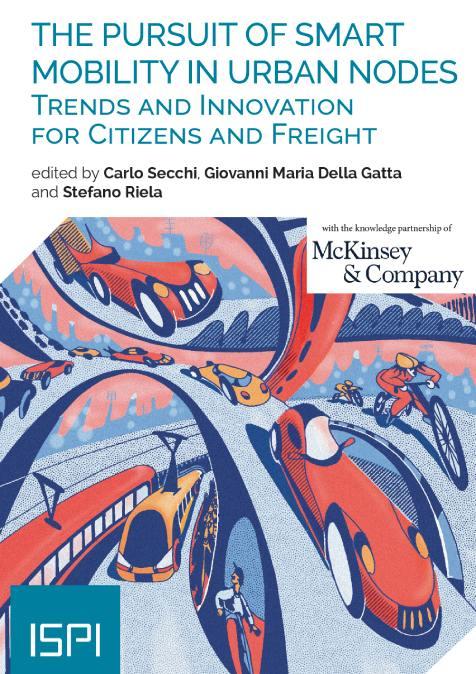
    This paper was originally published as a chapter in the ISPI report The Pursuit of Smart Mobility in Urban Nodes: Trends and Innovation for Citizens and Freight. Agglomeration economies have historically supported industrialisation and global integration by concentrating firms, labour and infrastructure in dynamic urban cores. However, these same forces have also generated persistent patterns of territorial polarisation. Drawing on New Economic Geography, this chapter interpret ...
  • Authors
    Andy Sumner
    Stephan Klingebiel
    September 4, 2026
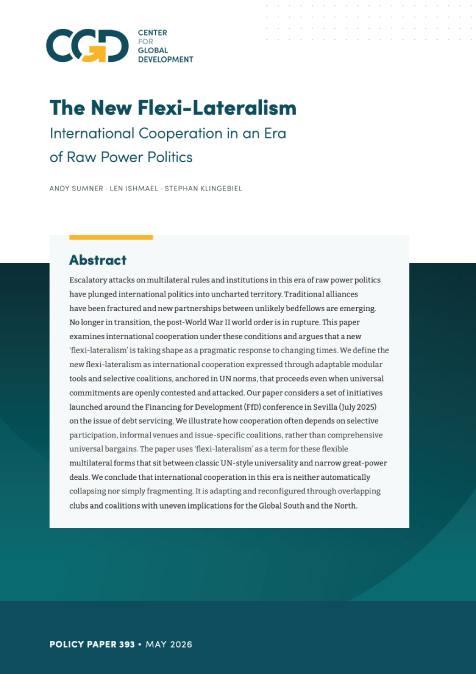
    This Paper was originally published on cgdev.org. Escalatory attacks on multilateral rules and institutions in this era of raw power politics have plunged international politics into uncharted territory. Traditional alliances have been fractured and new partnerships between unlikely bedfellows are emerging. No longer in transition, the post-World War II world order is in rupture. This paper examines international cooperation under these conditions and argues that a new "flexi-l ...
  • August 26, 2026
    The Africa Center, in partnership with the Policy Center for the New South, hosts a discussion on how air transport in Africa could be a powerful catalyst of economic growth, underpin regional trade, and fuel skilled job creation. ...
  • Authors
    Meryam Amarir
    August 13, 2026
    Les crises récentes au Moyen-Orient, notamment les attaques ciblant les navires commerciaux en mer Rouge et les tensions autour du détroit d'Ormuz, ont mis en évidence la vulnérabilité des principaux corridors stratégiques du commerce mondial. Plus qu'un bouleversement de l'organisation des échanges, elles accélèrent une transformation déjà engagée, fondée sur la recherche de chaînes de connectivité plus résilientes, la diversification des itinéraires commerciaux et le développement ...
  • Authors
    Meryam Amarir
    August 13, 2026
    Recent crises in the Middle East, particularly attacks targeting commercial vessels in the Red Sea and tensions surrounding the Strait of Hormuz, have highlighted the vulnerability of the main strategic corridors of global trade. Rather than fundamentally disrupting the organization of trade flows, these crises are accelerating an ongoing transformation driven by the search for more resilient connectivity chains, the diversification of trade routes, and the development of logistics ...