Publications /
Policy Paper

Back
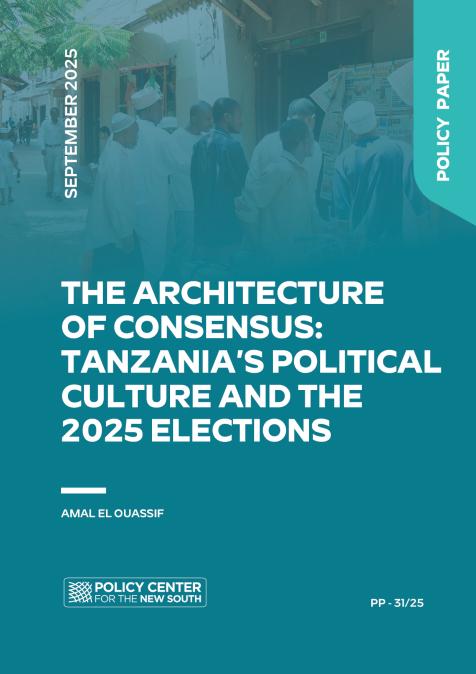
The Architecture of Consensus: Tanzania’s Political Culture and the 2025 Elections
Authors
September 15, 2025

The October 2025 general elections in Tanzania unfold within a political culture grounded in consensus and institutional continuity. President Samia Suluhu Hassan’s leadership has reopened political space by restoring elite dialogue, easing restrictions on rallies, and facilitating the return of exiled figures. Yet the exclusion of CHADEMA—the principal opposition party—highlights the enduring limits of pluralism. This paper analyzes the Tanzanian electoral process less as a conventional test of democratic competition than as a recalibration of consensus politics, where inclusion and exclusion are managed within a hegemonic framework shaped by the legacies of ujamaa and the dominance of Chama Cha Mapinduzi (CCM). Drawing on the works of Hyden and others, the analysis situates the 2025 elections within a historical continuum in which elections function as instruments of national affirmation and elite negotiation rather than mechanisms for alternation of power. The discussion develops along three interrelated dimensions: the persistence of elite accommodation within CCM, the bounded openness of civic and opposition space, and the symbolic but limited role of procedural pluralism. It argues that Samia’s leadership reflects a strategy of “negotiated legitimacy,” with reforms carefully calibrated to safeguard stability and international credibility while preserving the architecture of dominance. The conclusion reflects on the implications of this model for Tanzania’s future: while stability is maintained through consensus without contestation, growing demographic, social, and digital pressures may test the resilience of this political order beyond 2025.


RELATED CONTENT

  • October 15, 2026
    The Policy Center for the New South, in partnership with The Asian Network, is organizing a webinar titled “Emerging Powers and the Remaking of Global Order” to examine the growing role of emerging powers and the Global South at a time of profound transformation in the international sys...
  • October 14, 2026
    في ظل التوترات الجيوسياسية المتصاعدة، تتغير طرق التجارة العالمية وتتبدل معها موازين الممرات الاستراتيجية. تفتح هذه الحلقة من «حديث الثلاثاء» النقاش حول التقاء المسارات البحرية والبرية داخل هذه الممرات، والعوامل التي تتحكم في طبيعة السلع التي تعبرها. وتبحث كذلك في ما يمكن للمغرب أن يجنيه...
  • Authors
    Florent Parmentier
    October 12, 2026
    Cet article soutient que le Chief Geopolitical Officer (CGO) doit être repensé à partir de l’expérience des entreprises africaines. Dans un environnement multipolaire et fragmenté, leur principal défi n’est pas seulement la gestion des risques, mais la préservation de plusieurs options stratégiques simultanément selon une logique de hedging. Trois modèles de CGO sont à distinguer : l’intermédiation (Office chérifien des Phosphates (OCP), Tanger Med), l’intégration régionale (Ethiopi ...
  • Authors
    Paul Isbell
    October 9, 2026
    In the first seven Policy Briefs of this ongoing series of analysis on Pan-Atlanticism: The Atlantic Basin in a Multipolar-Transnational World, we developed the argument that the strategic significance of the Atlantic Basin is on the rise for a range of international actors (states, regions and non-state agents) and from distinct political or ideological perspectives. In addition, in the most recently published Policy Brief -- “The U.S. and the Current International Reconfiguration: ...
  • Authors
    Lina Jaoid
    October 8, 2026
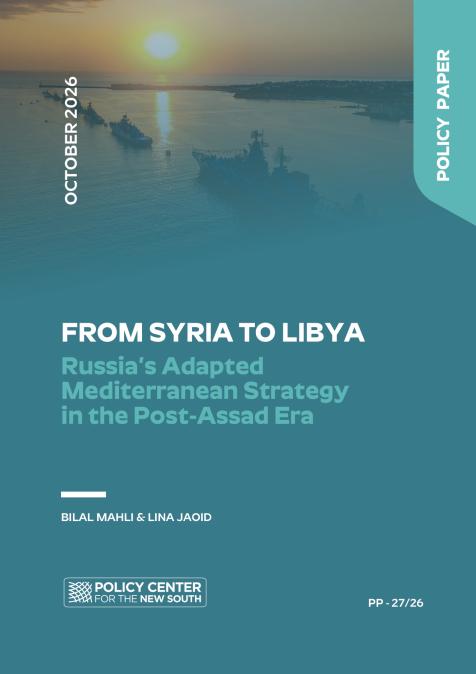
    In the two years since the fall of Bashar al-Assad in Syria, Russia has restructured its Mediterranean presence. Although Russia’s limited and increasingly conditional access to the Khmeimim and Tartus facilities in Syria has been preserved, its presence in the country has morphed from Assad’s ‘patron-client’ configuration to a more negotiated engagement. Simultaneously, Russia has upgraded its force-projection and logistical infrastructure in eastern Libya, giving it an access path ...
  • Authors
    Marie-Noelle Nwokolo
    October 6, 2026
    The author of this opinion, Marie-Noelle Nwokolo, is a 2024 alumna of the Atlantic Dialogues Emerging Leaders Program.In September 1978, delegations from 138 countries gathered in Buenos Aires, Argentina, around a powerful idea: developing countries had knowledge, experience and capabilities worth sharing with one another. The Buenos Aires Plan of Action gave institutional form to what we now call South-South Cooperation, part of a wider post-colonial effort by developing ...
  • September 28, 2026
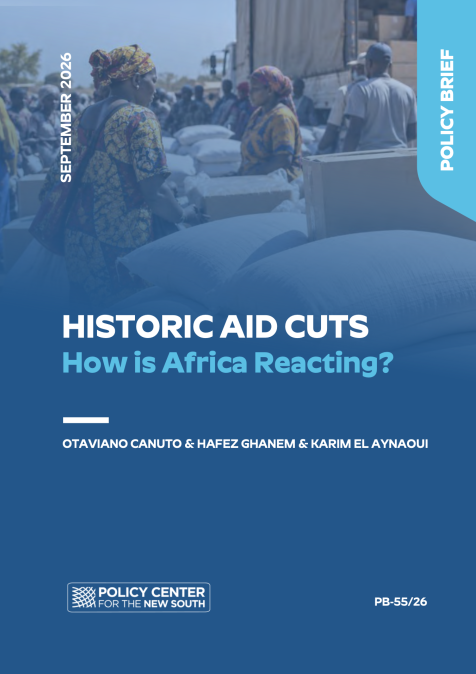
    This paper was initially published in French on the website of the Fondation Jean-Jaurès. There was a historic decline in Official Development Assistance (ODA) in 2025. Foreign aid to developing countries from members of the OECD-DAC fell by some 23%, the largest decline on record and the second consecutive annual decline. Aid to Africa fell by more than 25%. The International Monetary Fund (IMF) described this decline in ODA to Africa as “a shock like no other.” It differ ...
  • Authors
    Marianna Albuquerque
    September 23, 2026
    The author of this opinion, Marianna Albuquerque, is a 2022 alumna of the Atlantic Dialogues Emerging Leaders Program.As world leaders gather in New York for the 81st United Nations General Assembly, climate change returns to the center of multilateral diplomacy under markedly different circumstances. The debate is no longer confined to whether the world must decarbonize, but increasingly centers on how the transition will happen, who will bear its costs, who will capture ...