Podcasts

Back

Beyond Borders: Exploring Latin American Public Opinion on Atlantic Space

12
May 2023
Gerardo Maldonado & Mohamed Brick

The term "Atlantic matter" refers to the geopolitical and economic significance of the Atlantic Ocean and its surrounding regions, including Latin America, Africa, and Europe. The podcast highlights the need to consider the Atlantic space when analyzing public opinion in Latin America, as it has an important impact on economic, social, and political factors in the region.
The podcast also explores the differences in how different countries or regions within Latin America view the Atlantic space. It examines the factors that drive these differences, including historical, cultural, and economic factors. The podcast speculates on how these differences may impact public opinion on issues related to the Atlantic space. Furthermore, the podcast discusses the role of think tanks in shaping public opinion towards the Atlantic space in Latin America. It highlights the challenges that think tanks may face in doing so, including limited resources, competing priorities, and political polarization. The podcast also explores the role of the elite in shaping public opinion towards the Atlantic space and discusses their willingness to engage in policy discussions related to the region.


This podcast episode was produced as part of the Jean Monnet Atlantic Network 2.0, with the support of the European Union's Erasmus+ Program. The opinions expressed in the recorded content are solely those of the authors, as such,  neither the Agency nor the Commission can be held accountable for any use of the information it presents.

RELATED CONTENT

  • October 7, 2026
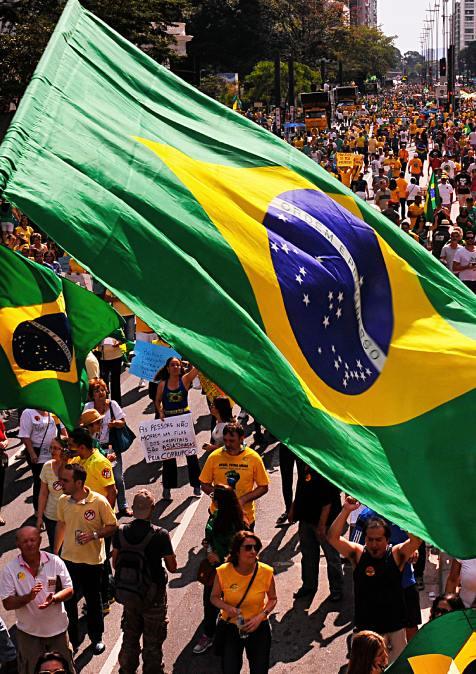
    Brazil's election poses a question that extends well beyond Latin America: how much freedom does a country retain to define its international role when external pressure collides with domestic political exhaustion? For the Global South, the answer matters more than any foreign government's preference regarding the next occupant of the presidential palace. Strategic autonomy remains fragile if every change of government puts a country's freedom of action back up for negotiation. ...
  • October 02, 2026
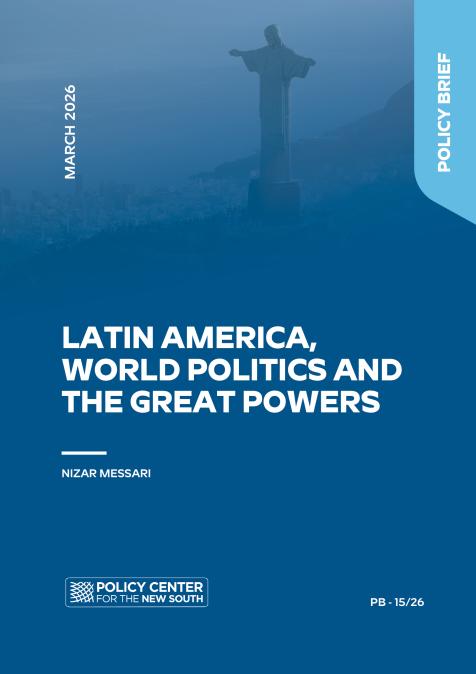
    Building on his Policy Brief "Latin America, World Politics and the Great Powers", Nizar Messari examines how recent developments are reshaping U.S. influence in the region and affecting ...
  • Authors
    September 30, 2026
    You can imagine how often I've been asked to comment on where the Brazilian economy is headed after the election. With polls pointing to a runoff on October 25 and currently showing a statistical tie between Luiz Inácio Lula da Silva and Flávio Bolsonaro in vote simulations, I'm naturally asked about their economic programs and about the country's relations with the United States. ...
  • Authors
    July 13, 2026
    On “marinetraffic.com”, thousands of triangles fill a map of the world’s ports and oceans, each representing the active location and destination of a ship, reported the “McGill International Review” (April 16, 2026) adding,” suspicious tankers are plentiful among them.” One of these vessels, marked by a red triangle, appears, zoomed, as “Monique”, a twenty-year-old vessel, aka Tokyo, Phuket and Elysia. Its old age and the frequent name change, suspects reporter Julnar Alzuki, “indic ...
  • Authors
    April 1, 2026
    We are now in the fifth week since the U.S. airstrike that killed top leaders of the Iranian regime, initiating a war involving the United States and Israel against the country. More than a month of mutual bombardments between Iran and Israel has ensued, extending to other Persian Gulf nations, U.S. military installations—and even Cyprus. From a global perspective, the impact has stemmed primarily from disruptions to regional production of goods and the blockade of the Strait of Hor ...
  • Authors
    Nizar Messari
    March 13, 2026
    Latin America has had to deal with expansionist agendas of great powers since its independence. To do so, different leaders from the region have adopted different policies. Some have sought to reinforce their relations with the U.S. whereas others mistrusted their big neighbor from the North and tried to multiply their partnerships with other parties in order to keep their autonomy. To this respect, the central role played by U.S.-Latin American relations, epitomized by the1823 Monr ...
  • Authors
    February 12, 2026
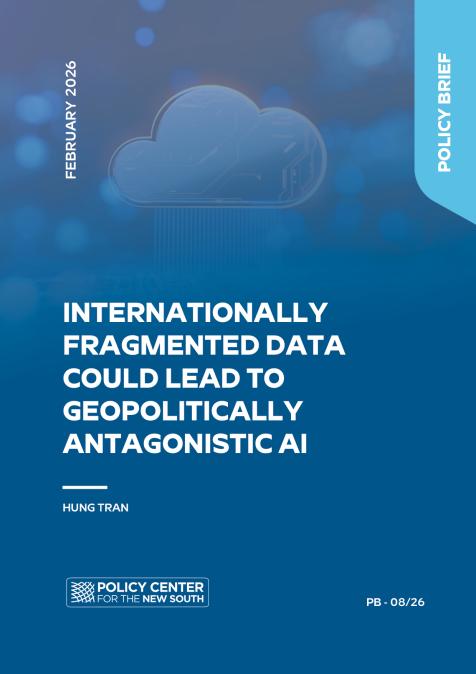
    Divergent regulatory regimes for data, driven by different motivations, ranging from privacy protection in the European Union to information control in China, could eventually produce distinctively different, and possibly contradictory, bodies of data. Artificial-intelligence models trained on those datasets could produce differing and possibly even conflicting outputs. To the extent that AI outputs start to shape human perception and to influence decisions, in governments and ...
  • January 23, 2026
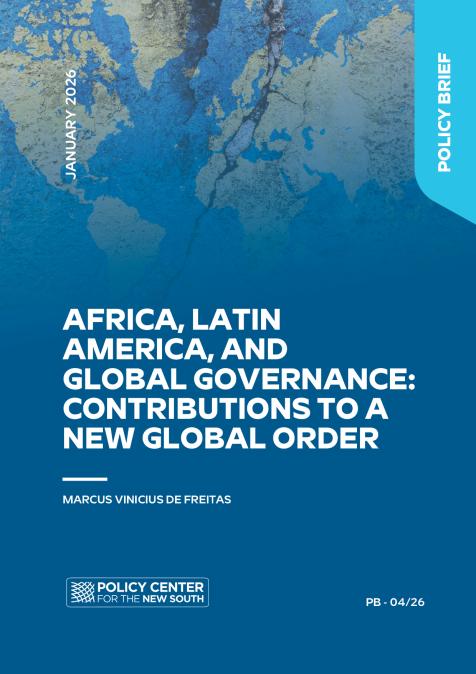
    The post-1945 international order, an architecture born of war-weariness and colonial twilight, is now a majestic but empty shell. Its foundational promise—a universal system of rules administered impartially—has been hollowed out by decades of selective enforcement, instrumentalized law, and a chasm between the rhetorical ideals of its custodians and their geopolitical practice. This is not a temporary dysfunction, but a systemic failure of legitimacy. From the invasion of Iraq und ...