Small States & Great Power Relations: How do Caribbean SIDs Secure their Interests?

June 17, 2021

The Policy Center for the New South, in partnership with the Brussels Diplomatic Academy, will host a webinar under the theme “Small States & Great Power Relations: How do Caribbean SIDs Secure their Interests?”, scheduled on Thursday, June 17th, 2021 at 2pm Rabat time/ 3pm Brussels time. These are extraordinary and highly uncertain times. Great power rivalry and competition between the USA and China are at an all-time high; the world is still in the grips of an on-going pandemic. Post COVID-19 recovery will be a long drawn out process. In the midst of tensions between East and West there are some who argue that a bifurcation of global systems will take place as the World Order continues to evolve and global value chains experience some degree of uncoupling as a result of both the effects of the pandemic and existing geopolitical tensions. In an evolving international structure small states need all the friends they can find. They have few opportunities and weapons in the soft power tool kit with which to lobby for and protect their interests. Coalitions and alliances matter. In this era of heightened tensions during which the economic and social effects of the pandemic will be long lasting, small states such as the SIDS of the Caribbean need to tread wearily, not wishing to be caught in tensions between East or West. In such a world, how do they influence global policies and secure their interests? Can they?
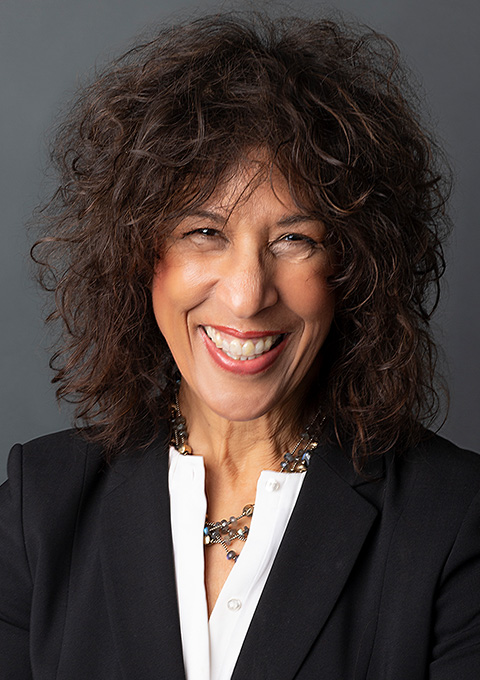

Speakers
Len Ishmael
Senior Fellow
Ambassador Dr. Len Ishmael is an affiliate Professor at Mohammed VI Polytechnic University teaching the MSc course New South Dynamics, as well as Geopolitics and Geo-economics in the Joint HEC Paris/Public Policy School Executive Program. She is a Senior Fellow of the Policy Center for the New South, Distinguished Visiting Scholar of the German Marshall Fund of the United States of America and a Senior Fellow of the European Centre for Development Policy Management. Dr. Ishmael is the Global Affairs Advisor and Head of the Expert Groups of the Brussels Diplomatic Academy of the Vrije Universiteit Brussel (VUB). She is the former Ambassador of the Eastern Caribbean States to the Kingdom of Belgium and European Union, past President of the 79-member African, Caribbean & ...
Eustace Wallace
Counsellor Political & Economic Affairs St Kitts & Nevis High Commission. Ottawa.
...

  • Authors
    François Gemenne
    March 1, 2011
    This paper analyzes the future of migrations related to climate changes and environment degradations. He shows how the dominant public reasoning remains inappropriate for addressing these issues, because of the Western/Northern countries' misconception of the relation between migration and environmental changes, including the cultural and political biases these countries show in the solutions they propose. The discrepancy between public policies and the actual reality of climatic an ...
  • Authors
    Françoise Nicolas
    January 1, 2011
    La montée en puissance de la Chine et de l’Inde domine les débats économiques depuis quelques années déjà. Poursuivant une stratégie d’internationalisation résolue, les entreprises chinoises et indiennes sont désormais présentes dans bon nombre de régions du globe. Ce dynamisme n’a pas manqué de susciter des inquiétudes mais aussi des espoirs, notamment dans le monde en développement, où ces deux pays sont perçus comme des partenaires potentiellement plus bienveillants que les pays ...
  • Authors
    Kassim Bouhou
    September 17, 2010
    Before the 9/11 events, US-Maghreb relations were growing stronger, especially after the United States had long left the floor to the Maghreb’s “natural” European partner. Therefore the American action in this region was in line with a mechanism previously set off by Clinton Administration member, Stuart Eizenstat, which aimed at reducing intra regional obstacles and stimulating American investments towards an area where Americans were little-represented. Hence Washington seemed mor ...
  • Authors
    Radhi Meddeb
    September 17, 2010
    The Gulf Cooperation Council (GCC) is a regional organization which was created in 1981, reassembling six Arab countries together: Saudi Arabia, Kuwait, Bahrain, Oman, Qatar, and the United Arab Emirates (UAE). Thanks to their oil income, GCC countries have enjoyed economic boom since 2002, hence breaking with the 1990s economic slow-down. The year 2002 corresponds to the oil prices’ entry in an upward spiral which has resulted in an increase of both income and foreign assets. This ...
  • Authors
    Dida Badi
    February 20, 2010
    The industrial revolution underwent by Europe in the 18th century has triggered the need for the major colonial powers to find new markets for their manufactured products. It is in this colonial competitive framework that European explorers delivered information about the different access roads, as well as the Tuareg tribes, notably the Kel Ajjer and the Kel Ahaggar. ...
  • Authors
    Jean-Luc Peduzzi
    February 20, 2010
    On November 5th 2009, a cocaine-loaded Boeing 727 aircraft arriving from Venezuela was discovered torched and emptied on a makeshift airstrip in the Malian desert (Gao region). The sahel-saharan area is clearly a contact zone between very distant worlds. ...
  • From

    15
    5:00 pm October 2026
      The Policy Center for the New South, in partnership with The Asian Network, is organizing a webinar titled “Emerging Powers and the Remaking of Global Order” to examine the growing role of emerging powers and the Global South at a time of profound transformation in the international system.As power becomes more diffuse, economic gravity shifts, multilateralism comes under pressure, and strategic competition intensifies, countries across Asia, Africa, the Gulf, and Latin America are seeking greater strategic autonomy, strengthening South-South trade and investment, advancing digital and green transitions, and calling for greater representation in global governance.These ambitions, however, unfold against significant challenges, including debt vulnerabilities, climat ...
  • From

    06
    11:00 am October 2026
    Dans un environnement international reconfiguré, les économies à revenu intermédiaire poursuivent leur processus de convergence dans des conditions plus exigeantes. La fragmentation géopolitique et la réorganisation des chaînes de valeur mondiales modifient les logiques d'insertion productive, tandis que les tensions sur le système monétaire international pèsent sur le financement des économies en développement. L'accélération des transitions technologique et énergétique redistribue par ailleurs les avantages comparatifs et exige des capacités d'adaptation que tous les pays ne peuvent mobiliser au même degré. Les moteurs classiques du rattrapage se trouvent fragilisés, et le risque d'enlisement dans le piège du revenu intermédiaire se pose de manière plus pressante.C'est dans ...