Agriculture and Food Security post Covid-19 with Isabelle Tsakok (5/5)

May 17, 2020

Retrouvez les analyses de nos expert-e-s au sujet de l'impact de la crise Covid 19 en une série de 5 entretiens

Speakers
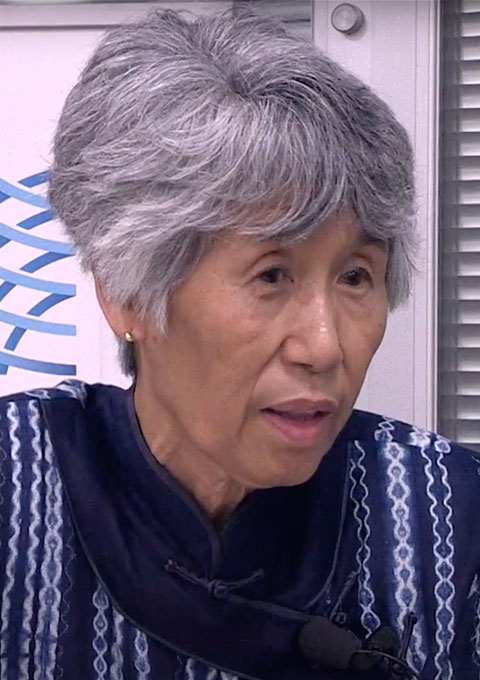
Isabelle Tsakok
Senior Fellow
Isabelle Tsakok, development practitioner, policy analyst, researcher, and teacher, is a Senior Fellow at the Policy Center for the New South. She grew up in the Republic of Mauritius, a multi- lingual, multi-ethnic and multi-cultural society. She holds a PHD in Economics from Harvard University, and a BA in Phil/Econ from the London School of Economics. As World Bank staff and consultant, she has focused on agricultural and rural development including on issues of agricultural transformation, food security, and poverty reduction. She has worked in most regions of the developing world, including Africa –North and South of the Sahara; Asia - South, Southeast and East; and Latin America. She has taught courses on agricultural policies and institutions at the World Bank; the Scho ...
RELATED CONTENT

  • Authors
    September 14, 2026
    Le déclenchement de la Guerre en Iran et le blocage du détroit d’Ormuz ont eu des conséquences majeures sur un grand nombre de marchés mondiaux de matières premières. Si l’attention médiatique s’est logiquement portée sur le pétrole et le gaz naturel, ainsi que sur l’aluminium, en raison de la forte dépendance de l’offre de ce métal aux prix de l’énergie, le soufre, comme l’hélium, l’éthylène, le propylène ou l’urée, a également été pris dans les rets de ce conflit. Loin d’être une ...
  • Authors
    August 5, 2026
    This paper addresses the persistent challenge of resource dependence in the world's poorest countries, focusing on the ten poorest African nations where natural- resource rents average 14% of income. It argues that four decades of conventional policy advice, which treated resource dependence primarily as a revenue management problem, have failed to help these countries. While stabilization funds and permanent-income frameworks aim to smooth consumption, they do not answer the fundam ...
  • Authors
    July 31, 2026
    Ethiopia continues to struggle to lay the economic foundations of food security for all, more than 30 years after first adopting the East Asian Developmental State Model (EADS) under Zenawi (1911-2012), continued under Hailemariam Desalegn (2012-April 2018), and later shifting toward a neo-liberal, Washington consensus-oriented approach under Abiy Ahmed (2018-present). The achievements recorded under the EADS approach—particularly double-digit annual growth, substantial poverty ...
  • July 23, 2026
    L'agriculture occupe une place stratégique dans l'économie marocaine, mais sa transformation reste confrontée à des défis structurels majeurs. Dans cet entretien, les intervenants reviennent sur les limites des politiques agricoles menées depuis l'indépendance, notamment l'objectif d'au...
  • Authors
    June 24, 2026
    Africa today remains far from food secure. Chronic malnutrition, widespread anemia among women of childbearing age, stunting and wasting among young children, pervasive underemployment in both rural and urban areas, and a youth bulge frustrated by high unemployment are key features of a continent that is seriously off track with respect to the SDG deadline: only 6% of SDGs have been implemented (Mo Ibrahim Forum, 2025).Despite this dismal progress, Africa can still achieve “The Afri ...
  • Authors
    June 9, 2026
    This Opinion was originally published on dev-front.org, by Hafez Ghanem, Senior Fellow at the Policy Center for the New South.Joe Studwell has spent most of his career working on Asia and brings an interesting fresh perspective on the economics of Africa. This makes the book worth reading even if one disagrees with some conclusions.   The book’s main argument is that Africa should follow the Asian model of first focusing on smallholder agriculture, then labor intensive manufact ...
  • Authors
    August 29, 2025
    After 1994, everything was a priority, and our people were completely broken. But we made three fundamental choices that guide us to this day. One—we chose to stay together. Two—we chose to be accountable to ourselves. Three—we chose to think big. — His Excellency President Paul Kagame, 20th Commemoration of the Genocide against the Tutsi (April 7, 2014) Rwanda’s socio-economic progress since 1994 has been remarkable. Rwanda is rightly considered a showcase of the enduring ...