
RELATED CONTENT
-
 October 9, 2026In the first seven Policy Briefs of this ongoing series of analysis on Pan-Atlanticism: The Atlantic Basin in a Multipolar-Transnational World, we developed the argument that the strategic significance of the Atlantic Basin is on the rise for a range of international actors (states, regions and non-state agents) and from distinct political or ideological perspectives. In addition, in the most recently published Policy Brief -- “The U.S. and the Current International Reconfiguration: ...
 -
 October 8, 2026In the two years since the fall of Bashar al-Assad in Syria, Russia has restructured its Mediterranean presence. Although Russia’s limited and increasingly conditional access to the Khmeimim and Tartus facilities in Syria has been preserved, its presence in the country has morphed from Assad’s ‘patron-client’ configuration to a more negotiated engagement. Simultaneously, Russia has upgraded its force-projection and logistical infrastructure in eastern Libya, giving it an access path ...
 -
 September 25, 2026Dans cet épisode d’Africafé, Amadou Diop analyse les défis de sécurité maritime auxquels font face les pays de l’Afrique atlantique, de la piraterie aux trafics transfrontaliers. Il souligne la nécessité de mutualiser les moyens et de partager l’information entre États. L’échange aborde...
 -
 September 25, 2026In this episode, Senior Fellow Ian Lesser examines the United States’ longstanding ties with the Mediterranean as the country marks its 250th anniversary. He discusses how a possible shif ...
 -
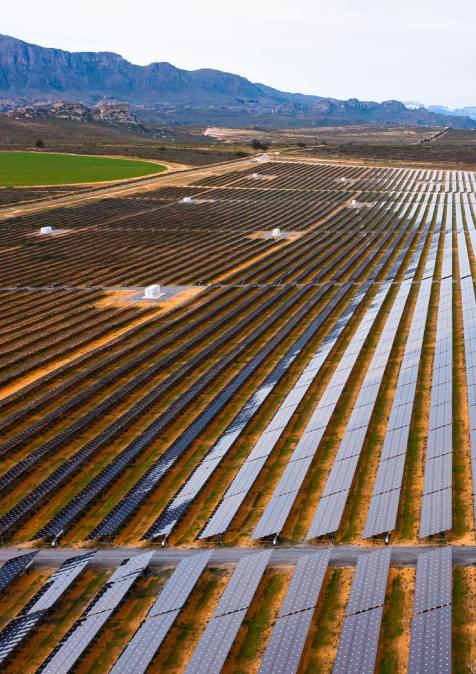 September 23, 2026The author of this opinion, Marianna Albuquerque, is a 2022 alumna of the Atlantic Dialogues Emerging Leaders Program.As world leaders gather in New York for the 81st United Nations General Assembly, climate change returns to the center of multilateral diplomacy under markedly different circumstances. The debate is no longer confined to whether the world must decarbonize, but increasingly centers on how the transition will happen, who will bear its costs, who will capture ...
 -
 August 13, 2026Les crises récentes au Moyen-Orient, notamment les attaques ciblant les navires commerciaux en mer Rouge et les tensions autour du détroit d'Ormuz, ont mis en évidence la vulnérabilité des principaux corridors stratégiques du commerce mondial. Plus qu'un bouleversement de l'organisation des échanges, elles accélèrent une transformation déjà engagée, fondée sur la recherche de chaînes de connectivité plus résilientes, la diversification des itinéraires commerciaux et le développement ...
 -
 August 13, 2026Recent crises in the Middle East, particularly attacks targeting commercial vessels in the Red Sea and tensions surrounding the Strait of Hormuz, have highlighted the vulnerability of the main strategic corridors of global trade. Rather than fundamentally disrupting the organization of trade flows, these crises are accelerating an ongoing transformation driven by the search for more resilient connectivity chains, the diversification of trade routes, and the development of logistics ...
 -
 August 12, 2026La géographie mondiale des hydrocarbures n'est évidemment pas figée. De nouveaux producteurs de pétrole et/ou de gaz naturel apparaissent suite à des découvertes, le plus souvent réalisées par des compagnies pétrolières internationales. On pense notamment au Mozambique, qui produit et exporte du gaz naturel liquéfié (GNL) depuis la fin 2022, au Sénégal, qui est un producteur de pétrole offshore depuis la mi-2024, et au Sénégal et à la Mauritanie, qui sont devenus conjointement expor ...
 -
 July 23, 2026Since 2018, the Atlantic Vision exercise has provided a structured space within the Atlantic Dialogues Emerging Leaders program for successive cohorts to reflect collectively on the future of the Atlantic Basin. Each year, participants are divided into economic, political, and social working groups and tasked with identifying the region’s most pressing challenges and proposing forward-looking solutions. Over time, these reports have formed a coherent intellectual trajectory. Th ...
 -
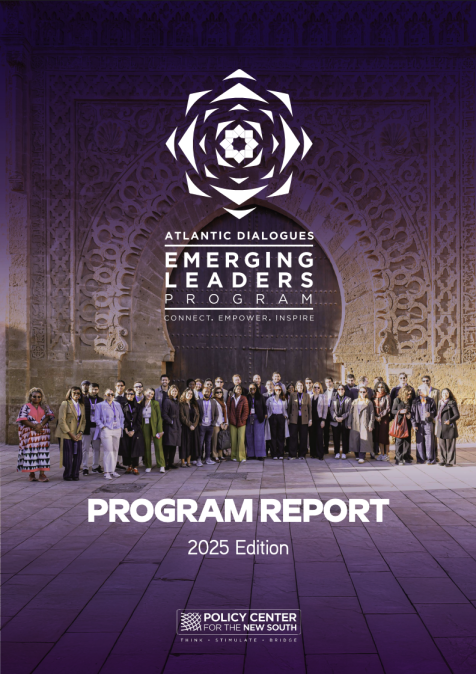 July 16, 2026The 12th Atlantic Dialogues Emerging Leaders program took place from December 7 to 11, 2025, in Rabat, Morocco. From a highly competitive pool of more than 1,900 applicants representing 125 countries, 42 exceptional young professionals, aged 25 to 35, were selected. The cohort included participants from 27 countries across the Atlantic Basin, spanning Africa, Europe, and the Americas, with additional representation from Asia and Oceania, reflecting the program’s growing global reach ...

