Publications /
Policy Brief
This paper was originaly published on trendsresearch.org
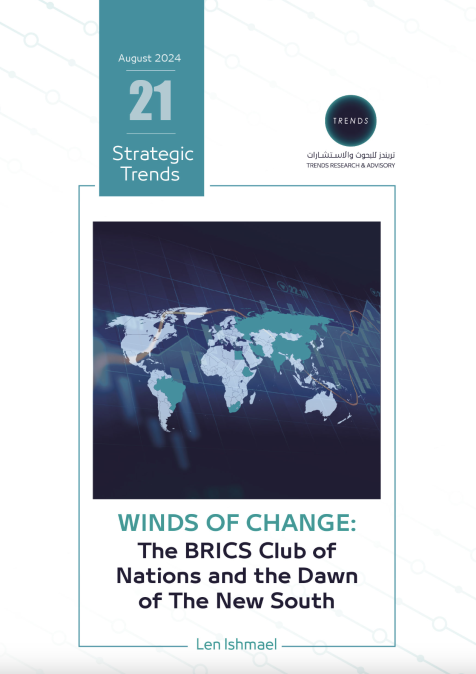
In this era of polycrises, where a global health pandemic coincides with wars in Europe and the Middle East, alongside Great Power rivalries and climate emergencies, countries around the world—rich and poor alike— are feeling the profound impacts. The Global South,1 in particular, has been disproportionately affected, with the World Bank warning of a ‘decade of lost development.’ As geopolitical tensions rise, security concerns are reshaping the nature of economic relationships between nations. This shift is especially evident in the complex interactions surrounding new technologies and the raw materials they depend on.
The traditional Western-led liberal world order, founded on principles of competition, open markets, free trade, and comparative advantage, is increasingly being challenged by protectionist behaviors in Western markets. The recent focus on de-risking and friend-shoring, justified by both security and economic concerns, has led to the adoption of anti-competitive practices. While the need for economic resilience is widely acknowledged, some argue that these measures are designed to undermine China’s comparative advantage in certain strategic sectors, thereby impeding its challenge to the hegemonic status of the United States and Western power more broadly. Regardless of the rationale, these new policies are adding another layer of disruption to global supply chains, already strained by recent crises. This trend raises concerns about the future of global trade as a critical tool for development, which has historically lifted millions out of poverty.
The specter of twelve rounds of Western sanctions on Russia as a consequence of the latter’s war in Ukraine since February 2022, and most recently, G7 initiatives to bankroll Ukraine’s war efforts through funds derived from interests on frozen Russian assets, has led several countries -spearheaded by BRICS members - to consider alternatives to the Western financial institutional architecture in a bid to safeguard their own interests. These measures risk fragmenting the existing global financial infrastructure and derailing benefits derived from decades of economic integration in the face of new barriers to cross border investment, commerce, and trade. Recent research shows that trade restrictions have more than tripled since 2019, financial sanctions have expanded and the geopolitical risk index has also spiked, following Russia’s invasion of Ukraine.2 While this and other reports suggest an absence of clear signs of de-globalization, the point is nonetheless being made that below-the-surface trends speak to increasing fragmentation with “trade and investment flows being redirected along geopolitical lines.”3 After decades of accepting the West’s rules, there is a sense that the era of the Global South is dawning, and that Western interests are no longer de facto those of the rest of the world. It is in this milieu that the BRICS and their initiatives take on heightened economic and political significance.