Publications /
Opinion
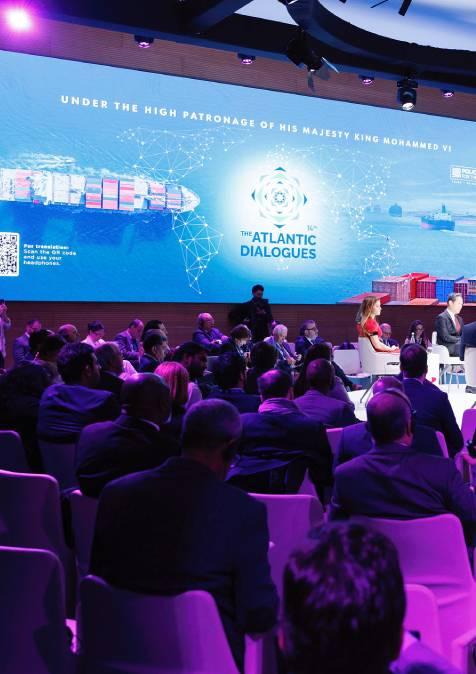
At the Atlantic Dialogues in December 2025, I argued that a period was underway in which trade and security could no longer be analytically or practically separated. Assessments have solidified in recent months regarding the emergence of a geoeconomic world order. Geoeconomics was a gradual transition from a purely geopolitical focus on military force, to an emphasis on economics to gain competitive advantage. It is no longer a transitional phase, but an emerging structural component of the international system. Trade protectionism, industrial policy, export controls, and supply-chain restrictions are being used increasingly as tools of foreign policy, rather than merely as temporary measures to address immediate crises.
The main challenge in this context for the Atlantic community is not whether this current geoeconomic environment will require an adaptation, but rather how the community should adapt. For three decades, the structures developed for regulating the process of globalization were based on relatively stable levels of geopolitical tension among the major powers. However, today’s global environment is characterized by systemic rivalries, regional conflicts, and technological competition. Thus, while economic interdependence has not disappeared, it has become a contested area of interaction between states.
Atlantic actors need to move beyond reactive adaptation. They should adopt a strategy of coordinated strategic shaping of their respective economies, in the face of these changing conditions. The intersection of trade and security, the restructuring of global commerce under duress, and the increasing proliferation of nationalistic economic policies across multiple geographic regions, demand a comprehensive and integrated response. While seemingly an ocean away, Japan’s ‘Free and Open Indo-Pacific’ model represents an example of how economic security can be linked to a positive vision of governance using rules, rather than as a tool of confrontation. This lesson can be applied to the Atlantic region.
I set out here a few reflections from the geoeconomic discussion at the Dialogues.
Trade and Security Convergence
For most of the post-Cold War era, the primary driver of economic globalization has been efficiency. Supply chains were structured to minimize costs. Capital flowed to larger companies that could provide faster service. Trade liberalization was seen as the best way to increase political stability. Commercial integration and strategic alliances, while related to each other; generally existed in separate arenas.
This is now changing rapidly. Strategic technologies, including advanced semiconductors, quantum systems, artificial intelligence, and clean energy infrastructure, exist at the crossroads of national defense and competitive advantage. Concentrated supply chains have illustrated how an economy’s dependence on its suppliers can give supplier nations significant influence over the politics of the dependent nation. Financial networks have transformed into sanctions regimes with a scope previously unseen.
While this trend is not specific or exclusive to any single nation or alliance, even countries such as Japan and the nations of the European Union are moving to take more aggressive industrial positions. There are many examples of emerging economies that are developing their own resource-based nationalism. Economic stress and political re-alignment are occurring globally, not just within the United States. The implication is clear: trade policy is now strategic policy. Industrial policy is security policy. Economic governance cannot be insulated from geopolitical realities.
Conflict as an Economic Catalyst
As a result of recent conflict, this transition has speeded up. Russia’s full-scale invasion of Ukraine triggered sanctions against Moscow and a rapid transformation of the way energy flows across Europe. The relative ease with which Europe has been able to reduce its dependency on natural gas imports from Russia demonstrates resilience; however, it also demonstrates how deeply energy interdependency has become embedded into Europe’s economic model.
Instability in the Red Sea region has also resulted in significant disruption to maritime shipping lanes that are critical to the flow of goods between Europe and Asia. Additionally, as tension escalates in the Indo-Pacific region, many governments and companies are evaluating the risks associated with manufacturing concentration in East Asia, especially those related to high-tech industries.
These disruptions have highlighted three systemic weaknesses relevant for the Atlantic community:
- Over-concentration of critical components at specific locations.
- Under-investment in redundancy.
- Over-reliance on metrics of efficiency, without consideration of geopolitical risk.
While global commerce is not collapsing, it is undergoing significant change. Companies are expanding their production bases. Governments are offering incentives for domestic or allied manufacturing. Supply chains are being evaluated through a resilience lens, instead of solely a cost lens. Adaptation is no longer optional for the economies of the Atlantic region, which are subject to a wide range of factors including maritime disruption, technology bifurcation, and commodity price volatility.
Interdependence as Leverage
As the number and scope of sanctions regimes grow, so does the level of coordination among governments. Trade restrictions and export controls on leading-edge semiconductor manufacturing equipment and semiconductor design software have drastically changed how technology companies operate. Governments are implementing investment screening mechanisms at an unprecedented pace—from Washington D.C. to Brussels.
While these types of actions are often responses to legitimate national security concerns, they have unintended consequences that stack up when multiple countries impose similar restrictions without coordinated action. This is known as fragmentation—each country creates its own economic security measures, which can result in reduced economies of scale globally, a loss of faith in multilateral institutions, and even the creation of parallel financial and technological systems.
Therefore, Atlantic actors must exercise restraint and discipline in their use of economic tools for security purposes, unless it is deemed existential to deter a focused adversary. Targeted, proportional measures taken by governments in alignment will enhance the overall resilience of all parties involved. Conversely, if governments unilaterally or politically restrict access to markets or resources, it could weaken the very system that was established to protect against such threats.
Economic Stress is Systemic, Not Singular
Renewed U.S. industrial activism has dominated public discourse in recent months and was a fixture of discussion at the 2025 Atlantic Dialogues. Tariffs, domestic-content mandates, and the massive subsidies that are accompanying these tariffs, have changed transatlantic dialogue and relationships fundamentally. However, to view the current economic distress as an isolated problem unique to the U.S. would be inaccurate and incomplete.
Industrial policies have been revived across Europe, and are now a core component of many countries’ competitiveness strategies. State intervention in markets has taken place throughout Europe because of energy and geopolitical shocks. The idea of strategic autonomy has also re-emerged as a recurrent theme in Paris, Brussels, and beyond. Meanwhile, several Asian states are protecting key industries and implementing new investment screening processes. China’s state-backed model continues to create stress for the international trade regime because China refuses to meaningfully open market access to foreign producers, while unfairly backing its state-owned firms, to undermine the competitiveness or competitors.
In some areas of the Global South, nationalization of resources and requirements to add value to raw materials processed within their borders demonstrate the same impulses. This shared impulse is caused by the increased sense of vulnerability felt by all nations involved. Supply chains were made fragile by the global pandemic; energy shocks were triggered by war and the intense competition between major powers for control over technology. These factors have led all governments to rethink the optimal balance between economic openness and national security. While this is not a direct departure from globalization, it is a significant adjustment.
It remains imperative that policymakers recognize the systemic implications of the changes taking place in the world economy. If Atlantic partners view this period as temporary or occurring unilaterally, they will underestimate the structural significance of the changes that are underway.
FOIP as a Constructive Lens
The current turmoil is an opportunity to see how a Free and Open Indo-Pacific (FOIP) can provide a way to frame economic development based on positive norms. Japan was the first country to introduce the concept of FOIP, followed by Canada, the U.S., and EU, which adopted and modified the idea of FOIP. The definition of FOIP has four key components: openness, rule of law, transparency, and respect for sovereignty.
Importantly, FOIP is not defined solely by the taking of a position against one or more states, but rather by positive norms: freedom of navigation, resilient infrastructure, sustainable development, and high-quality trade. The combination of these concepts in FOIP shows that economic security does not have to be viewed as a zero-sum game, in which security is gained at the expense of another state.
If Atlantic actors were to apply a FOIP-like approach to their own region, they could pursue the following actions:
- Create transparent partnership opportunities to invest in Africa and in Latin American infrastructure;
- Pursue high-standard trade agreements that incorporate the elements of sustainability and resilience;
- Ensure that when pursuing supply-chain diversification, building capacity is included, not just extracting resources.
The strength of FOIP rests in how deterrence is balanced with openness. This balance is something that all regions should strive for when developing their regional economic-security frameworks.
Avoiding Full Economic Decoupling
There is an immediate current risk of full-scale decoupling. This, though reasonable in terms of de-risking in high-sensitivity areas, is otherwise unwise, because of the high cost of fragmented standards, duplicated supply chains, and competing financial systems, all of which will impede innovation and restrain growth. Smaller countries will also be forced to line up behind one or other competitor bloc to maintain their strategic independence.
Therefore, Atlantic partners need to distinguish between: sectoral needs that require protection (e.g. advanced dual-use technologies), and sectors in which openness is in each party’s mutual interest. A clear distinction between these two categories will help avoid miscalculations. Clarity through transparent criteria on export controls and investments will increase predictability and create channels for dialogue, in order to prevent escalation resulting from misinterpretation.
Policy Pathways for Atlantic Leadership
If the Atlantic region is to define the systemic changes unfolding around it, rather than simply to react to them, several policy pathways deserve serious consideration.
First, industrial coordination should be institutionalized. Regular consultations on subsidies, critical sectors, and supply-chain incentives would significantly reduce tensions among allies. By increasing transparency, subsidy competitions can be reduced and the collective bargaining position can be strengthened.
Second, resilience should be made the hallmark of development partnership strategies. When developing alternative supply chains for Africa and Latin America, local value added and governance standards should be emphasized. Strengthening economic stability supports normative leadership.
Third, multilateral trade frameworks should be updated to accommodate security-driven trade measures. The purpose is to allow enable institutions to permit security-driven trade measures without normalizing protectionism. An updated system is needed to resolve disputes related to export controls and technology restrictions.
Fourth, the relationship between governments and the private sector should be deepened. Companies operate global supply chains; governments must incorporate private-sector expertise into their plans for building resilience, and should provide strategic guidance for companies’ investment decisions.
Finally, the strategic direction you intend to follow. Clearly distinguishing de-risking from decoupling is critical. Escalatory rhetoric can create market uncertainty and accelerate fragmentation.
From Adaptation to Strategic Shaping
The global economy is not going back to its pre-2014 or pre-2020 status quo. There is structural interdependence between trade and security. Economic stress exists across all economies. Industrial policy has emerged once again as a primary tool of statecraft.
However, fragmentation does not have to occur. The Atlantic region has unmatched economic power, institutional density, and normative influence. It now faces the test of coherence. If the industrial strategies and security-driven trade measures of Atlantic nations can be coordinated, and a compelling positive vision can be articulated, similar to the FOIP principles of openness and a rules-based international order, the Atlantic region can anchor stability in this unstable time.
When I addressed the Atlantic Dialogues in December 2025, my focus was on identifying this turning point. Now, the issue is implementing this process of adaptation into strategic shaping. The choice facing Atlantic partners is not whether globalization is ending, but rather how the next phase of global integration will take place, and whether the Atlantic community can set the course for this next phase. In a world in which economics is strategy, the leadership role will belong to those who can balance resilience with openness, competition with cooperation, and national security with shared prosperity.
Jonathan Berkshire Miller is principal of Pendulum Geopolitical Advisory and Senior Fellow at the Macdonald-Laurier Institute, based in Ottawa.