Publications /
Opinion

The author of this opinion, Leonardo Párraga, is a 2016 alumnus of the Atlantic Dialogues Emerging Leaders Program.
The next chapter of peacebuilding won’t be written only around the negotiating table or in United Nations chambers. Traditional peacebuilding processes have been characterized by exclusion of some of the key stakeholders that can make them more sustainable: women, young people, and local communities. This trend has been seen in recent peace agreements. For example, of 208 peace agreements concluded between 1990 and 2022, only 12% included a reference to ‘young people’ or ‘youth’[1], who will have to live longest with consequences of the agreements. Yet, another way of making peace is already emerging in streets, forests, and digital spaces where young people from the Global South are reimagining diplomacy from the ground up. Traditional diplomacy remains vital, but it’s no longer enough. The future belongs to a South Youth Compass—a tool for navigating peacebuilding by looking South for direction, wisdom, and bold new visions. This vision is powered by SoYou: South Youth–South Youth Cooperation, a growing movement of young changemakers building peace through solidarity and shared innovation.
Bridging State Diplomacy and Youth-Led Action
Peace processes have long been dominated by top-down frameworks—summits, agreements, and elite negotiations. Yet treaties alone rarely heal divisions; conflict resolution needs trust, inclusion, and sustained dialogue. Citizen diplomacy and youth leadership step into this gap, building empathy, exchanging knowledge, and driving creative solutions that governments can’t always achieve.
Colombia illustrates this shift. After the 2016 peace accord, the country became a global reference in South-South cooperation, sharing in its 2024 De Colombia para el Mundo (‘From Colombia to the World’) lessons with countries including the Philippines, Cameroon, Nigeria, and the Democratic Republic of Congo. Moreover, this year Colombia hosted the Nuestro Norte es el Sur (‘Our North is the South’) forum, an event to celebrate the international day of South-South cooperation. While these programs are vital, they often leave out the innovation young people can bring. In parallel, youth peace coalitions across these countries are practicing SoYou, co-designing policies, piloting grassroots mediation programs, and pushing climate and reconciliation initiatives forward. Together, state efforts and youth-led action create a multi-layered peace ecosystem that’s both institutional and deeply local.
The Power of SoYou Networks
SoYou is about peer-to-peer diplomacy—not just between governments but between communities. Young people from the Global South bring perspectives that official processes often overlook: lived experiences of conflict, inequality, and resilience. When young people in Colombia exchange strategies with negotiators in Cameroon, or organizers in Manila share wellbeing practices with Global South activists, they’re building horizontal networks of solidarity and innovation. One example is the Ginhawa (holistic wellbeing) project developed by Keri Caring for Activists, a youth collective from the Philippines, which exchanges practices rooted in local philosophy to sustain the mental health of young human rights defenders from 11 countries. This is done through sessions including Our Inner Worlds and On Meaning-making and Freedom.
These connections scale up local wisdom: agroecology from Brazil informs food security projects in the DRC; arts-based reconciliation in Colombia inspires healing initiatives in Mexico. SoYou proves that young people aren’t just beneficiaries of diplomacy but architects of it.
Grounding Peace in Community Practice
The strength of these networks lies in their roots. In Colombia, seed banks are biodiversity hubs and platforms for dialogue. Moreover, in 2023, Bogotá, Colombia’s capital, hosted the 8th Global Conference of La Via Campesina. La Via Campesina is a global coalition representing 200 million small-scale farmers in 81 different countries that defends peasant agriculture for food sovereignty. They recently hosted in Tanzania the Youth-led Peasant-to-Peasant Agroecological Exchange, based on the peasant philosophy of pole-pole (slowly, calmly), offering five days to build stronger relationships and collaborative networks, leading to a commitment to encourage regions with consolidated youth articulations to support those facing difficulties in initiating meaningful youth participation processes.
Across Asia, Africa, and Latin America, youth coalitions amplify community voices in national peace policies, working to implement localized versions of the United Nations Security Council Resolution 2250 on its tenth anniversary, maintaining dialogues with one another, and exchanging best practices. SoYou thrives in these local contexts, showing that peace isn’t abstract; it’s built through practical, regenerative systems emerging from the South.
Reimagining Futures: From Solarpunk to Sumak Kawsay and Beyond
Global narratives such as Solarpunk—a sociocultural movement and science-fiction genre that envisions sustainable futures with social justice, in contrast to the dominant landscape of catastrophe and dystopia—resonate strongly in the South, but these ideas aren’t new. Indigenous and Afro-descendant traditions have long imagined worlds of harmony, abundance, and justice. While Solarpunk remains the main umbrella term to refer to these imagined futures and new possible worlds, ideological biodiversity is also a Southern strength:
- Afro-Latin palenques highlighting autonomy, resistance, and cultural resilience. San Basilio de Palenque in Colombia is the first free town in the Americas, founded by former slaves who escaped slavery during the colonial era. It was declared a Masterpiece of the Oral and Intangible Heritage of Humanity by UNESCO in 2005, and is a good example of decoloniality and imagining freedom, even under circumstances of oppression and violence.
- The Andean philosophy of Sumak Kawsay (Quechua for ‘buen vivir’ or ‘living well’) emphasizes collective wellbeing over extraction. Peace becomes an exercise that is balanced with the environment, community, and reciprocity, not merely the absence of violence. This has led to alternative proposals to the Sustainable Development Goals (SDGs), such as the Good Living Goals.
- The concept of sentipensar (feeling-thinking), coined by Orlando Fals-Borda, describes a way of living in which the heart and the mind jointly construct the relationship with the world. This approach, defying the separation of body and mind brought about by modernity, provides a more holistic engagement with the world. For example, a fisher making decisions will not only apply his or her logical knowledge of the currents and location of fish, but will also include his or her love for the sea, previous generations, and health of the ecosystem.
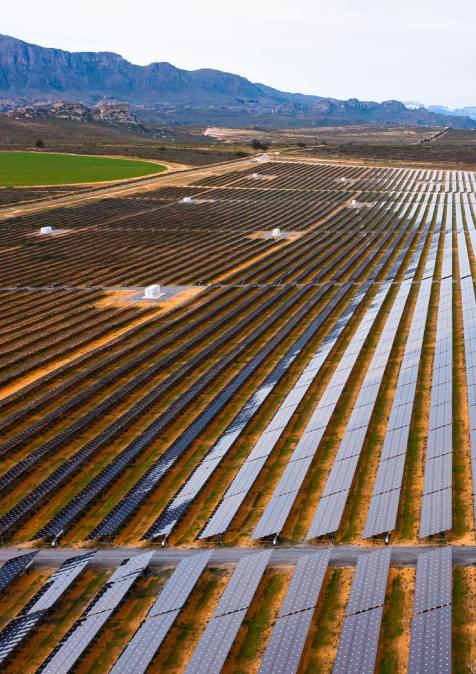
These visions aren’t futuristic dreams. They’re alive in seed banks, solar cooperatives, urban gardens, and digital advocacy hubs. Thus, the genre of Solarpunk in Latin America can acquire new names such as Sentipensar Futurism, Palenque Visions, and Sumak Kawsay Futures—a chorus of locally-rooted imaginaries shaping peacebuilding and possible new worlds.
The South Youth Compass
The South Youth Compass is both a metaphor and a framework—a guide for reorienting cooperation by looking South for direction. It points to four interconnected principles:
- Source: draw strength from the South as a source of ancestral knowledge, cultural depth, and lived resilience.
- Circulation: build flows of ideas, practices, and solidarity across SoYou networks, keeping diplomacy dynamic and inclusive.
- Creation: spark innovation rooted in community, blending art, tech, ecology, and storytelling to craft new solutions.
- Courage: face entrenched inequalities and dare to chart new pathways for justice and peace.
With SoYou as its lifeblood, the South Youth Compass transforms peacebuilding into a movement rather than a bureaucracy.
The Call: Growing Futures Together
The future of peace won’t be handed down; it will be grown in seed banks, resolved in circles of community mediation, and strengthened through bold coalition building. SoYou is already planting the seeds of this future. The wave is rising, and it’s ours to ride, not just to end conflict, but to create the worlds we’ve been waiting for.