Publications /
Opinion

Back
Robert E .Hall et Michael Woodford, Prix Nobel d’Économie 2026
October 26, 2026

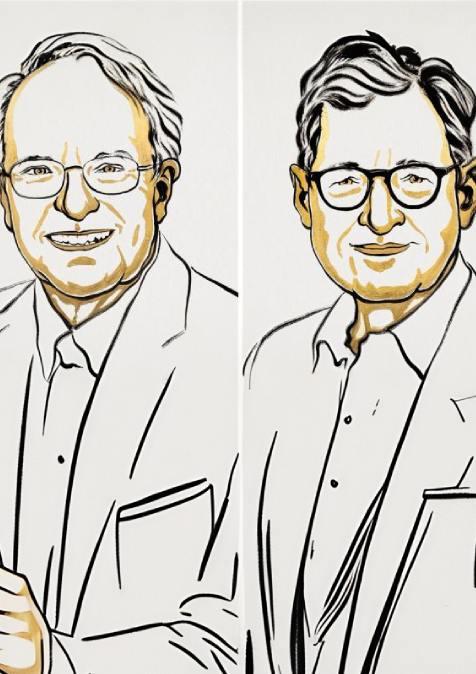
Depuis que l’économie a été reconnue par les Nobel en 1969, il revient à cette discipline de clore les cérémonies annuelles d’attribution des Prix aux lauréats. C’est le 12 octobre 2026 que le jury du prix de la Banque de Suède, en sciences économiques en mémoire d’Alfred Nobel, a consacré deux Américains Prix Nobel de l’économie : Robert E. Hall et MichaelWoodford, pour leur contribution aux « fondements microéconomiques de la stabilisation macroéconomique de la stabilisation ».

Le choc pétrolier de 1973, aboutissant à la stagflation, va mettre à mal les recettes keynésiennes de l’après-guerre. Mais, à la différence de nombreux   Keynésiens qui désiraient tourner la page du Maitre de Cambridge, nos deux lauréats vont chercher à donner une nouvelle dimension à son analyse, à partir d’une approche micro économique comportementale des individus et des entreprises. Et ils vont agir en complémentarité, Robert E .Hall, en privilégiant la demande, Michael Wood, l’offre.

Robert E .Hall enseigne toujours à l’université de Stanford (Californie), aux États-Unis, après avoir soutenu sa thèse de doctorat, sous la direction de Robert Solow, Prix   Nobel d’Économie en 1987. Ses travaux vont porter principalement sur la prise en compte des anticipations dans la décision   de consommer ou de ne pas consommer. Avant sa contribution, on considérait que la consommation dépendait du revenu disponible et de lui seul. Hall va montrer qu’on ne peut comprendre l’évolution de la consommation sans prendre en compte les anticipations individuelles du consommateur, par exemple celle qui concerne son salaire ou son pouvoir d’achat. Dans un article fondateur de 1978, il montre que le changement de consommation est imprévisible, ce qui le conduit à conclure que la meilleure prédiction de la consommation ne peut se fonder que sur la consommation du moment, à une variation imprévisible près. (Son ouvrage de   référence : ‘’The 

Rational Consumer :Theory  and Evidence ‘’, MIT Press /Cambridge, Massachusetts 1990)

Michael Woodford enseigne à l’université de Columbia (New York). Ses travaux concernent la version offre de la problématique. Et ce, en analysant la fixation des prix par les entreprises, et plus particulièrement les raisons pour lesquelles , en cas de choc, les prix ne s’ajustaient pas rapidement. Il va montrer que si ces prix pouvaient baisser, cela ne pouvait être que très lentement, leur adaptation au choc nécessitant de multiples, et parfois couteuses, micro-décisions. À partir de ce constat, il va développer, en y intégrant, les travaux de Hall sur la consommation, un modèle macroéconomique beaucoup plus efficace, montrant, par exemple, que l’inflation globale est fonction des anticipations et du niveau actuel de la production, qu’il va intégrer à celui de Hall. Woodford va ainsi influencer les politiques économiques et monétaires du monde entier. Ce qui lui vaudra d’être qualifié par certains du « plus grand économiste monétaire de son temps ». ( Son ouvrage de référence : ‘’ Interest   and Prices :Foundations  of a Theory of Monetary Policy ‘’ Princeton University Press   2003 )

En distinguant un champ de recherche, celui de la nouvelle économie keynésienne, le jury ne pouvait en ignorer le pionner :Robert E .Hall , et celui qui va le plus contribuer à la faire progresser, allant jusqu’à la modéliser avec des applications concrètes : Michael Woodford.



RELATED CONTENT

  • Authors
    January 31, 2022
    On January 28, both Argentina’s government and the International Monetary Fund staff made announcements about an understanding on new support program. Meanwhile, in addition to the payment of an amortization due on January 28, another payment is also expected in the first week of February. Both payments relate to the previous package, approved in 2018 and substantially disbursed thereafter. Non-payment could sour relations at a critical moment for a new program to be approved by the ...
  • Authors
    Morten Seja
    Charlie Knight
    Hadley Hilgenhurst
    Amlan Banerjee
    Omair Azam
    January 31, 2022
    Setting the Scene for the Current State of Inclusive Green FinanceClimate change is one of, if not the biggest, challenges facing the world. The challenge extends to banking regulators, who, in addition to other responsibilities, are now tasked with ensuring financial inclusion and climate change mitigation. However, central banks realizing how important inclusion and climate change are is only the first step. As part of this process, they need to understand how to define Inclusive ...
  • January 31, 2022
    According to the Oslo Manual, innovation can be defined as “the implementation of a new or significantly improved product (good or service), or process, a new marketing method or a new organisational method in business practices, workplace organisations or external relations” (OECD, 2005, p. 46). For today’s middle-income countries in Africa, innovation is essential to sustain growth and promote the transition to high-income status. This paper begins by providing a summary of theore ...
  • Authors
    January 26, 2022
    The year began with simultaneous signs of a slowdown in global economic growth and a reorientation toward tightening of monetary policies in advanced economies. In its latest Global Economic Prospects released on January 11, the World Bank forecasts that, after a global growth surprisingly at 5.5% last year, it should moderate to somewhere around 4.1% and 3.2%. % in, respectively, 2022 and 2023. In addition to the effects of omicron at the start of the year, less fiscal support and ...
  • Authors
    January 26, 2022
    COVID-19 has caused serious damage throughout the entire world. As of mid-2021, the global fiscal cost of COVID-19—excluding the most important consequences, such as human lives, mental health effects, restrictions of human freedom, and other non-pecuniary components, have amounted to at least $16.5 trillion, about 18% of world GDP (Dinh 2021). Financial support has varied across countries depending on income level, political willingness, and the extent of the pandemic in each econo ...
  • Authors
    Morten Seja
    Hadley Hilgenhurst
    Charlie Knight
    January 25, 2022
    Why Green Finance Taxonomies? The increasing effort to mitigate climate change has caused more and more individuals, governments, and companies to shift away from traditional financial investments and activities, and towards more environmentally-friendly alternatives. However, until recently, there has been a lack of consensus on what green finance and its environmental impact is. Thus, green finance taxonomies are needed to provide classification systems that identify how environm ...
  • January 18, 2022
    يخصص مركز السياسات من أجل الجنوب الجديد حلقة برنامجه الأسبوعي "حديث الثلاثاء" لموضوع التمكين الاقتصادي للنساء مع الطيب غازي، باحث في الاقتصاد بمركز السياسات من أجل الجنوب الجديد. يعد مجال التمكين الاقتصادي للنساء من المداخل الأساسية لإرساء المساواة بين النساء والرجال، ويستمد هذا المجال ...