Publications /
Book / Report

Back
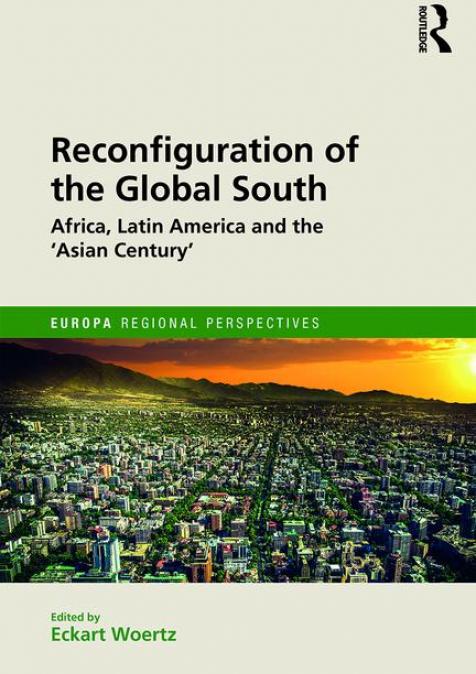
Reconfiguration of the Global South: Africa and Latin America and the 'Asian Century'
Authors
Eckart Woertz
November 24, 2016

Face aux bouleversements à ses frontières orientales et méridionales, l'Union européenne a cherché à trouver des réponses en révisant sa Politique européenne de voisinage et en publiant une nouvelle stratégie globale de politique étrangère et de sécurité. Au-delà des documents, quelles réalités de l'impact européen dans son voisinage ?

La Politique européenne de voisinage (PEV) a été initiée en 2003 avec des déclinaisons régionales au Sud avec l’Union pour la Méditerranée depuis 2008 et, à l’Est, avec le Partenariat oriental depuis 2009. L’ambition de réunir dans un même chapitre des pays aussi différents que l’Égypte et l’Arménie paraît audacieuse. L’intérêt bureaucratique d’avoir un cadre unique est certes compréhensible, mais la pertinence politique l’est moins. En outre, les troubles géopolitiques à l’Est et au Sud ont généré de nombreuses incertitudes, tant sur le plan sécuritaire que sur la capacité de l’Union européenne à être un acteur influent et de premier plan. D’où la révision de la PEV en novembre 2015 et la publication de la stratégie globale de l’UE en juin 2016 pour tenter de recentrer les priorités européennes.

Elles s’articulent autour de trois principes : la sélectivité, la stabilité et la résilience. La sélectivité, tout d’abord, prévoit une plus grande différentiation dans le traitement des partenaires, en fonction notamment de l’envie de ces pays de coopérer avec l’Union. La stabilité, ensuite, reprend toute sa centralité face au soutien à la démocratie ; les préoccupations sécuritaires européennes sont devenues prioritaires. La résilience, enfin, renforce l’idée que stabilité et sécurité sont des principes fondamentaux de la PEV, bien que ce concept reste assez flou et difficilement exportable.

Progressivement, la PEV devient une boîte à outils. L’Union sait, à juste titre, qu’elle ne peut pas espérer transformer tout son voisinage ni à la même vitesse, ni vers les mêmes horizons. C’est pour cette raison que la PEV a besoin d’être ancrée dans un cadre politique clair afin que ses outils et ses relations soient gouvernés par des principes directeurs. La stratégie globale peut fournir un tel cadre. Aux institutions européennes et aux États membres de s’assurer qu’il y a une cohérence d’action. C’est d’autant plus important que la PEV a longtemps pâti de son caractère technocratique, qui la rendait déconnectée d’objectifs plus larges de politique étrangère. Il existe aujourd’hui une opportunité de corriger ce défaut de conception et de mettre la PEV au service de la politique extérieure de l’Union et de la rendre plus pertinente aux yeux des États membres, qui peuvent alors davantage l’investir.
RELATED CONTENT

  • Authors
    Giovanna Rinaldo
    November 4, 2026
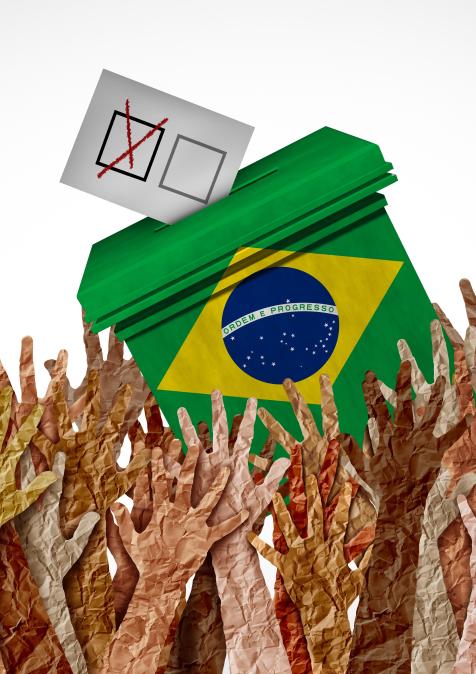
    Brazil’s presidential election, which concluded on October 25, 2026, was above all a digital battle. This is nothing new; the impact of social media on elections has been widely analyzed since Barack Obama's 2008 win marked a turning point for digital campaigning worldwide. Almost two decades later, social media is an entirely different breed, with a life of its own – and still very little regulation within electoral politics. The danger, however, is that digital players now also in ...
  • October 29, 2026
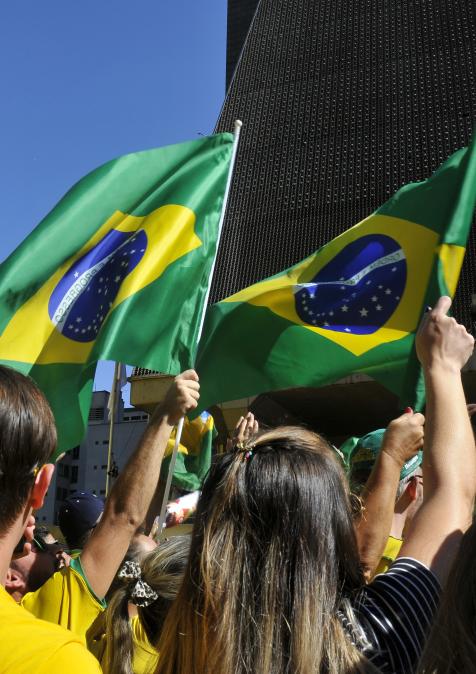
    Luiz Inácio Lula da Silva’s victory brings to an end one of the most closely contested elections in Brazil’s recent history. Before any broader analysis, however, a qualification is necessary. Supreme Court Justice Cristiano Zanin’s controversial decision to extend voting hours sparked debate over the electoral process. Although the measure was not mathematically decisive in Lula’s come-from-behind victory, the episode risks fuelling challenges to the result and further eroding poli ...
  • October 22, 2026
    Strategic hedging is rational when it preserves a worthwhile choice at a tolerable cost while respecting existing commitments. Drawing on the literature on hedging and Latin American autonomy, this Policy Brief examines contrasting illustrations of that proposition. It distinguishes ambiguity about future alignment from uncertainty about existing obligations and explains how clearly bounded commitments can reconcile autonomy with credibility. The cases reveal different vulnerabiliti ...
  • Authors
    Nizar Messari
    October 20, 2026
    In October 2026, Brazil will elect its president. It will also renew the entire lower legislative chamber and two-thirds of the upper chamber, elect governors in all states, and renew state legislatures. What will be the impact of these elections nationally, regionally, and internationally? Who are the main presidential candidates, and what are their agendas? What are the main challenges facing Brazil over the coming years? These are the questions that this Policy Brief seeks to ans ...
  • October 15, 2026
    The Policy Center for the New South, in partnership with The Asian Network, is organizing a webinar titled “Emerging Powers and the Remaking of Global Order” to examine the growing role of emerging powers and the Global South at a time of profound transformation in the international sys...
  • Authors
    Paul Isbell
    October 9, 2026
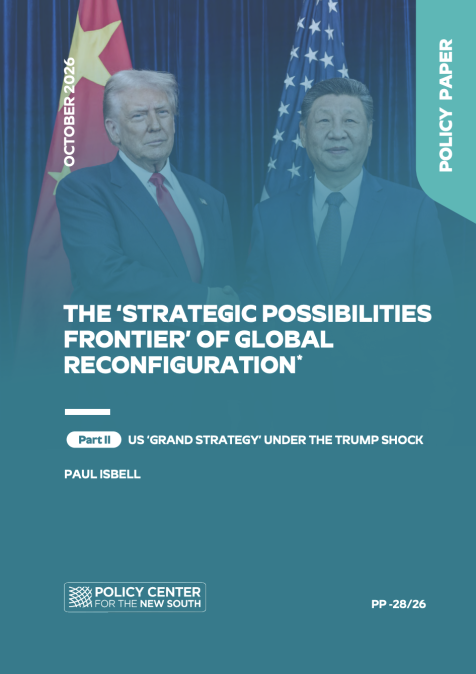
    In the first seven Policy Briefs of this ongoing series of analysis on Pan-Atlanticism: The Atlantic Basin in a Multipolar-Transnational World, we developed the argument that the strategic significance of the Atlantic Basin is on the rise for a range of international actors (states, regions and non-state agents) and from distinct political or ideological perspectives. In addition, in the most recently published Policy Brief -- “The U.S. and the Current International Reconfiguration: ...
  • October 7, 2026
    Brazil's election poses a question that extends well beyond Latin America: how much freedom does a country retain to define its international role when external pressure collides with domestic political exhaustion? For the Global South, the answer matters more than any foreign government's preference regarding the next occupant of the presidential palace. Strategic autonomy remains fragile if every change of government puts a country's freedom of action back up for negotiation. ...
  • October 02, 2026
    Building on his Policy Brief "Latin America, World Politics and the Great Powers", Nizar Messari examines how recent developments are reshaping U.S. influence in the region and affecting ...
  • Authors
    September 30, 2026
    You can imagine how often I've been asked to comment on where the Brazilian economy is headed after the election. With polls pointing to a runoff on October 25 and currently showing a statistical tie between Luiz Inácio Lula da Silva and Flávio Bolsonaro in vote simulations, I'm naturally asked about their economic programs and about the country's relations with the United States. ...