Publications /
Paper in Academic Journals
Back
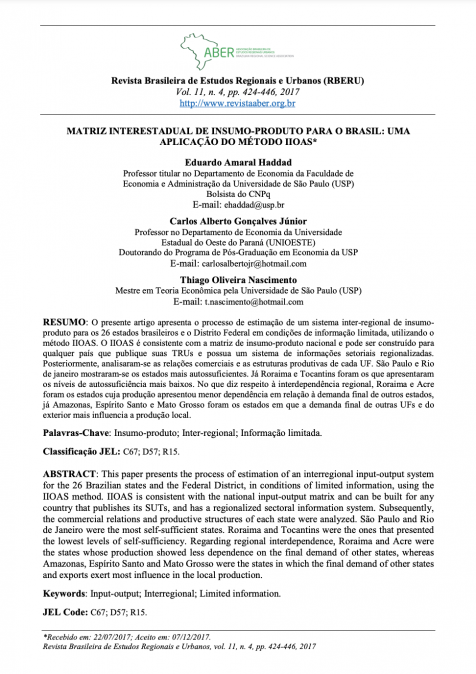
MATRIZ INTERESTADUAL DE INSUMO-PRODUTO PARA O BRASIL: UMA APLICAÇÃO DO MÉTODO IIOAS
Authors
Carlos Alberto Gonçalves Júnior
Thiago Oliveira Nascimento
February 13, 2018

O presente artigo apresenta o processo de estimação de um sistema inter-regional de insumo-produto para os 26 estados brasileiros e o Distrito Federal em condições de informação limitada, utilizando o método IIOAS. O IIOAS é consistente com a matriz de insumo-produto nacional e pode ser construído para qualquer país que publique suas TRUs e possua um sistema de informações setoriais regionalizadas. Posteriormente, analisaram-se as relações comerciais e as estruturas produtivas de cada UF. São Paulo e Rio de janeiro mostraram-se os estados mais autossuficientes. Já Roraima e Tocantins foram os que apresentaram os níveis de autossuficiência mais baixos. No que diz respeito à interdependência regional, Roraima e Acre foram os estados cuja produção apresentou menor dependência em relação à demanda final de outros estados, já Amazonas, Espírito Santo e Mato Grosso foram os estados em que a demanda final de outras UFs e do exterior mais influencia a produção local.

RELATED CONTENT

  • Authors
    Otávio José Guerci SIDONE
    Jesús Pascual MENA-CHALCO
    April 6, 2016
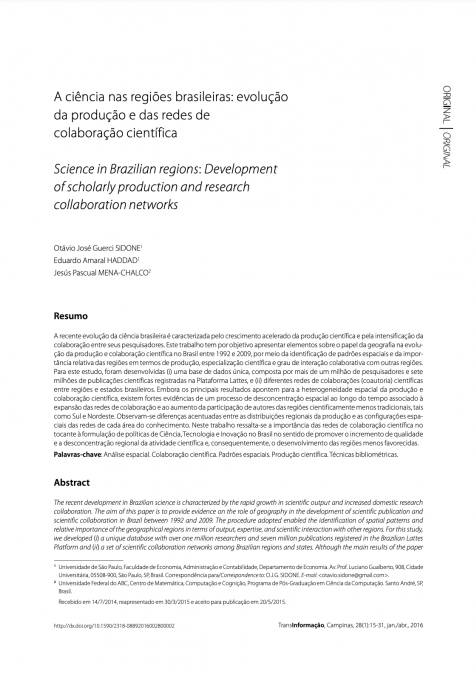
    A recente evolução da ciência brasileira é caracterizada pelo crescimento acelerado da produção científica e pela intensificação da colaboração entre seus pesquisadores. Este trabalho tem por objetivo apresentar elementos sobre o papel da geografia na evolução da produção e colaboração científica no Brasil entre 1992 e 2009, por meio da identificação de padrões espaciais e da importância relativa das regiões em termos de produção, especialização científica e grau de interação colabo ...
  • Authors
    March 8, 2016
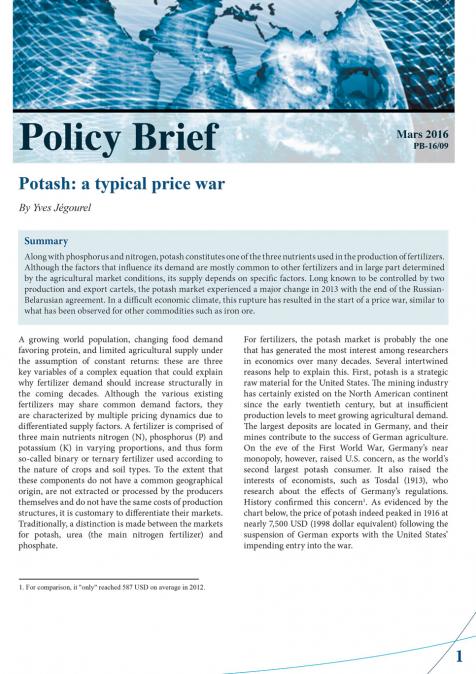
    Along with phosphorus and nitrogen, potash constitutes one of the three nutrients used in the production of fertilizers. Although the factors that influence its demand are mostly common to other fertilizers and in large part determined by the agricultural market conditions, its supply depends on specific factors. Long known to be controlled by two production and export cartels, the potash market experienced a major change in 2013 with the end of the RussianBelarusian agreement. In a ...
  • Authors
    December 14, 2015
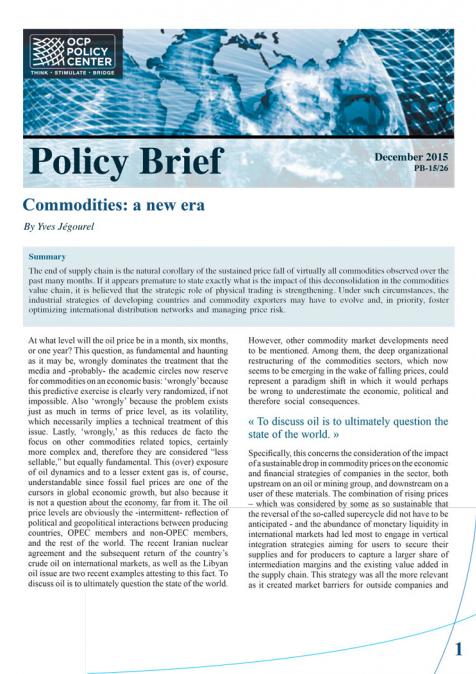
    The end of supply chain is the natural corollary of the sustained price fall of virtually all commodities observed over the past many months. If it appears premature to state exactly what is the impact of this deconsolidation in the commodities value chain, it is believed that the strategic role of physical trading is strengthening. Under such circumstances, the industrial strategies of developing countries and commodity exporters may have to evolve and, in priority, foster optimizi ...
  • Authors
    Jesús P. Mena-Chalco
    Otávio J. G. Sidone
    November 18, 2015
    The Regional Economics Applications Laboratory (REAL) celebrated its twenty-fifth anniversary in 2014. Since then, REAL has become one of the leading research centers of regional science worldwide. In this article, we describe the scholarly network involving REAL’s alumni working in academia in Brazil. We analyze the patterns of research collaboration among around fifty Brazilian researchers whose main activities are related to academic institutions in Brazil. The Brazilian REAL net ...
  • November 5, 2015
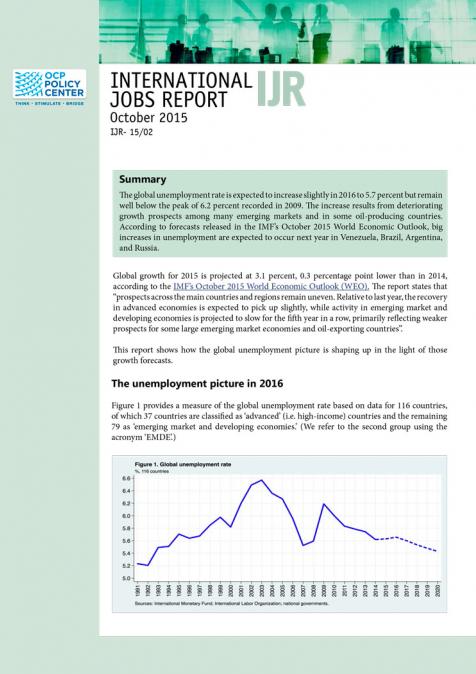
    The global unemployment rate is expected to increase slightly in 2016 to 5.7 percent but remain well below the peak of 6.2 percent recorded in 2009. The increase results from deteriorating growth prospects among many emerging markets and in some oil-producing countries. According to forecasts released in the IMF’s October 2015 World Economic Outlook, big increases in unemployment are expected to occur next year in Venezuela, Brazil, Argentina, and Russia. ...
  • Authors
    Sergio Fausto
    February 27, 2015
    Brazil’s future prospects, and ability to harness its advantages, will hinge on its own policy choices over the next few years. Yet the outlook for meaningful change is unclear. At present, Brazil is in a weaker position than four years ago, from both an economic and a foreign policy standpoint. Even in a scenario where Brazil’s economy gradually returns to the course it was on until 2008, no major strategic changes are likely to happen in Rousseff’s four-year term. ...
  • Authors
    February 10, 2015
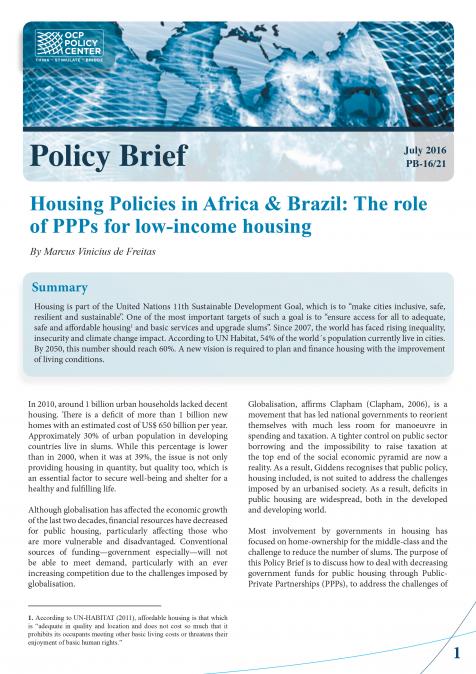
    Manufacturing is declining as a share of GDP not only in advanced countries, but in developing countries as well. This new trend, a result of complex forces, should be seen on balance as a reason for development-optimism, not pessimism. In the 21st century economy, manufacturing remains important, but poor countries can attract investment, grow rapidly and diversify away from agriculture on the basis of many possible sources of comparative advantage, without artificially promoting m ...