Publications /
Opinion

Back
The Limits of Asia’s Two Major Growth Models
August 3, 2026

This Opinion was originally published in Project Syndicate


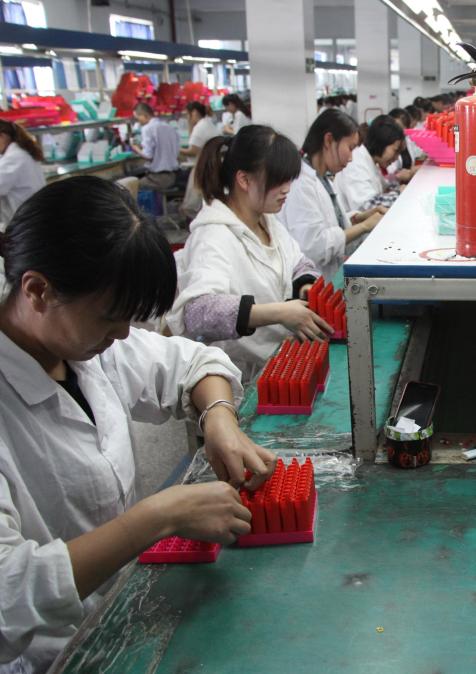
Data from a period in which both China and India pursued deliberate industrial policies show that neither country's development route is accessible to other countries. At best, their experience can alert policymakers to structural limitations and coordination problems that will require their own homegrown solutions.

RABAT—What is the most reliable development path for an increasingly fragmented global economy? China and India, the world’s two most populous countries, each represent a different answer. But can other countries emulate them?

>>Read more

RELATED CONTENT

  • Authors
    Mehmet Sait Akman
    Shiro Armstrong
    Anabel Gonzalez
    Fukunari Kimura
    Junji Nakagawa
    Peter Rashish
    Akihiko Tamura
    Carlos A. Primo Braga
    February 9, 2020
    In the context of his role as chair of the T20 task force « Trade, Investment and Globalization », our senior fellow, Uri Dadush has led the T20 brief under the theme "World Trading System Under Stress: Scenarios for the Future", which has been published in Global Policy. The world trading system has been remarkably successful in many respects but is now under great strain. The causes are deep‐seated and require a strategic response. The future of the system depends critically on r ...
  • Authors
    Elhadj EZZAHID
    July 19, 2019
    Les recherches sur les sources de croissance de long terme des économies montrent qu’elle dépend plus de la croissance de la productivité que de la croissance des volumes des inputs accumulés. Au Maroc, les résultats disponibles fournissent des évidences sur le rythme très lent de la croissance de la productivité mesurée par la PTF ou le rapport production-travail. Des simulations montrent que seule une augmentation de la PTF permettra d’atteindre une croissance suffisamment élevée. ...
  • Authors
    March 14, 2019
    China's push for Latin American consumers reflects changes back home. Chinese financing in Latin America is changing. After becoming a major source of capital flows to Latin America and the Caribbean over the past 15 years, a more diverse range of investors has surfaced, interested in channeling resources towards infrastructure, governments and state companies. The profile of the Chinese investment in the region tracks the evolution of China’s economy as it moves toward a higher r ...
  • Authors
    March 7, 2019
    A well-functioning modern infrastructure is essential for social and economic development. It has the power to change the quality of life of populations as well as the prospects of businesses. Despite developing Asia’s remarkable economic performances since the 1980s, the region still faces important difficulties in delivering adequate infrastructure services. “Over 400 million Asians do not have electricity access; 300 million live without safe drinking water and 1.5 billion withou ...
  • August 1, 2018
    “This article has been originally published in 'Morocco in Focus 2018,' the magazine of the Moroccan Embassy in New Delhi, India on the occasion of the Morocco National Day 2018.” Introduction In an article published last year, the author stressed the role of partnership between Morocco and India for the inclusive growth of small farmers. There is no doubt that agriculture remains a major instrument for human development both in India and in Africa. Several international reports&n ...
  • Authors
    May 15, 2018
    Technology and inequality, China's special status, macroeconomic imbalances, and WTO dysfunction, are the challenges confronted by the world trading system, and which lie at the root of resurgent protectionism. Are the trade tensions that have been stoked by Trump unique to him or the outcome of forces that preceded him and will outlast him? ...
  • Authors
    December 23, 2015
    Global economic growth is likely to be a little better in 2016 than this year’s lackluster outcome. The ongoing slow recovery in the United States and Europe is likely to continue. However, weakness in China as well as several large emerging markets, and sluggishness of world trade, mean that risks are weighted on the downside of this forecast. Morocco, which is reliant on European markets, is a heavy importer of oil, and whose currency has devalued in effective terms, should find t ...
  • Authors
    Karim EL MOKRI
    July 6, 2015
    « Les asymétries et l’instabilité du marché des matières premières dans les pays en développement : politiques et impacts sur le développement », une problématique d’un intérêt particulier pour ces pays, a fait l’objet d’un séminaire de recherche organisé par la Fondation pour les Etudes et Recherches sur le Développement International (Ferdi), les 24 et 25 juin 2015 à Clermont-Ferrand. Cet évènement a été tenu la veille du workshop co-organisé par la Ferdi et OCP Policy Center ...
  • Authors
    February 10, 2015
    Manufacturing is declining as a share of GDP not only in advanced countries, but in developing countries as well. This new trend, a result of complex forces, should be seen on balance as a reason for development-optimism, not pessimism. In the 21st century economy, manufacturing remains important, but poor countries can attract investment, grow rapidly and diversify away from agriculture on the basis of many possible sources of comparative advantage, without artificially promoting m ...