Publications /
Policy Paper

Back
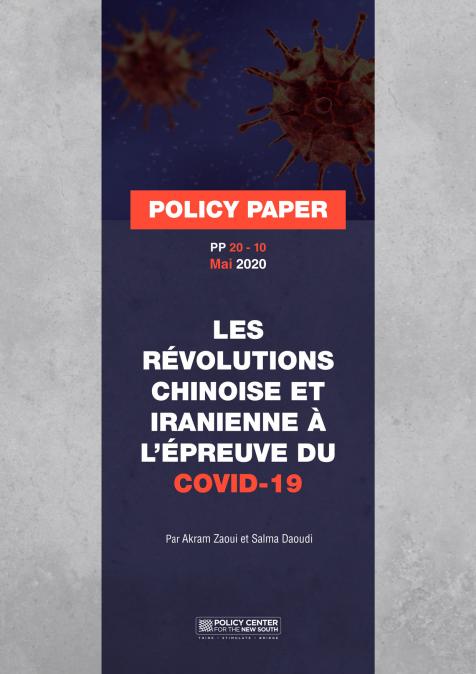
Les révolutions chinoise et iranienne à l’épreuve du Covid-19
Authors
May 13, 2020

L’objectif de cet article est de chercher à mettre en perspective les réactions de la République populaire de Chine et de la République islamique d’Iran face à la crise sanitaire provoquée par le nouveau coronavirus (Covid-19) avec l’histoire politique et moderne de ces pays, les modalités de leur construction étatique et de leur insertion dans l’ordre international. Régimes autoritaires dont la rhétorique et la légitimation se construisent autour d’une manière de nationalisme associée à une idéologie et une doctrine révolutionnaires, l’Iran et la Chine présentent des formes particulières d’articulation des rapports entre société, Etat ou régime et communauté internationale dominée par l’Occident. La crise1 du Covid-19 est venue opérer une fonction de révélation, voire d’exacerbation ou d’inhibition, en tout cas de modalisation de ces rapports. Le propos de ce Papier est de passer en revue la façon dont cela s’est produit, en introduisant dans la réflexion conduite une dimension théorique ayant trait aux relations internationales comme à la construction des Etats-nations modernes comme Etats sécuritaires, sanitaires et mercantiles. Un long détour historique et théorique et une approche multidisciplinaire nous semblent requis pour conduire l’analyse à son terme. Ils permettront de mettre en lumière un certain nombre d’articulations, de contradictions, de tensions, d’expérimentations et d’hésitations, de compositions, de décompositions et de recompositions, qui sous-tendent et structurent le jeu dialectique entre composantes de la société, Etat, ordre international, guerre, sécurité, santé et économie. En mobilisant ce biais théorique, que nous justifions : l’Etat administre des territoires et des masses biologiques dans une perspective qui est celle de mener la guerre sur différents fronts, et notamment militaire et économique.
RELATED CONTENT

  • Authors
    December 1, 2025
    This Paper was originally published on transatlantic.org The contemporary maritime domain is increasingly recognized as a geopolitical and economic space, but also as an environment intertwined with human, social, ecological, and governance systems ashore. The United Nations Institute for Disarmament Research (UNIDIR 2024) report argues that maritime security has evolved from a narrow naval and state-centered concern into a multidimensional issue embedded in global human s ...
  • Authors
    November 28, 2025
    Le 17 novembre 2025, le Conseil de sécurité de l’Organisation des Nations Unies (ONU) a adopté la résolution 2803 par laquelle il fait sien le Plan d’ensemble du Président Donald Trump ayant pour objectif de mettre fin au conflit à Gaza. Contrairement à ce qu’on pourrait croire, l’initiative américaine ne date pas du 2ème mandat de l’Administration Trump. Elle a vu le jour durant son premier mandat.  Le Plan entériné par la résolution du Conseil de sécurité de l’ONU, surnommé ‘ ...
  • Authors
    November 28, 2025
    The adoption of United Nations Security Council Resolution 2803 on November 17, 2025, endorsing the “Comprehensive Plan to End the Gaza Conflict,” is a step in the right direction, but it must be accompanied by the implementation of a Gaza development and post-conflict reconstruction program. Paragraph 6 of Resolution 2803 “calls upon the World Bank and other financial institutions to facilitate and provide financial resources to support the reconstruction and development of Ga ...
  • Authors
    October 28, 2025
    Now that a cease-fire is in place, it is time to consider Gaza’s reconstruction. This will be the fifth such effort in less than twenty years. Lessons from the previous four indicate that rebuilding houses, bridges, and roads is relatively straightforward. Far more challenging is building a thriving Gazan economy and society—one where young people live with dignity, have jobs, feel heard and included in their communities, and are hopeful about their future. Achieving this requires n ...
  • October 27, 2025
    L’« Accord sur Gaza » d’octobre 2025, imposé aux parties au conflit -Israël et le Hamas-  par le président américain Donald Trump, et le « Sommet de la paix de Sharm el-Sheikh », ont permis d’ouvrir une perspective pour un arrêt des hostilités et l’acheminement de l’aide humanitaire vers la bande de Gaza, en attendant la négociation de la seconde phase devant consolider le cessez-le-feu et préparer la paix dans la Région. Si l’implication du Hamas dans les négociations rel ...
  • Authors
    October 14, 2025
    Almost a year after the December 2024 fall of former President Bashar al-Assad, Syrians on October 5 took part in their first parliamentary vote—a symbolic milestone for a nation emerging from years of war and authoritarian rule. Rather than a direct popular election, the process followed an indirect model: about 7,000 members of regional electoral colleges cast ballots to choose two-thirds of the 210 seats in parliament. The remaining one-third will be appointed directly by Preside ...
  • Authors
    September 2, 2025
    This paper argues that the Middle East has become the crucible of twenty-first-century imperial politics, exposing the collapse of legal universality and the resurgence of coercive empire. Through the archetypes of Hammurabi and Nebuchadnezzar, it analyzes how states invoke law rhetorically while practicing domination through siege, spectacle, and exclusion.The United States, China, Türkiye, Israel, Iran, the European Union, and the Gulf monarchies all oscillate between Hammurabian ...
  • Authors
    February 12, 2025
    يستكشف هذا العرض الحاجة الملحة إلى إحداث تحول في النموذج المعتمد حاليّا في عملية تقديم المساعدات الإنسانية، في سياق حالات النزاع وما بعد النزاع، في منطقة الشرق الأوسط وشمال إفريقيا. ويدعو هذا العرض إلى تبني مقاربة ذات "بعد تنموي للمساعدات الإنسانية"، تجمع بين الإغاثة الفورية والأهداف التنموية على المدى الطويل. كما يدعو هذا المقال، من خلال تركيزه على محدودية المساعدات الإنسانية التقليدية، لا سيما في سياق الأزمات الطويلة، مثل: العراق، اليمن، لبنان وغزة، لضرورة تبني آليات تمو ...
  • Authors
    November 29, 2024
    Following the European Parliament’s approval of the 26 candidates proposed by Member States to form the new European Commission (2024-2029), the new European super-ministers will take office on 1 December. Notably, for the first time, the core of “Europe’s government” includes two representatives from the far-right: Italian Raffaele Fitto, nominated by the Meloni Government as Vice-President for Cohesion and Reforms, overseeing structural funds, and Hungarian Olivér Várhelyi, appoin ...