Publications /
Policy Brief

Back
Dollarization of Argentina: Revival of a Zombie Idea
Authors
Sebastian Carranza
April 28, 2022

Last March, a proposal of dollarizing Argentina’s economy arrived at its Congress. We summarize here the potential consequences of such a route in case the bill succeeds in getting approval. First, we point out the broad implications of dollarizing an economy. Then, we set out some cases of Latin American experiences with dollarization. Finally, we address the case of Argentina.

The main potential benefit of dollarization would be elimination of domestic inflation, but at a very high cost. Argentina’s fiscal imbalances will not be eliminated by dollarization. Even though dollarization would prevent the printing of money, it imposes no constraints on government spending and borrowing. The only result is that monetary policy ceases to be available as an option, leaving almost no response capacity in case of external shocks. Moreover, dollarization creates the possibility of being exposed to pro-cyclical monetary policies unrelated to domestic necessities. It also eliminates seigniorage benefits.

On top of more general features of dollarization and case studies, implementing dollarization now in Argentina would have to face hard-to-overcome challenges. Proposing dollarization under current conditions would require a selective default of domestic currency liabilities, a brutal devaluation, and/or a unilateral conversion of public deposits.
RELATED CONTENT

  • Authors
    December 29, 2021
    Après une longue période de prix atones, le café a vu ses cours se raffermir au cours de l’année 2020 et du premier trimestre 2021, avant de flamber durant l’été et l’automne. Il renouait alors avec des plus hauts niveaux depuis 2011, date de la fin du dernier « super-cycle des matières premières (2002-2011). Tandis que la demande progresse structurellement, l’offre s’est repliée, pénalisée par une conjonction de facteurs climatiques, géopolitiques et, bien évidemment, sanitaires en ...
  • Authors
    Inácio F. Araújo
    December 18, 2020
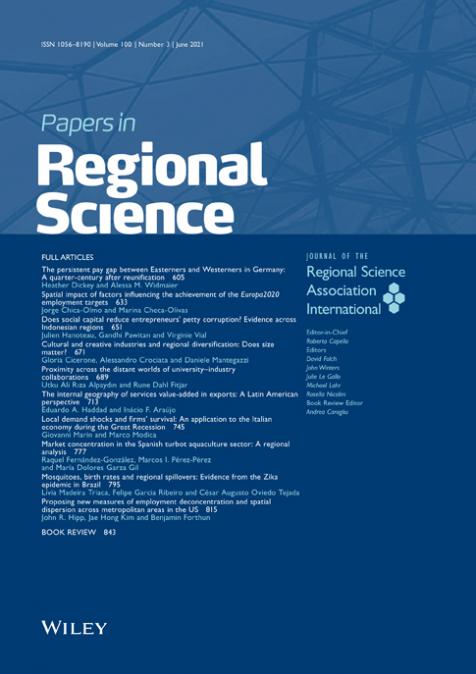
    We estimate the contents of services value-added incorporated in goods exports in different countries in Latin America, exploring the local dimension of the results. We use inter-regional input–output analysis to trace and map domestic value-added embedded in those countries' exports. We add to the discussion of global value chains the internal, within-country geography of trade in value-added, since the set of locational preferences that help understanding the spatial patterns of n ...
  • Authors
    December 14, 2020
    This article has originally been published on OECD Development matter platform Many donor countries seem eager to see middle-income countries (MICs) “master out” and graduate to a non-client status in multilateral development institutions before fully achieving their development potential. We argue that such institutions can still significantly contribute to the sustainable development of MICs, while also seizing many benefits from this relationship (Middle income countries and mul ...
  • Authors
    Inácio F. Araújo
    October 27, 2020
    We estimate the contents of services value-added incorporated in goods exports in different countries in Latin America, exploring the local dimension of the results. We use inter-regional input-output analysis to trace and map domestic value-added embedded in those countries’ exports. We add to the discussion of global value chains the internal, withincountry geography of trade in value-added, since the set of locational preferences that help understanding the spatial patterns of na ...
  • Authors
    September 3, 2020
    The “middle income trap” may well characterize the experience of Brazil and most of Latin America since the 1980s. Conversely, South Korea maintained its pace of evolution, reaching a high-income status. Such divergence of economic growth can be related to their distinctive performances of domestic accumulation of technological and organizational capabilities. Their different approaches to global value chains and trade globalization reinforced such discrepancy in domestic accumulati ...
  • Authors
    September 30, 2019
    Despite some short-term benefits, trade deviation to the region shouldn’t be expected to last. Has the U.S. trade war with China been good for Latin America? An increase in Chinese demand for primary products from the region, as well as recent news of production transfers from China to Mexico, might give the impression that it has. But any positive short-term effects of the confrontation should also take into account its negative medium- and long-term impacts on the region and on gl ...
  • Authors
    July 3, 2019
    Twenty years after negotiations began between Mercosur and the European Union (EU), a trade agreement between ministers was reached last Friday in Brussels. Its first phase, from 1999 to 2014, had among the motivations on the European side not to be left behind while the US then pursued a Free Trade Agreement for Latin America (FTAA). Symptomatically, such enthusiasm cooled after FTAA negotiations came to a halt and the United States embarked on bilateral agreements with some c ...
  • Authors
    Sabine Cessou
    October 8, 2018
    « Amérique latine, crises et sorties de crises », telle était la première des deux thématiques des 6èmes Dialogues stratégiques, organisés le 4 avril par HEC Paris (Centre de géopolitique) et OCP Policy Center. Un tableau mitigé a été dressé, avec des signes de reprise et une croissance supérieure à 2 % qui n’empêchent pas des situations de crise comme au Brésil, au Nicaragua ou au Vénézuela. Crise d’un modèle d’oligarchies anti-capitalistes Au Vénézuela, la corruption paraît si e ...
  • Authors
    August 13, 2018
    The Brazilian economy pays a price in terms of productivity foregone because of its lack of trade openness. A trade opening process would bring an adjustment impact that could nonetheless be mitigated with public policies that facilitate labor mobility and job migration. Benefits from trade opening would also hinge on policy improvements in complementary areas, such as infrastructure investments, business environment and others. The Brazilian economy would benefit from opening trad ...
  • Authors
    June 6, 2018
    The spike in US bond yields since mid-April in tandem with the strengthening of the dollar sparked a retrenchment of capital flows to emerging markets (EM), accompanied by a sell-off of assets in some cases. Argentina and Turkey suffered from strong and potentially disruptive exchange rate depreciation pressures in May, with financial markets calming down only after bold domestic policy moves (interest rate hikes in both countries and, in the case of Argentina, a decision to seek a ...