Publications /
Opinion
The author of this opinion, Eduarda Zoghbi, is a 2024 alumna of the Atlantic Dialogues Emerging Leaders Program.
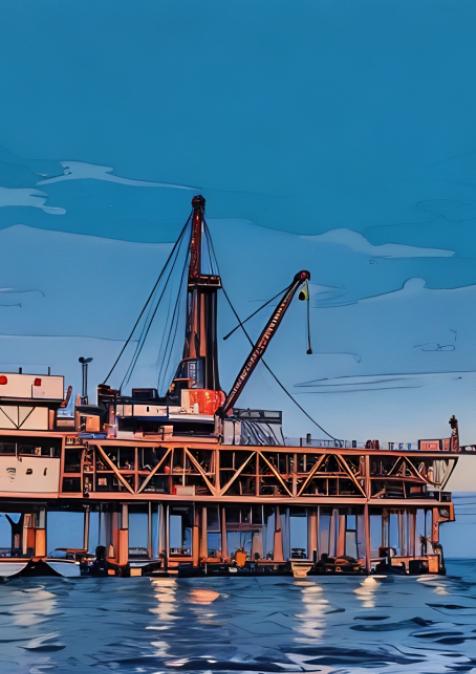
It is no longer news that critical minerals are becoming increasingly important for global supply chains, and are essential to the energy transition. Countries are racing to secure mining rights in the Global South, and to expand refining capacity within their borders, but few have been paying attention to a new frontier for mineral extraction—the deep sea. The issue has flown under the radar, in part because of its controversial and sensitive nature.
On April 24, however, President Trump issued an Executive Order (EO), declaring that “the United States has a core national security and economic interest in maintaining leadership in deep sea science and technology and seabed mineral resources”. The EO promotes the responsible development of seabed minerals, and calls for the acceleration of extraction and processing technologies to secure supply chains for defense, infrastructure, and, notably, the energy sector. It also proposes a fast-tracked licensing process and a seabed mapping initiative to position the U.S. as a global leader in seabed mineral exploration and innovation.
Another of President Trump’s goals is to reduce dependence on foreign suppliers—particularly China—and boost U.S. competitiveness. To that end, the EO includes a politically sensitive provision that allows for exploration licenses not only in U.S. waters but also in “areas beyond national jurisdiction”.
In 1982, the United Nations adopted the Convention on the Law of the Sea (UNCLOS), a legal framework regulating oceans and marine resources. It led to the creation of the International Seabed Authority (ISA), tasked with overseeing mining in areas beyond national jurisdiction. For decades, ISA member states have struggled to reach agree rules to govern this emerging industry. While most countries have ratified UNCLOS, the U.S. has remained an exception, which may now justify its own regulatory path and, arguably, to sidestep multilateral governance.
Governments, scientists, and environmental organizations argue that the EO is a unilateral move that undermines ISA’s authority. Letícia Reis de Carvalho, ISA’s Secretary-General, responded with a letter raising concerns about the EO’s applicability in areas beyond national jurisdiction. She said that the EO contradicts the UNCLOS framework, which stipulates that mineral activities in international waters must be conducted under ISA’s oversight, with equitable benefit-sharing and strong environmental protections. UNCLOS asserts that no state has the right to exploit deep-sea minerals unilaterally—a norm that is understood to be binding even on countries that haven't ratified the treaty.
De Carvalho also expressed surprise since the U.S. has historically played a constructive role in ISA negotiations, offering technical expertise to shape new regulatory frameworks. However, the decision to mine beyond national jurisdiction disregards the principle that international waters are a common heritage of humankind. Trump’s EO could therefore compromise decades of negotiations and set a dangerous precedent that could destabilize the entire system of global ocean governance.
While the crisis over ocean governance rights unfolds, Pacific Island nations are also asserting their sovereignty and influence. Some countries are advancing domestic regulations on deep-sea mining, while others continue to uphold indigenous stewardship and their longstanding commitments to protecting ocean biodiversity. Meanwhile, the EO could create incentives for countries with seabed minerals to partner with Washington, reshaping how these nations protect their environmental heritage.
Whether deep-sea mining will create a positive or negative effect for the ocean’s ecosystem is also being contested. Critics of deep-sea mining argue that only 5% of the ocean has been explored, leaving the remaining 95% as a vast, unknown ecosystem. Jeff Watters, vice president for external affairs at Ocean Conservancy, notes that there is consensus among scientists that the long-term risks outweigh the short-term economic benefits. The damage wouldn’t be confined to the ocean floor—it would impact the entire water column, and by extension, all life that depends on it.
A recent BBC article highlighted a paper from the UK’s Natural History Museum and the National Oceanography Centre, which has monitored the effects of experimental seabed mining since the 1970s. While some sediment-dwelling creatures were able to recolonize the site and recover from the test, larger animals appeared not to have returned. Scientists emphasized that polymetallic nodules collected from the seabed take millions of years to form and cannot be replaced.
In contrast, mining companies claim the environmental concerns are exaggerated. In interviews with CNN, several CEOs argued that their research proves the viability of their operations. They acknowledged it’s not a zero-impact endeavor, but claimed that ocean mining causes less harm than land mining, which often involves deforestation and illegal labor exploitation. Opposing groups fear that ocean mining will not reduce land mining, and instead, will potentially create a new frontier of devastation.
This geopolitical conundrum illustrates a classic case of the prisoner’s dilemma. In other words, while international cooperation would benefit all by ensuring long-term ecological preservation and equitable access to marine resources, the temptation for unilateral action—in pursuit of short-term national interests—can influence even historically cooperative states. This is precisely the risk posed by Trump’s EO: it signals a shift to self-interest, encouraging others to follow, rather than uphold shared governance. Abandoning multilateralism in favor of unilateral gain is dangerous for ocean governance, especially as climate change continues to destabilize marine ecosystems. Just as in game theory, the dominant strategy for individual players may lead to a collectively suboptimal outcome, that would jeopardize not only biodiversity, but the climate commitments on which our shared future depends.