
Publications /
Opinion
It is a biblical scene: the massive Philistine warrior Goliath, standing nine feet tall and heavily armed, faces the young shepherd David, who brings down the giant against all odds, overcoming fear and demonstrating courage in the face of brute size and raw power. This metaphor resonates with a reality unfolding in America today: high tech versus the people.
A year ago, The New York Times (October 20, 2025) reported growing opposition to the global AI boom, under the headline “From Mexico to Ireland, Fury Mounts Over a Global AI Frenzy.”
Since then, concerns surrounding the rapid expansion of AI infrastructure have increasingly translated into local resistance. From small communities in the United States, particularly in Texas and Virginia, to activists in Berlin and Paris, opposition to large-scale data centers has continued to grow. In the Paris suburb of Clichy, the planned 51,430-square-meter “East-West Campus” data center has also raised questions about the local impact of such developments.
“Fortunately,” noted the British newspaper The Guardian (May 8, 2026), “an unlikely coalition has emerged to resist the AI takeover by taking aim at the industry’s core infrastructure: 2026 is shaping up to be an even bigger year for AI resistance.” A recent Gallup poll showed that 71% of Americans would oppose the construction of a data center in their area. In some cases, opposition emerged even before a project was officially proposed ; the mere rumor of a data center was enough to trigger organized resistance.
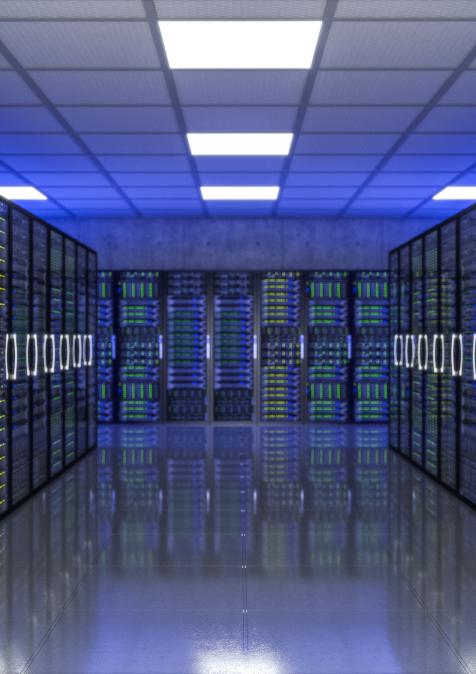
In the early years of the data center boom, the sector attracted relatively little public scrutiny, despite its substantial electricity and water requirements. As data centers spread rapidly across the US, these resource demands became a growing source of public concern. A data center was not simply a call center employing students and artists to sell weekend trips to Paris or vacuum cleaners, but an industrial-scale facility. A standard hyperscale data center measures more than 10,000 square feet and houses over 5,000 servers. A traditional cloud data center may house 30,000 to 40,000 server racks, drawing an average of 8 kW to 15 kW per rack. An optimized AI data center may house fewer racks (roughly 8,000 to 12,000) but at much higher densities, drawing 40 kW to over 100 kW per rack, with power-hungry GPUs. Water consumption varies significantly depending on the cooling architecture and local climate conditions.
Uninterruptible Power
OpenAI’s Stargate project near Ann Arbor, Michigan, is planned to cover approximately two million square feet, with a projected power capacity exceeding one gigawatt, equivalent to the electricity demand of hundreds of thousands of households. Large facilities, such as Google’s Council Bluffs site in Iowa, one of the company’s major data center hubs, also require substantial water resources. In 2024, the Council Bluffs facility withdrew an average of 3.9 million gallons of water per day and consumed approximately 2.8 million gallons.
Computer servers generate considerable heat, and one of the most common and cost-effective methods of cooling them involves evaporative cooling towers, which consume substantial amounts of water. In an article published on August 26, 2026, SoftwareSeni examined the question: “How much electricity, water, and land do AI data centers actually use?” The answer: “A single hyperscale AI facility draws roughly 100 to 750 MW and moves millions of litres of cooling water a day. One gigawatt is roughly the output of one nuclear reactor, enough for about one million homes.”
UN researchers estimated the global land footprint associated with data centers' electricity consumption at approximately 6,900 square kilometers in 2025. Meta’s “Hyperion” campus in Richland Parish, Louisiana, spans approximately 3,650 acres, more than four times the size of New York City’s Central Park. A traditional data center in the US may occupy an estimated 9,300 square meters, including power substations, uninterruptible power supply (UPS) battery rooms, backup diesel generators, and industrial cooling systems. The rise of the AI boom has led to the development of larger facilities, some occupying 18,500 square meters or more. So-called “hyperscale” campuses, developed by major technology companies, can extend across 90,000 to 420,000 square meters or more, while requiring relatively small operational teams compared with their physical scale.
Concerns over water scarcity and rising electricity prices have brought together progressive lawmakers concerned about corporate accountability and environmental impacts, and rural communities seeking to protect agricultural land and local water resources. In previous years, tech conglomerates presented data centers to local municipalities as economic windfalls. Today, however, growing opposition is increasingly challenging these arguments.
Philosophers, researchers, and religious leaders, including the Pope in Rome are debating the risks of machines escaping human control and potentially threatening humanity. But David, representing the people, is resisting the growing power of AI and its potential environmental and social consequences, from the replacement of human workers by robots to increased pressure on water resources and electricity systems. Data centers across the US consume billions of gallons of water, including in regions where droughts are already threatening agriculture. To date, approximately 4,000 data centers are operating in the US, with another 3,000 projects reportedly planned. As electricity grids require multibillion-dollar upgrades to accommodate growing demand, concerns are mounting that part of these costs could be passed on to ordinary consumers through higher monthly utility bills.
The Most Disparate Neighbors
Estimates suggest that, within the next few years, data centers could account for around 10% to 15% of total electricity demand in the US. This growing demand, as noted by the Harvard Gazette (April 9, 2026), could put considerable strain on efforts to transition toward renewable energy sources by prolonging the operation of fossil fuel plants that had been scheduled for closure. Growing demand for water, even in drought-prone regions, has also sparked legal disputes between some of the world's wealthiest technology companies and rural communities, including in states such as Louisiana and Texas. Data centers, as reported by Wired (August 4, 2026), are bringing together “the most disparate neighbors in all regions of the country.”
An Unlikely Bipartisan Consensus
For many, this represents an opportunity to unite in opposition to the growing influence of tech giants. Data centers have become “the most bipartisan issue since beer.” As anger over AI spreads, politicians are also turning against data centers, as observed by The Wall Street Journal (August 21, 2026). The giant computing facilities powering the artificial intelligence boom have sparked nationwide concerns about a rapidly changing economy and the potential loss of jobs to machines, as reported by The New York Times (August 31, 2026). What began as relatively small local protests has evolved into increasingly organized legal and political opposition. The New York Times highlighted these tensions in an article titled “Trump Mocks Data-Center Opponents as Wanting to Stay ‘Backwards and Poor.‘ ”
In the first quarter of 2026 alone, grassroots opposition reportedly blocked or delayed at least 75 major data center projects nationwide, putting roughly $130 billion in planned developments on hold. New York and Maine have also taken steps to restrict the development of new data centers, including proposals for moratoriums targeting large facilities with power demands of 20 to 50 megawatts or more, in an effort to protect local electricity grids. According to estimates attributed to the International Energy Agency (IEA), a data center can consume roughly two million liters (approximately 530,000 gallons) of water per day, while some of the largest facilities may use up to five million gallons daily, equivalent to the water consumption of a town of 50,000 people.
The sheer volume of electricity required to power advanced AI chips, such as GPUs, is prompting a major reassessment of the US energy landscape. Data centers currently account for an estimated 6% of total electricity consumption in the US. Processing an AI-driven request can require significantly more energy than conventional computing tasks. For example, generating a brief five-second AI video has been compared to running a household microwave continuously for one hour. The Washington Post has also highlighted the water footprint of ChatGPT queries, with estimates suggesting that AI interactions can consume significant amounts of water. A US Department of Energy national laboratory report estimated that data centers consumed 17.3 billion gallons of water for on-site cooling in 2023 alone. With the expansion of AI, this figure could increase substantially by 2028.


