Publications /
Opinion
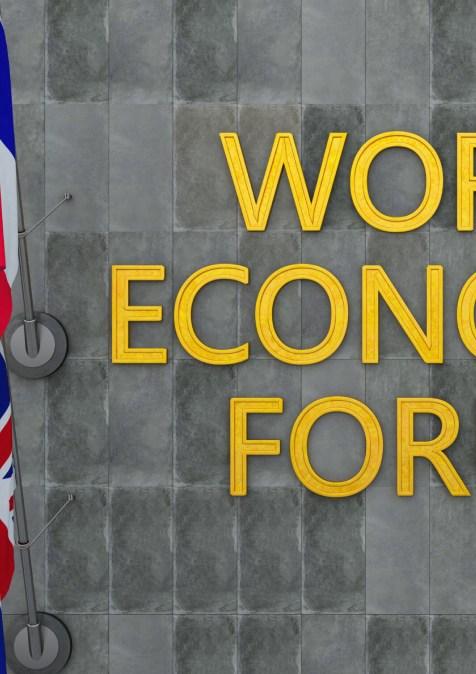
The 2026 World Economic Forum (WEF) Annual Meeting took place in an environment of elevated economic uncertainty and structural risk repricing. According to the Global Risks Report (GRR) 2026, geoeconomic confrontation and economic downturn rank among the most severe near-term risks, while inflation-related risks and economic volatility have risen sharply in perceived severity compared with the previous edition. Notably, 50% of respondents to the Global Risks Perception Survey describe the global outlook over the next two years as “turbulent” or “stormy,” a 14-percentage-point increase relative to the prior survey, suggesting that volatility is increasingly perceived as a baseline condition rather than a temporary deviation. In this context, Davos should be read neither as a venue for policy coordination nor as a source of implementation outcomes. Its analytical value lies instead in what it reveals about how senior policymakers, financial actors, and corporate leaders perceive constraints, assess order risks, and recalibrate expectations under conditions of structural uncertainty.
Risk Repricing, Fragmentation, and Investment Behavior
A first economic constraint signaled at Davos concerns the interaction between geoeconomic fragmentation and investment behavior. The GRR 2026 documents a world in which trade, finance, technology, and energy are increasingly deployed as instruments of strategic competition rather than governed solely by multilateral rules. In such an environment, political and regulatory uncertainty becomes systematically embedded in the cost of capital. As a result, risk premium arises because volatility increases, but more so because access to markets, technologies, and financing is perceived as conditional and potentially reversible.
This shift has concrete implications for investment. When regulatory regimes, tariffs, or access to technology can change abruptly, long-horizon projects become harder to finance—particularly those dependent on cross-border coordination, stable offtake arrangements or predictable regulation. These risks are non-linear and difficult to hedge through standard diversification strategies. Statements at Davos did not emphasize a return to a previous global order, but rather adaptation to a structurally different one. This framing aligns with Mark Carney’s address, in which he stated: “The old order is not coming back. We should not mourn it. Nostalgia is not a strategy.”
Inflation, Fiscal Space, and Macro Dominance
A second constraint shaping the global macro environment is the persistence of inflation and its implications for policy space. The GRR 2026 shows that economic risks—including inflation and downturn—have risen most sharply in the near-term risk ranking, reflecting concerns about price stability, growth prospects, and macro volatility. Elevated inflation tightens monetary conditions and narrows fiscal margins, thereby constraining the pace and sequencing of structural reforms.
This has direct implications for how growth, energy, and transition agendas are framed. Policies such as energy price reform, carbon pricing, or large-scale industrial incentives may be efficiency-enhancing over the long run. However, in the short to medium term, they interact directly with headline inflation, budget balances, and household purchasing power—especially in energy-importing and fiscally constrained economies.
Discussions at Davos repeatedly referenced affordability, price stability, and security of supply in relation to energy and growth, consistent with the WEF’s emphasis on economic resilience and near-term risks. This does not indicate a retreat from transition objectives, but rather the reassertion of macro dominance: structural reforms that raise relative prices require explicit compensatory mechanisms and credible pacing—through targeted transfers, gradual adjustment, or offsetting fiscal measures—to maintain political and macroeconomic stability.
Competitiveness, Standards, and Adjustment Costs
A third constraint signaled at Davos operates through competitiveness under fragmentation. Growth is increasingly conditioned by access to markets governed by regulatory standards, reporting requirements, and technology rules that function as economic filters rather than neutral regulations. This framing is explicit in the WEF’s treatment of a “contested multipolar landscape” and the interaction between growth, innovation, and planetary boundaries.
Climate- and technology-related instruments—such as carbon reporting requirements, product standards, or border adjustment mechanisms—alter cost structures along value chains. Compliance therefore requires investment in measurement, certification, data systems, and process adaptation, all of which carry financing and capacity implications. From a macroeconomic perspective, these adjustment costs affect aggregate investment, sectoral reallocation, and external performance. Growth strategies that ignore compliance costs and timing risks tend to overstate short-term gains while underestimating pressures on firms, particularly in environments where financing conditions are already tight.
Technology, Productivity, and Investment Efficiency
Technology—and artificial intelligence (AI) in particular—featured prominently at Davos 2026. However, the tone reflected growing caution regarding the timing and distribution of productivity gains. Corporate leaders noted that returns on AI investment have so far been uneven, with many firms yet to observe material productivity effects. At the same time, AI deployment is capital-intensive, energy-intensive, and skills-intensive.
This creates a macroeconomic tension. Governments and firms are encouraged to invest in AI-led growth at a moment when financing conditions are tight, energy costs remain volatile, and fiscal space is constrained. Without complementary investments in skills, infrastructure, and energy systems, the macroeconomic payoff of AI investment remains uncertain, raising the risk of capital misallocation.
Synthesis: What Davos 2026 Reveals about the Global Economic Moment
Taken together, the signals from Davos 2026 point to a global economic environment defined by a tightening set of constraints. Structural uncertainty raises the cost of capital and reshapes investment horizons. Persistent inflation narrows fiscal and monetary room for maneuver. Fragmentation conditions growth through access, standards, and non-linear risks. These constraints reinforce one another and limit the pace at which policy agendas can be pursued without macroeconomic slippage.
Viewed in this light, Davos 2026 highlights a tension between long-term objectives and short-term feasibility. While narratives on growth, transition, and innovation remain broadly aligned with global challenges, prevailing risk perceptions suggest that sequencing and credibility have become central economic concerns.