Publications /
Book / Report

Back
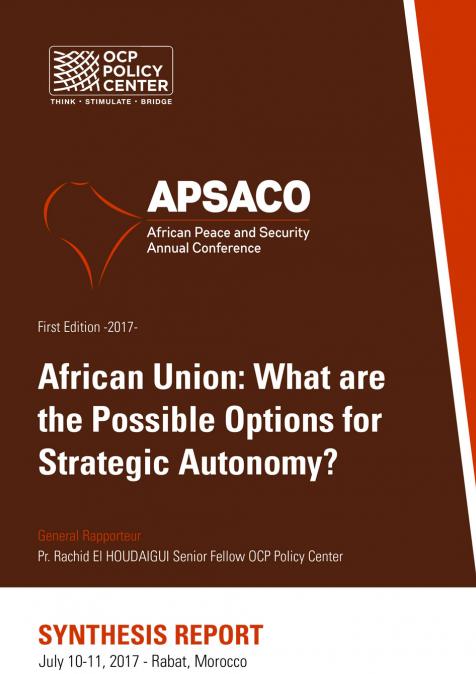
African Union: What are the Possible Options for Strategic Autonomy?
July 31, 2017

The African Peace and Security Annual Conference (APSACO), organized by the OCP Policy Center, was held from July 10 – 11, 2017 in Rabat. This first edition, focusing on the African Union’s (AU) strategic autonomy, aimed to facilitate a serious and constructive consideration of the various probable and realistic options for the rise of this international organization as an autonomous entity that is globally interdependent. The conference also aimed at launching a deep African debate on the continent’s place in developing global strategic discourse.

RELATED CONTENT

  • Authors
    Patricia Ahanda
    November 23, 2026
    Patricia Ahanda, alumna du programme Atlantic Dialogues Emerging Leaders 2018.  Depuis l’Antiquité, l’océan Atlantique est l’odyssée de récits multiples. Son étymologie convoque déjà la figure d’Atlas, le Titan que les traditions antiques situaient aux confins occidentaux du monde connu, condamné à soutenir la voûte céleste, et dont le nom fut également associé aux montagnes du nord-ouest de l’Afrique.[1]Dès l’origine, l’Atlantique apparaît comme le croisement des réc ...
  • November 12, 2026
    The U.S. midterm elections raise questions about the future direction of American foreign policy and its implications for Africa. This discussion examines how shifting political dynamics in Washington could shape the Trump administration’s foreign policy priorities and engagement with t...
  • Authors
    Edited by Abdelhak Bassou
    October 30, 2026
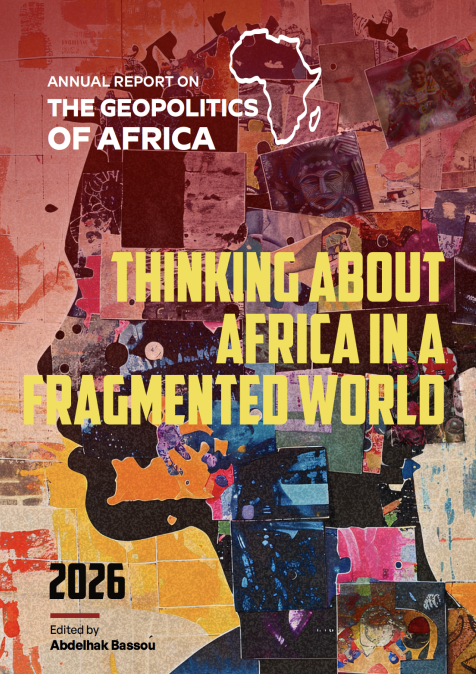
    This year marks the tenth edition of the annual report on African geopolitics; for ten years now, the Policy Center for the New South has been providing a platform for Africans to reclaim the narrative about their continent. The number 10 is significant: it marks the maturity of an editorial project founded on a simple yet demanding conviction - that Africa must define itself, from within, using the analytical tools that its own people forge through engagement with reality.&nbs ...
  • Authors
    Paul Isbell
    October 9, 2026
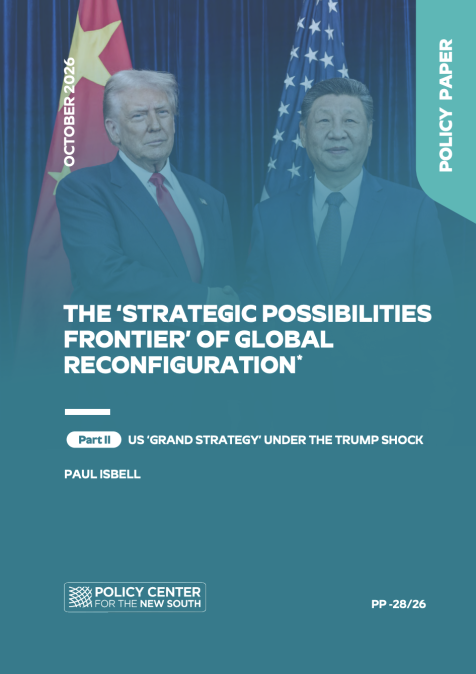
    In the first seven Policy Briefs of this ongoing series of analysis on Pan-Atlanticism: The Atlantic Basin in a Multipolar-Transnational World, we developed the argument that the strategic significance of the Atlantic Basin is on the rise for a range of international actors (states, regions and non-state agents) and from distinct political or ideological perspectives. In addition, in the most recently published Policy Brief -- “The U.S. and the Current International Reconfiguration: ...
  • Authors
    Lina Jaoid
    October 8, 2026
    In the two years since the fall of Bashar al-Assad in Syria, Russia has restructured its Mediterranean presence. Although Russia’s limited and increasingly conditional access to the Khmeimim and Tartus facilities in Syria has been preserved, its presence in the country has morphed from Assad’s ‘patron-client’ configuration to a more negotiated engagement. Simultaneously, Russia has upgraded its force-projection and logistical infrastructure in eastern Libya, giving it an access path ...
  • Authors
    Meryam Amarir
    August 13, 2026
    Recent crises in the Middle East, particularly attacks targeting commercial vessels in the Red Sea and tensions surrounding the Strait of Hormuz, have highlighted the vulnerability of the main strategic corridors of global trade. Rather than fundamentally disrupting the organization of trade flows, these crises are accelerating an ongoing transformation driven by the search for more resilient connectivity chains, the diversification of trade routes, and the development of logistics ...
  • Authors
    Meryam Amarir
    August 13, 2026
    Les crises récentes au Moyen-Orient, notamment les attaques ciblant les navires commerciaux en mer Rouge et les tensions autour du détroit d'Ormuz, ont mis en évidence la vulnérabilité des principaux corridors stratégiques du commerce mondial. Plus qu'un bouleversement de l'organisation des échanges, elles accélèrent une transformation déjà engagée, fondée sur la recherche de chaînes de connectivité plus résilientes, la diversification des itinéraires commerciaux et le développement ...