Podcasts

Back

Soja contre terres rares : la guerre silencieuse entre Washington et Pékin

31
October 2025
Oumaïma El Azami El Hassani, Ahmed Ouhnini

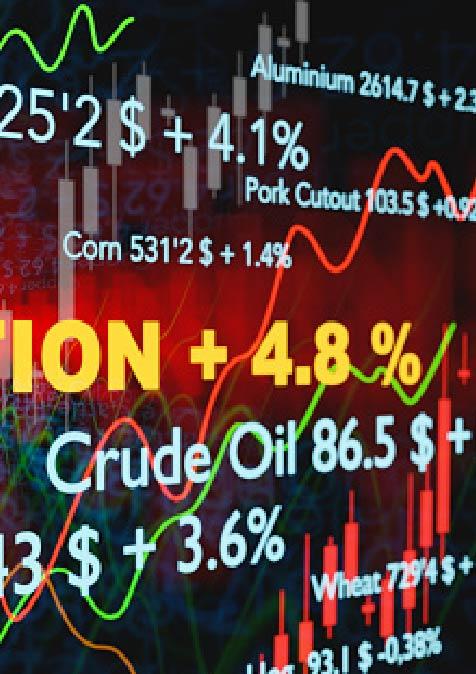
Dans ce podcast, nous verrons comment une simple graine est devenue un levier de puissance mondiale, reliant les fermiers du Midwest américain aux usines chinoises. Entre sécurité alimentaire, rivalités commerciales et dépendances stratégiques, ce récit dévoile comment l’alimentation et les ressources naturelles redessinent les rapports de force du XXIᵉ siècle.
RELATED CONTENT

  • February 20, 2024
    The heightened and persistent geopolitical tensions of recent years, marked by the deterioration of U.S.-China relations, the escalation of tensions in Taiwan, and the conflict between Russia and Ukraine, have had significant repercussions on the strategic and critical minerals supply policies of several states. Recent crises, particularly the COVID-19 pandemic and the war in Ukraine, have exposed the vulnerability of global supply chains to geopolitical shocks and disruptions, prom ...
  • Authors
    November 2, 2023
    The global economic environment has changed as the U.S.—and to a less confrontational degree, the European Union—have clearly established a context of technological rivalry with China. Hindering China’s progress in the sophistication of semiconductor production has become a centerpiece of current U.S. foreign policy. While the U.S. is clearly winning the semiconductor war, the picture is different when it comes to clean-energy technology. Both technology wars overlap with access to ...
  • Authors
    May 15, 2023
    In the face of oil production cuts by Saudi Arabia and some OPEC members, the energy supply is shrinking again. This is in response to fears of an impending recession, higher inventories in some key countries, and an attempt to keep prices at a certain level. Turning to renewables is now essential to reduce dependence and increase resilience to energy insecurity, while non-renewable energy sources continue to show signs of unpredictability and harmful dependence. Economic outlooks v ...
  • March 31, 2023
    L’Afrique est plurielle, comme le sont les investissements chinois sur son continent. Cette étude montre que, contrairement à ce que l’on mettait en avant durant la décennie 2010, ces investissements ne se limitent pas à l’exploitation du sous-sol africain. Les opérateurs chinois, privilégiant le long terme, se montrent le plus souvent patients et discrets, ne ciblant pas les seuls investissements miniers. Concernant les secteurs principalement bénéficiaires de ces investissements, ...
  • Authors
    October 21, 2022
    This Policy Brief addresses the question of Europe's interest in the Nigeria-Morocco Gas Pipeline project. The paper advances six arguments to support this interest and its relevance. 1) The project effectively diversifies European gas resources and provide greater scope for action. 2) Building the pipeline helps create a new generation of measures to curb the asymmetric risks Europe faces. 3) The project mitigates the risk of replacing European dependence on Russian gas with anothe ...
  • September 09, 2022
    Key Challenges and Opportunities of African natural gas supplies to Europe. Since the beginning of the war in Ukraine, the African natural gas has emerged as an alternative to Russian na ...
  • Authors
    August 17, 2022
    In May 2021, the International Energy Agency’s (IEA) report Net Zero by 2050 stated that there is no need for new investments in oil and gas fields in their net zero pathway[1]. The message was clear: place your next investments in clean energy sources and energy efficiency. However, the IEA’s Africa Energy Outlook 2022 stated that Africa’s industrialisation relies in expanding the use of natural gas[2]. Even the IEA executive director Fatih Birol said, “if we make a list of the top ...
  • Authors
    May 6, 2022
    In addition to the deaths and destruction in Ukraine, the Russian invasion has caused several significant shocks to the global economy. In addition to the geopolitical consequences of the war, reinforcing the downward trend in trade globalization and financial integration, new rounds of disruptions to supply chains and higher commodity prices have already led to downward revisions in economic growth projections, accompanied by higher inflation. The commodity price shock, intensify ...
  • Authors
    March 11, 2022
    The pros and the cons of regional market integration are well exemplified by the experience of Uruguay, a small, open economy in MERCOSUR, which is a highly protectionist trade bloc, dominated by Argentina and Brazil. With access to such large markets, Uruguay did raise its growth rate during the first decade of MERCOSUR, the 1990s. However, market integration as implemented in MERCOSUR was also problematic in that Uruguay suffered from the high protectionism of Argentina in the for ...