Podcasts

Back

Migration and Integration in Atlantic Latin America

09
June 2023
Hamza M’jahed and Elena Sanchez-Montijano

In this podcast episode, we delve into the complex and diverse topic of migration and integration in Atlantic Latin America. As we explore the historical events and patterns of migration that have shaped the region's cultural, social, and economic development. We also examine recent changes in immigration policy and the resulting impact on migration and integration patterns, including the challenges faced by migrants and their host communities while discussing effective policies and programs that promote the integration of migrants in Atlantic Latin America.

This podcast episode was produced as part of the Jean Monnet Atlantic Network 2.0, with the support of the European Union's Erasmus+ Program. The opinions expressed in the recorded content are solely those of the authors, as such, neither the Agency nor the Commission can be held accountable for any use of the information it presents.

RELATED CONTENT

  • Authors
    Russel Dinh
    January 27, 2016
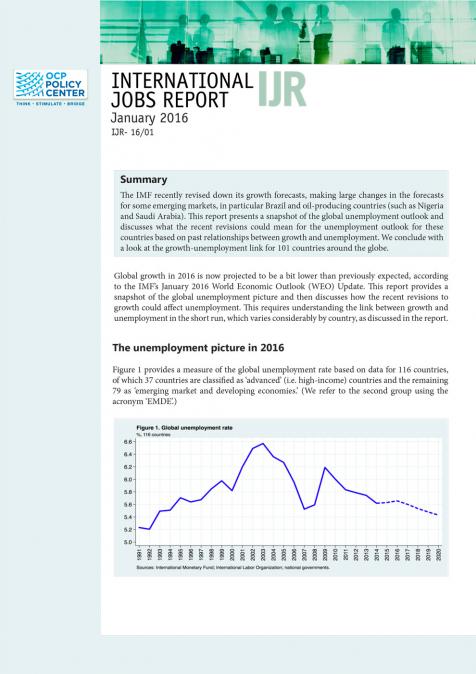
    The IMF recently revised down its growth forecasts, making large changes in the forecasts for some emerging markets, in particular Brazil and oil-producing countries (such as Nigeria and Saudi Arabia). This report presents a snapshot of the global unemployment outlook and discusses what the recent revisions could mean for the unemployment outlook for these countries based on past relationships between growth and unemployment. We conclude with a look at the growth-unemployment link f ...
  • November 5, 2015
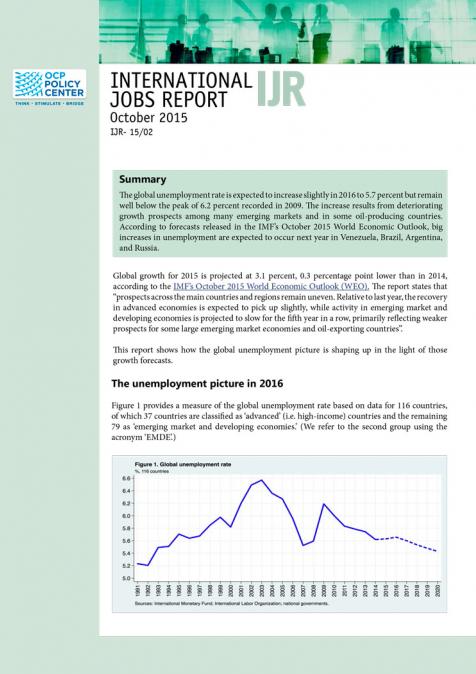
    The global unemployment rate is expected to increase slightly in 2016 to 5.7 percent but remain well below the peak of 6.2 percent recorded in 2009. The increase results from deteriorating growth prospects among many emerging markets and in some oil-producing countries. According to forecasts released in the IMF’s October 2015 World Economic Outlook, big increases in unemployment are expected to occur next year in Venezuela, Brazil, Argentina, and Russia. ...
  • Authors
    Sergio Fausto
    February 27, 2015
    Brazil’s future prospects, and ability to harness its advantages, will hinge on its own policy choices over the next few years. Yet the outlook for meaningful change is unclear. At present, Brazil is in a weaker position than four years ago, from both an economic and a foreign policy standpoint. Even in a scenario where Brazil’s economy gradually returns to the course it was on until 2008, no major strategic changes are likely to happen in Rousseff’s four-year term. ...