Podcasts

Back

Des émergents au défi du « retour de la géopolitique »

22
May 2015
TV Program, Policy Center for the New South

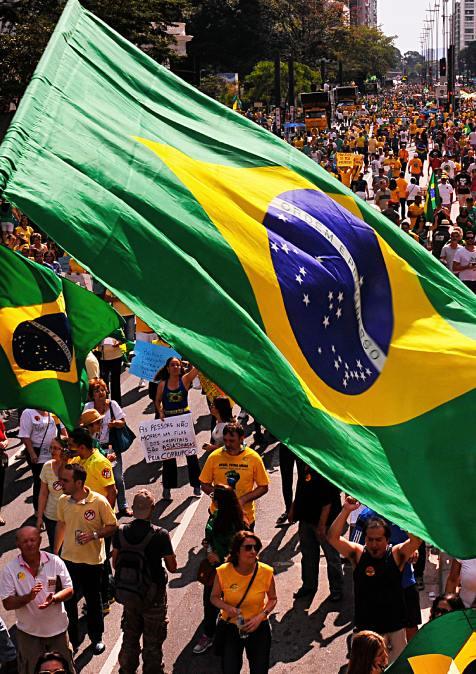
Cette deuxième émission de la série Ifri-Policy Center for the New South Roundtables sur "les défis de l'émergence et le retour de la géopolitique" porte sur les défis de l’émergence auxquels sont confrontés des pays comme le Brésil, l’Indonésie, le Nigéria et la Côte d’Ivoire. Acteur économique et politique incontournable des relations internationales depuis le début des années 2000, le Brésil connaît une croissance ralentie depuis 2011. Compte tenu du manque d’investissement dans les secteurs innovants et performants et de la persistance de très fortes inégalités sociales, le questionnement sur la trajectoire d’émergence brésilienne reste entier.
Avec ses caractéristiques géopolitiques, culturelles et politiques, l’Indonésie possède de tous les atouts d’une puissance en devenir. Néanmoins, les nombreuses crises internes et le faible niveau d’industrialisation freinent encore le retour de la confiance des investisseurs et remettent en question le modèle de croissance.
Devenu première puissance économique africaine en 2014, le Nigeria a fini par trouver sa place dans le cercle des pays émergents. Cependant, les inégalités fortes qui y persistent ainsi que la faible diversification de son économie dépendant très largement d’un secteur pétrolier en difficulté sont tant de freins à une croissance solide. Un climat sécuritaire extrêmement délicat fragilise d’autant plus ce géant aux pieds d’argile.
Disposant d’un fort potentiel en ressources naturelles et humaines, d’infrastructures relativement performantes et d’une croissance soutenue depuis l’adoption en 2011 de politiques de grands travaux, la Côte d’Ivoire semble destinée à un avenir économique florissant. Néanmoins, les défis économiques et sociaux que connaît le pays liés à l’existence de fortes inégalités entre espaces ruraux et urbains et à un climat politique tendu pourraient entraver son développement futur.

RELATED CONTENT

  • May 13, 2026
    The meeting between Donald Trump and Xi Jinping in Beijing this week goes far beyond the traditional framework of a bilateral encounter between the world’s two largest economies. In many respects, it is a symbolic moment in the transition toward a new international order—one increasingly shaped not only by great-power competition but also by the Global South’s growing political consciousness and strategic relevance. ...
  • Authors
    May 6, 2026
    Trump’s Strategy of Overriding Constitutional SafeguardsPerhaps bearing in mind that only a minority of voters in the United States support U.S. military action against Iran, President Donald Trump has called the war a “short term excursion” and a “little journey” that may be over “pretty quickly”. The war is thus not a war, although Trump has said the U.S. will take Iran “back to the stone ages, where they belong”, and the U.S. military has admitted to attacks on 14,000 Irania ...
  • Authors
    Stephan Klingebiel
    Andy Sumner
    May 4, 2026
    This Opinion was originally published on policyedge.in The weakening of global institutions creates both risk and opportunity, placing India at the center of debates on reform and renewal.The global order is not collapsing outright but is gradually hollowing out, as institutions lose normative coherence and great power contestation reshapes rules from within. This moment of transition creates both risks of fragmentation and opportunities for redesign. For India, rising economic ...
  • April 29, 2026
    Cet oped a été publié initialement dans la revue afkar/ideas 77 (IEMed).  La politique étrangère du Maroc traverse une transition structurelle, sous l’effet de la polycrise mondiale, de la diversification de ses partenariats et de l’affirmation de nouveaux choix stratégiques. La centralité accordée aux notions de « hub », de « plateforme »ou de « corridor » traduit un glissement sémantique et fonctionnel dans le narratif national, accordant une priorité majeure aux considé ...
  • Authors
    April 21, 2026
    « C’est le moment me semble-t-il de sortir de cette dialectique de l’euphorie ou du désespoir pour entreprendre un effort de réflexion sur soi, sur notre situation dans le monde : se penser, se représenter, mener une réflexion critique sur ses propres réalités. Il est de la responsabilité des intellectuels, penseurs, artistes africains de mener à bien cette entreprise afin de dégager des horizons et contribuer à la transformation radicale des sociétés africaines » Felwin Sarr. Écriv ...
  • Authors
    Paul Isbell
    April 2, 2026
    PrefaceThis series of policy briefs, Pan-Atlanticism: The Atlantic Basin in a Multipolar-Transnational World, assesses the strategic significance—and potential—of the Atlantic Basin, when viewed and engaged with as a distinct and coherent region for international cooperation or governance, and as a potential arena of strategic competition, within a shifting structure of international power that is now moving from unipolarity to a new multipolar reality.The series began by tracing th ...
  • Authors
    April 1, 2026
    We are now in the fifth week since the U.S. airstrike that killed top leaders of the Iranian regime, initiating a war involving the United States and Israel against the country. More than a month of mutual bombardments between Iran and Israel has ensued, extending to other Persian Gulf nations, U.S. military installations—and even Cyprus. From a global perspective, the impact has stemmed primarily from disruptions to regional production of goods and the blockade of the Strait of Hor ...